
Mark Sanchez: A Look Back at His Unforgettable Career (52)
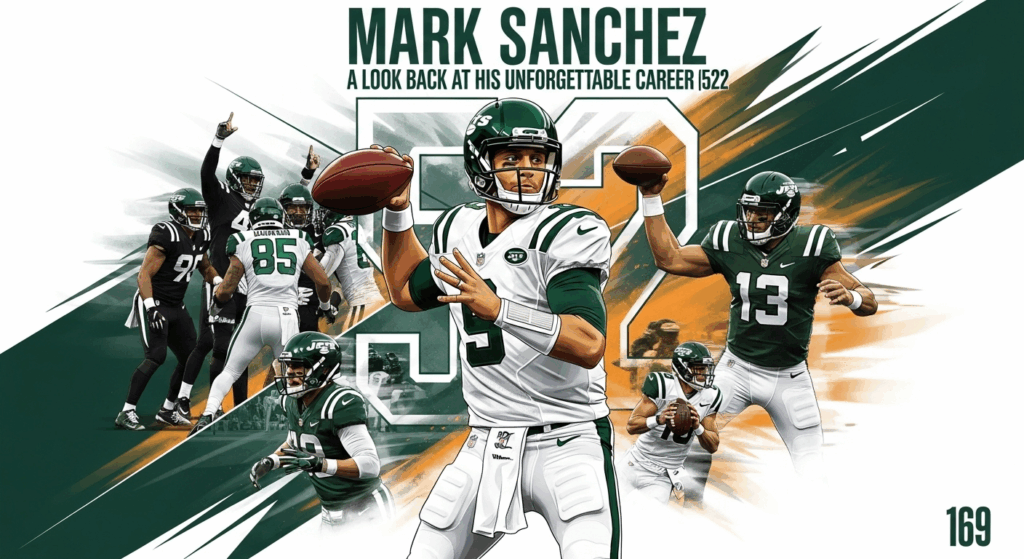
The world of sports is a vast and captivating tapestry, woven with the threads of individual brilliance, fierce team rivalries, and unforgettable narratives that stand the test of time. Fans are drawn to stories of meteoric rises, crushing defeats, and the sheer human drama that unfolds on the field of play. Examining this landscape reveals fascinating parallels and contrasts, from the high-stakes journey of a quarterback like Mark Sanchez and the gritty determination of a defensive lineman like Arthur Jones, to the decades-spanning, passionate animosity of a football classic like Chelsea vs Liverpool. These are not just games or statistics; they are cultural moments that define eras and create legacies, for better or for worse.
The Sanchize Era: The Rise and Fall of Mark Sanchez
Mark Sanchez’s career in the National Football League is one of the most compelling and polarizing stories in modern football history. Drafted with immense hype and expectations, he was anointed the savior of a New York Jets franchise desperate for a Super Bowl. For a fleeting, brilliant moment, it seemed like he would deliver on that promise, leading the team to the brink of the ultimate prize. His time in the spotlight was characterized by surprising success, swagger, and a connection with the New York media that few have managed. He was "The Sanchize," a charismatic leader destined for greatness.
However, the same career that soared to incredible heights also plummeted to embarrassing lows. The narrative of Mark Sanchez cannot be told without acknowledging the moments of inconsistency and the infamous plays that would later overshadow his early accomplishments. This dichotomy is what makes his story so enduring. He represents the razor-thin margin between being a champion and a cautionary tale, a hero and a meme. His journey is a powerful reminder of the immense pressure placed on franchise quarterbacks and how quickly a narrative can change in the unforgiving world of professional sports.
Ultimately, looking back at his unforgettable career reveals a complex legacy. He was a quarterback who won more playoff games on the road than many Hall of Fame players, yet he is often remembered for a single, disastrous play. This paradox ensures his place in NFL lore, serving as a subject of debate among fans and analysts alike. Was he a product of a great defense and running game, or was he a talented quarterback whose confidence was shattered? The answer likely lies somewhere in the middle, making his story a fascinating case study in talent, timing, and circumstance.
From USC Glory to Broadway Joe's Heir
Mark Sanchez's path to the NFL was paved with gold. As the starting quarterback for the University of Southern California (USC) Trojans, one of college football's most storied programs, he was a campus hero. In his one full season as a starter, he led USC to a dominant 12-1 record, culminating in a spectacular Rose Bowl victory where he was named the MVP. His performance, filled with poise, accuracy, and a flair for the dramatic, convinced many NFL scouts that he was the most pro-ready quarterback in the 2009 draft class. His Mexican-American heritage also made him a uniquely marketable star, and his Hollywood good looks and confident demeanor seemed tailor-made for a major market.
The New York Jets, under the bold new leadership of head coach Rex Ryan, were immediately smitten. They orchestrated a major trade to move up to the #5 spot in the draft to select Sanchez, a move that signaled a dramatic shift for the franchise. Ryan, in his typically bombastic fashion, presented Sanchez as the heir to "Broadway Joe" Namath, the only quarterback to ever lead the Jets to a Super Bowl. The pressure was immense, but Sanchez embraced it. He was immediately named the starter, and the "Sanchize" era had officially begun in New York, bringing with it a wave of optimism not seen in decades.
The Playoff Runs and the Peak
Against all odds, the early returns on the Jets' investment were spectacular. In his first two seasons (2009 and 2010), Mark Sanchez did something few young quarterbacks ever accomplish: he led his team to back-to-back AFC Championship Games. While the Jets' "Ground and Pound" philosophy, built on a punishing running game and a historically great defense, was the team's true identity, Sanchez played a crucial role as a game manager who could make big plays when needed. He was not asked to throw 40 times a game; he was asked to protect the football, convert key third downs, and exhibit poise in hostile environments.
During these playoff runs, Sanchez was remarkably effective, particularly on the road. He secured stunning upset victories against established quarterbacks like Peyton Manning, Tom Brady, and Philip Rivers, all in their home stadiums. His four road playoff wins remain an NFL record. These performances cemented his status as a clutch player who, despite his youth, did not shrink from the moment. It was during this period that the hype felt justified. He was the confident leader of a brash, tough-talking team that mirrored its coach's personality, and they were just one win away from the Super Bowl in two consecutive years. This was the absolute peak of his career, a time when his potential seemed limitless.
The "Butt Fumble" and the Decline
The trajectory of Mark Sanchez's career, and perhaps the entire Jets organization at the time, can be pinpointed to one single, unforgettable moment on Thanksgiving Day 2012. In a nationally televised game against the New England Patriots, Sanchez, scrambling on a broken play, ran directly into the backside of his own offensive lineman, Brandon Moore. The collision caused him to fumble the ball, which was promptly picked up by Patriots' safety Steve Gregory and returned for a touchdown. The play, forever known as the "Butt Fumble", became an instant and enduring symbol of ineptitude.
This moment was more than just a bizarre turnover; it was the symbolic end of the "Sanchize" era. The Jets were blown out in that game, and Sanchez's confidence, already wavering, appeared to be completely shattered. He was benched later that season, suffered a season-ending injury the following preseason, and was released by the Jets in 2014. He went on to have a respectable career as a backup and spot-starter for several other teams, including the Philadelphia Eagles and Dallas Cowboys, but he never again reached the heights of his first two years in New York. The promise of being Broadway Joe's heir had dissolved into a legacy defined by quarterback rating struggles and one infamous, comical, and ultimately career-altering play.
Arthur Jones: The Unsung Force on a Championship Defense
In the star-driven ecosystem of the NFL, players who do the dirty work in the trenches often go underappreciated. Arthur Jones is a prime example of such a player. A defensive end whose primary responsibility was to clog running lanes and occupy offensive linemen, his impact wasn't always visible on the stat sheet. Yet, for a crucial period, he was an indispensable cog in one of the league's most formidable defensive units. His career is a testament to the importance of role players in building a championship-caliber team.
Jones's story is also intrinsically linked to his remarkable family. Being the oldest of the three Jones brothers—all of whom reached the pinnacle of their respective sports—adds a unique layer of intrigue to his career. While his brothers Jon (a legendary UFC champion) and Chandler (a multi-time Pro Bowl defensive end and Super Bowl champion himself) often garnered more headlines, Arthur carved out his own successful path. He embodied the toughness and relentless motor required to succeed on the interior defensive line.
His peak came as a member of the Baltimore Ravens, where he played a pivotal role in their memorable run to a Super Bowl XLVII victory. On a defense filled with future Hall of Fame players like Ray Lewis and Ed Reed, Jones provided the youthful energy and brute force up front. He was the unsung hero, a player whose contributions were deeply valued inside the locker room even if they weren't always celebrated by the media. His career showcases the grit and determination needed to not only make it in the NFL but to win at its highest level.
A Legacy of Athleticism: The Jones Brothers
You cannot discuss Arthur Jones without acknowledging the incredible athletic dynasty of his family. Growing up in Endicott, New York, Arthur and his younger brothers, Jon and Chandler, were a trio of supremely gifted athletes destined for greatness. Their father's encouragement and their own competitive nature pushed them to excel. This unique family dynamic has been a source of public fascination, a rare case of three siblings all reaching the elite professional level in high-impact sports.
Jon, known as "Bones," would go on to become arguably the greatest mixed martial artist of all time, dominating the UFC's light heavyweight and heavyweight divisions. Chandler, a fearsome pass rusher, would become a first-round draft pick, set sack records for the Arizona Cardinals, and win a Super Bowl with the New England Patriots. In this context, Arthur, a 5th-round draft pick, was often seen as the underdog of the three. However, he was the first of the brothers to win a major professional championship, setting a high bar for his siblings to follow and cementing the Jones name as royalty in the world of combat and contact sports.
The Baltimore Ravens and Super Bowl Glory
Arthur Jones found the perfect home with the Baltimore Ravens, a franchise renowned for its commitment to tough, physical defense. Drafted in 2010, he developed into a key rotational player and eventual starter on the defensive line. His primary strength was as a run-stuffer. In the Ravens' 3-4 defensive scheme, his job was to take on double teams, hold the point of attack, and allow linebackers like Ray Lewis to flow freely to the ball-carrier. It was a thankless job, but he performed it with excellence.
His career culminated during the 2012 season. Jones had his best statistical year and was a dominant force throughout the team's improbable playoff run. During that postseason, the Ravens' defense, on what was dubbed Ray Lewis's "last ride," stifled a series of high-powered offenses. Jones was a critical part of that success, consistently collapsing the pocket from the interior and shutting down the opponent's ground attack. His performance in Super Bowl XLVII against the San Francisco 49ers was instrumental in securing the victory. He was a vital, non-statistical force on a championship team.
Arthur Jones – 2012 Championship Season Stats
| Category | Regular Season | Playoffs (4 Games) |
|---|---|---|
| Combined Tackles | 47 | 10 |
| Sacks | 4.5 | 1.0 |
| Tackles for Loss | 7 | 1 |
| Fumble Recoveries | 1 | 1 |
Post-Ravens Career and Legacy
Following his Super Bowl victory and a strong 2013 season, Arthur Jones cashed in on his success, signing a lucrative five-year, $33 million contract with the Indianapolis Colts. The deal was a reward for his excellent play and a sign that the league recognized his value as a premier run-stuffing defensive end. Unfortunately, his time in Indianapolis was marred by a series of significant injuries that prevented him from ever replicating the impact he had in Baltimore.
He struggled with ankle and groin injuries, limiting his availability and effectiveness on the field. The Colts eventually released him in 2017. He had a brief stint with Washington before retiring from the NFL. While his post-Ravens career didn't go as planned, his legacy is secure. He will be remembered as a dominant force on a Super Bowl-winning defense, a player who maximized his talent to reach the sport's summit, and one-third of one of the most athletic families in sports history.
A Rivalry Forged in Fire: Chelsea vs Liverpool
Few matchups in English football carry the same weight, vitriol, and tactical intrigue as Chelsea vs Liverpool. While both clubs have traditional local rivals, their modern feud, born in the crucible of high-stakes European and domestic cup ties in the mid-2000s, is arguably one of the most intense in the Premier League era. It's a rivalry not based on geography, but on competition; a clash of two footballing titans who repeatedly stood in each other's way in the hunt for the sport's biggest prizes.
The rivalry is defined by its intensity on the pitch and the animosity off it. The games are almost always tight, tactical, and fiercely contested affairs, often decided by a moment of brilliance or a controversial decision. The managers, from José Mourinho and Rafa Benítez to Jürgen Klopp and Thomas Tuchel, have been central figures, their personal and tactical battles adding another layer of drama to the proceedings. Clashes between these two clubs are more than just a game; they are events that captivate a global audience.
This fixture has delivered some of the most memorable and debated moments in recent football history. From Champions League semi-finals decided by a single, disputed goal to domestic cup finals that stretched to marathon penalty shootouts, the narrative of Chelsea vs Liverpool is rich with drama. It has evolved over the years but has never lost its edge, remaining a must-watch event on the Premier League calendar.

The Mourinho vs. Benítez Era: A Tactical and Personal Battle
The genesis of the modern Chelsea-Liverpool rivalry can be traced directly to the arrival of two managers in England in 2004: José Mourinho at Chelsea and Rafael Benítez at Liverpool. Mourinho, "The Special One," was brash, charismatic, and backed by the immense wealth of Chelsea owner Roman Abramovich. He built a powerful, ruthlessly efficient team designed to dominate. Benítez, in contrast, was a more reserved, meticulous tactician, known for his defensive organization and ability to out-think opponents in cup competitions. Their personalities and footballing philosophies were polar opposites, creating a perfect storm for a rivalry.
They faced each other an astonishing number of times in just a few seasons, most notably in three Champions League semi-finals in 2005, 2007, and 2008. These ties were incredibly tense, low-scoring tactical battles. Mourinho's powerful Chelsea often controlled the league, but Benítez's Liverpool consistently found a way to thwart them in knockout formats, creating immense frustration for the London club. The managers' press conferences became as compelling as the matches themselves, with thinly veiled insults and mind games becoming a regular feature. This personal animosity fueled the hatred between the two fanbases and cemented the fixture as a modern classic.
Memorable Clashes and Controversial Moments
The history of this rivalry is littered with iconic moments that are still debated today. None is more famous than the "Ghost Goal" in the 2005 Champions League semi-final second leg at Anfield. Luis Garcia's early goal for Liverpool was awarded despite Chelsea players vehemently protesting that the ball had not crossed the line. With no goal-line technology at the time, the referee's decision stood. That single goal was enough to send Liverpool to the final, which they famously won in Istanbul. Mourinho has referred to it as "the goal that came from the moon," and it remains a major point of contention.
Other unforgettable moments include:
- The 2005 League Cup Final: A dramatic 3-2 extra-time win for Chelsea, notable for a Steven Gerrard own goal and Mourinho's "shushing" gesture to the Liverpool fans.
- Steven Gerrard's Slip (2014): In a crucial league match, the Liverpool captain's infamous slip allowed Demba Ba to score for Chelsea, effectively ending Liverpool's best chance at a Premier League title in years.
- The 2022 Cup Final Doubles: In an incredible display of parity, both the League Cup and FA Cup finals between the two clubs in 2022 ended 0-0 and were decided by marathon penalty shootouts, with Liverpool winning both.
These events, filled with high drama and controversy, have added layers of narrative and bad blood to the rivalry, ensuring that every time the two teams meet, the weight of history is felt by players and fans alike.
The Evolution of the Rivalry in the Modern Premier League
While the Mourinho-Benítez era defined the rivalry's peak intensity, the fixture has continued to be a centerpiece of the Premier League under new leadership. The arrival of Jürgen Klopp at Liverpool and a series of top-tier managers at Chelsea (including Antonio Conte, Thomas Tuchel, and Mauricio Pochettino) has transformed the tactical nature of the games. The matches evolved from the cagey, defensive battles of the 2000s into high-energy, high-pressing contests between two of the world's most athletic and technically gifted squads.
Under Klopp and Tuchel, in particular, the meetings became a masterclass in modern football tactics. Both managers favored a high-pressing, quick-transition style, leading to breathless, end-to-end encounters. Their mutual respect stood in stark contrast to the open hostility of the Mourinho-Benítez days, but the on-field intensity remained just as high. The fact that both major domestic cup finals in a single season went to penalty shootouts demonstrates how evenly matched the teams have become. The rivalry has proven to be durable, adapting and evolving with the times while consistently delivering top-tier football entertainment.
The Intersection of Careers: Moments in Time
While Mark Sanchez, Arthur Jones, and the Chelsea vs. Liverpool rivalry exist in different sporting universes, their stories interestingly converge around a similar period: the early 2010s. This era represented a critical juncture for all three. For Mark Sanchez, 2009-2011 was the absolute zenith of his career, a time when he was the quarterback of a team on the cusp of a Super Bowl, a hero in the nation's largest media market. It was his moment of maximum promise and achievement.
Simultaneously, Arthur Jones was cementing his role on the Baltimore Ravens' defense. His journey culminated in the 2012 season and the subsequent Super Bowl victory in early 2013. This was his championship moment, the peak of his professional life, where his hard work and tenacity paid off on the grandest stage. His success was a story of a role player becoming a champion, a narrative that defines the team-first nature of football.
During this same window, the Chelsea vs. Liverpool rivalry continued to burn brightly, albeit with new faces. Though the peak Mourinho-Benítez years had passed, the clubs were still bitter rivals, meeting in high-stakes FA Cup and League Cup finals. The dramatic 2012 FA Cup Final, won by Chelsea, and the infamous 2014 league match that derailed Liverpool's title hopes, were all part of this era. It was a time when all three of these subjects were central to the biggest stories in their respective sports, creating unforgettable moments that fans still discuss today.
What Makes These Stories Endure? The Fan Perspective
Sports are more than just a collection of results; they are a source of identity, emotion, and shared experience. The stories of Mark Sanchez, Arthur Jones, and the Chelsea-Liverpool rivalry endure because they tap into the fundamental archetypes of sports narratives that resonate deeply with fans. They are stories of hope, ambition, failure, and redemption.
Mark Sanchez's career is a classic "Icarus" tale. He flew incredibly close to the sun, achieving heights few thought possible, only to come crashing down in a spectacular and public fashion. Fans are drawn to this narrative because it is so human. The "Butt Fumble" is not just a funny clip; it's a moment of profound sporting tragedy that makes his early success all the more poignant. We remember him because his story is a dramatic rollercoaster, not a flat line of mediocrity.
Arthur Jones represents the "unsung hero" archetype. In a world that celebrates quarterbacks and goal-scorers, his story is a tribute to the grinders, the players whose contributions are vital but not always glamorous. Fans, especially those who appreciate the nuances of team sports, celebrate players like Jones. His Super Bowl ring is a victory for every player who has ever done the dirty work, a validation that championships are built by a full roster, not just a few stars. The Chelsea-Liverpool rivalry endures because it embodies pure, undiluted competition. It is a story of equals battling for supremacy, with a history rich in controversy and drama. This is what fans crave: a rivalry with stakes, with history, and with a genuine dislike that makes every match feel like more than just three points.
Frequently Asked Questions (FAQ)
Q: Why is Mark Sanchez's career considered so unforgettable despite his struggles?
A: Mark Sanchez's career is unforgettable precisely because of its dramatic highs and lows. He is remembered not just for his struggles, but for leading the New York Jets to two consecutive AFC Championship games as a young quarterback, a feat that generated immense hope. This early success, combined with the infamous "Butt Fumble" and his subsequent decline, creates a compelling, almost cinematic narrative arc that is more memorable than the careers of many statistically better players.
Q: What was Arthur Jones's most significant contribution to the Baltimore Ravens?
A: Arthur Jones's most significant contribution was his role as a dominant run-stuffing defensive end on the Ravens' Super Bowl XLVII-winning team. In their 3-4 defensive scheme, he was masterful at absorbing double-team blocks, controlling the line of scrimmage, and freeing up linebackers like Ray Lewis to make plays. While not a high-profile sack artist, his physical, blue-collar work in the trenches was a critical component of their championship defense in the 2012 season.
Q: What truly ignited the modern rivalry between Chelsea and Liverpool?
A: The modern rivalry was ignited by a series of high-stakes UEFA Champions League knockout ties between 2005 and 2008. These matches were intensified by the personal and tactical feud between the two managers at the time, José Mourinho of Chelsea and Rafael Benítez of Liverpool. Controversial moments, like Luis Garcia's "Ghost Goal" in 2005, added fuel to the fire, turning it from a standard league fixture into one of the most hostile and anticipated rivalries in European football.
Conclusion
The vast landscape of professional sports is filled with stories that capture our imagination and stand the test of time. The journey of Mark Sanchez, from a franchise savior to the subject of an infamous meme, serves as a powerful cautionary tale about the pressures of stardom. The career of Arthur Jones highlights the crucial, often overlooked, importance of role players in building a championship dynasty. And the fiery Chelsea vs Liverpool rivalry demonstrates how pure, sustained competition can forge a modern classic built on tactical genius and raw emotion.
Each of these narratives, though distinct in its context and characters, speaks to a universal truth about sports: that the moments that truly define a legacy are rarely just the wins and losses. They are the dramatic playoff runs, the championship-clinching plays in the trenches, and the controversial goals that are debated for decades. They are the stories we tell, the moments we remember, and the reasons we continue to watch. They are, in a word, unforgettable.
***
Article Summary
This comprehensive article, "Mark Sanchez: A Look Back at His Unforgettable Career (52)," delves into three distinct yet compelling sports subjects. It begins by exploring the dramatic and polarized NFL career of quarterback Mark Sanchez. The piece details his meteoric rise as the leader of the New York Jets, guiding them to two AFC Championship games, and his subsequent, infamous decline symbolized by the "Butt Fumble."
The focus then shifts to Arthur Jones, a defensive lineman whose gritty, unsung work was pivotal to the Baltimore Ravens' Super Bowl XLVII victory. His story is framed within the context of his famously athletic family, including brothers Jon and Chandler Jones, and highlights his crucial role as a run-stopper on a championship-winning defense.
Finally, the article analyzes the intense modern football rivalry between Chelsea and Liverpool. It traces its origins to the tactical and personal battles between managers José Mourinho and Rafa Benítez in the mid-2000s, revisits iconic and controversial moments like the "Ghost Goal," and examines how the rivalry has evolved into a clash of modern, high-pressing footballing styles. The article ties these disparate subjects together by noting their concurrent peaks in the early 2010s and analyzing why their stories—of heroes, underdogs, and bitter rivals—resonate so enduringly with sports fans. An FAQ section addresses key questions about each topic, providing further clarity and insight.