
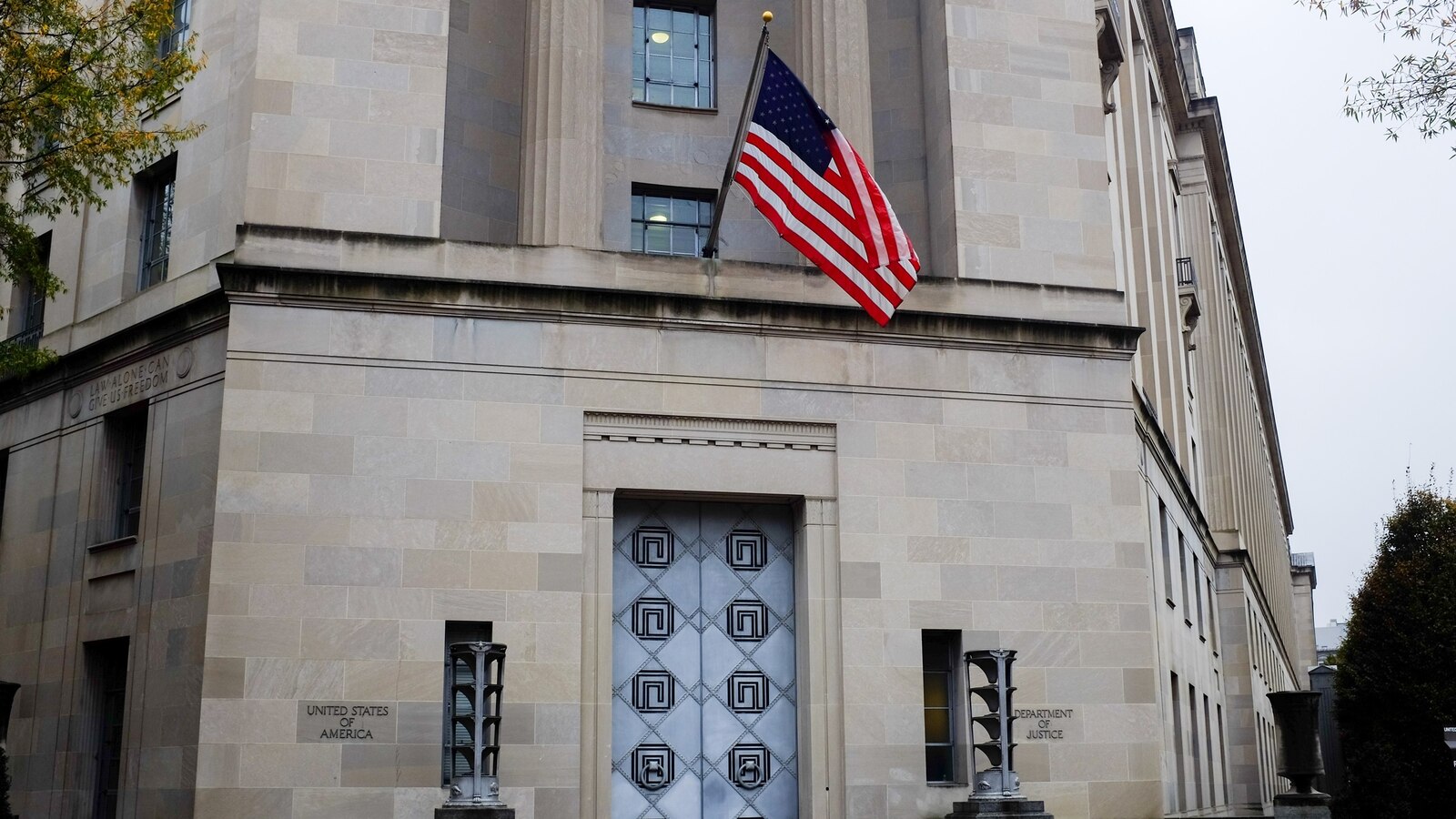
Historic First: Alien Terrorist Removal Court Addresses Deportation of Afghan Permanent Resident
A New Legal Arena Opens After Three Decades of Inactivity
Cyberzenhub.com – Public defenders initiated an early challenge on Thursday to dismiss the inaugural case filed within the Alien Terrorist Removal Court. This specialized judicial body represents an untested approach by the Trump administration to deport an Afghan woman residing in Texas, whom officials allege maintains connections to an ISIS conspiracy. Nazira Haji Zada, who holds lawful permanent resident status, was taken into custody earlier this week in Texas. She faces accusations of assisting her son and son-in-law in organizing a potential mass casualty assault targeting American voters during the 2024 presidential election.
While law enforcement successfully prevented the planned attack, investigators maintain that Haji Zada formally pledged allegiance to ISIS and actively indoctrinated her family members with extremist ideology. The Alien Terrorist Removal Court stands as an obscure, specialized judicial entity established by Congress back in 1996. Its primary purpose involves rapidly initiating deportation proceedings against individuals currently within U.S. borders who pose national security threats. Remarkably, this court remained completely inactive for three decades following its creation and had never been utilized prior to this case.
Government Officials Celebrate Judicial Innovation
Most documentation submitted in connection with this case contains classified information, with only a concise summary of the matter released to the public. Judge Joan Erickson, serving as the court’s chief judge, initially demonstrated skepticism regarding the government’s effort to employ this venue for the first time. Nevertheless, she ultimately determined that the Justice Department had accumulated sufficient evidence to proceed with the proceedings. Senior Justice Department officials expressed enthusiasm about the court’s inauguration on Thursday, contending that it would strengthen the government’s ability to prosecute removal cases dependent upon classified materials.
FBI director Kash Patel described the proceedings as “a historic step” within an official DOJ statement.
Acting Attorney General Todd Blanche remarked, “The allegations in this case show the matriarch of an ISIS-sympathizing family aiding in a plot to launch a mass casualty attack on American voters on Election Day.” He continued, “The Department’s application in this court makes clear that terrorists have no place in the United States of America.”
Defense Counsel Raises Due Process Concerns
Conversely, Haji Zada’s two appointed public defenders mounted a vigorous counterargument during the initial Thursday hearing. They contended that the Trump administration’s deportation initiative breached Haji Zada’s constitutional due process protections. Although Judge Erickson declined to dismiss the case entirely, the proceedings offered preliminary insight into how Haji Zada intends to challenge the government’s unprecedented removal strategy.
Her legal representatives characterized the government’s utilization of this specialized court as an attempt to circumvent conventional criminal proceedings and evade standard due process obligations. They asserted that the government violated Haji Zada’s First, Fourth, and Sixth Amendment rights. Assistant Federal Public Defender Matthew Farley, one of Haji Zada’s counsel, argued that attempting to remove a legal permanent resident “based on just a few paragraphs calling the government’s unclassified filings is absolutely contrary to due process.” He further described the government’s unclassified filings as “woefully inadequate.”
The government has maintained that additional disclosure would enable terrorists to evade preventative or detection measures. The hearing also served as a preliminary test for the never-before-utilized court. Judge Erickson acknowledged on Thursday that her management of the case might prove “inelegant,” recognizing that the court’s procedures remain “untested” after remaining dormant for thirty years. She committed to being “careful” and “circumspect” while promising “fealty to the Constitution.”
Looking Ahead: Uncharted Legal Territory
No specific date has yet been established for Haji Zada’s removal hearing. Until that time arrives, both parties will navigate unexplored legal waters as they debate the extent to which defense counsel and the public are entitled to access classified materials within this specialized court. Judge Erickson signaled that she would view skeptically any attempts by the government to withhold documents from defense counsel, indicating that prosecutors must present compelling arguments for keeping classified materials sealed.
This landmark case represents more than just the deportation of one individual. It establishes precedent for how the United States will handle national security threats through this newly activated judicial mechanism. The outcome could significantly influence future immigration enforcement strategies, particularly in cases involving classified intelligence and permanent residents accused of terrorist connections. Legal scholars anticipate that the proceedings will generate extensive discussion regarding the balance between security concerns and constitutional protections in this unique forum.
Related Reading
Frequently Asked Questions
What is Little known Alien Terrorist Removal Court?
Little known Alien Terrorist Removal Court is the main topic of this guide. The article explains the context, practical details, and next steps readers should understand.
Why does Little known Alien Terrorist Removal Court matter?
Little known Alien Terrorist Removal Court matters because readers are looking for a useful answer, not just a short summary. Good content should match search intent and help them decide what to do next.