Aviation Safety Under Scrutiny After Near-Miss at Reagan National Airport
Cyberzenhub.com – The Federal Aviation Administration has launched an investigation into a potential safety breach at one of the nation’s busiest airports, following an incident where a commercial aircraft departed while President Donald Trump’s helicopter was en route to Reagan National Airport. The occurrence on Tuesday afternoon has raised questions about whether established protocols designed to prevent midair collisions were properly followed during the high-profile event.
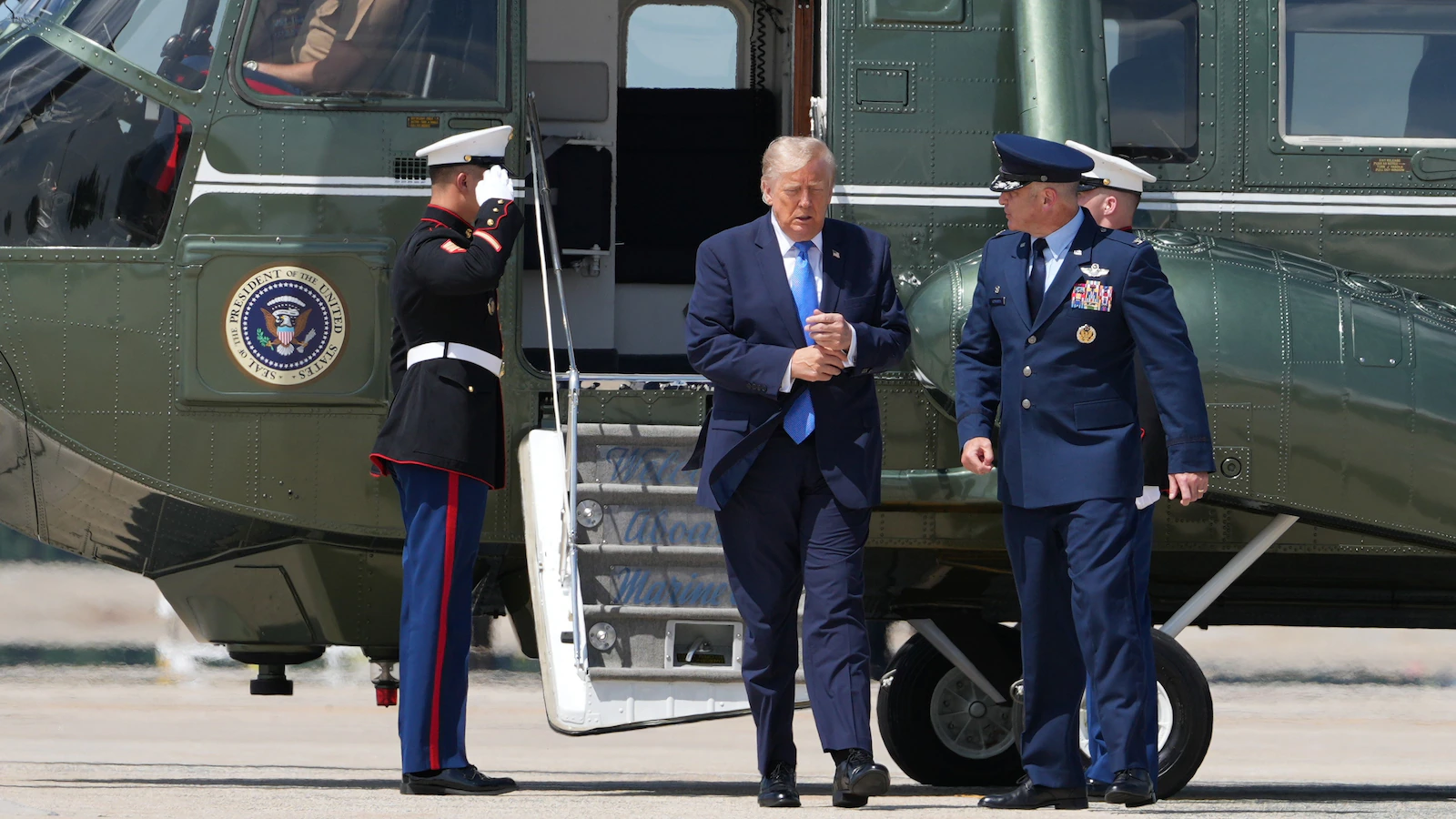
The incident unfolded as Marine One, carrying the president aboard for the initial segment of a West Coast journey, departed from the White House grounds bound for Andrews Air Force Base. Simultaneously, a commercial jet initiated its takeoff from Reagan National, creating a situation that appeared to contradict safety measures implemented following a devastating collision the previous year.
Incident Details and Aircraft Movement
According to the FAA, the commercial airplane was climbing above Marine One as the presidential helicopter approached the airport. Despite the close proximity, officials confirmed that the two aircraft were not positioned on a collision course. The agency issued a statement explaining that “there was a momentary loss of separation after which the aircraft continued to move away from one another.”
Further clarification came from the FAA regarding air traffic control communications during the event. “The air traffic controller was in contact with both the commercial pilot and Marine One pilot during the loss of separation,” the agency noted in its official statement.
Background: The January Midair Collision
The safety procedures under review were established in response to a tragic incident on January 29, 2025, when an airliner collided with an Army Black Hawk helicopter near Reagan National Airport. The crash claimed the lives of 67 people and prompted immediate action from aviation authorities.
Following the investigation into that collision, the FAA implemented comprehensive changes to airspace management around Reagan National. These measures included halting all takeoffs and landings whenever a helicopter passes through the airport’s airspace. Additionally, the new rules prohibit air traffic controllers from relying solely on visual separation and mandate that all military aircraft broadcast their positions continuously.
The airspace surrounding both the White House and Reagan National has long been characterized by heavy congestion, accommodating a mix of military and commercial traffic. The enhanced protocols were designed specifically to address the risks inherent in this densely populated airspace.
Official Responses and Reassurances
White House officials moved quickly to address public concerns about the president’s safety during the incident. “Marine One flights are piloted by some of the best aviators in the world, and at no point was the President in harm’s way,” said White House spokesman Kush Desai in a statement emphasizing that Trump faced no danger.
The Marine Corps also issued a defense of its helicopter pilots’ actions during the routine movement. “There were no ‘close calls’ with the routine Marine One movement,” said Marine Corps spokesman Capt. Jacob Sugg in an email communication. Sugg further explained that “Washington National Tower did not delay the helicopter crew, ask them to hold, or otherwise alter their flight profile. To the contrary, the ATC team approved the requested route and provided timely and appropriate traffic information.”
Family Members Voice Concerns
Adding to the scrutiny, the primary group representing family members of those who perished in last year’s crash took to social media platform X on Wednesday morning to question why the government has not implemented more robust measures to prevent collisions in the crowded airspace around Reagan.
These family members have been actively advocating for Congress to reach a compromise and pass a comprehensive package of aviation safety reforms recommended by the National Transportation Safety Board following the midair collision. Their concerns reflect broader public interest in ensuring that lessons from the tragedy have been fully integrated into operational procedures.
Investigation Status and Next Steps
The National Transportation Safety Board confirmed on Wednesday morning that it is currently gathering information about Tuesday’s incident involving Marine One. The agency has not yet determined whether a formal investigation will be launched into the matter.
The Wall Street Journal was the first news organization to report on the incident, bringing attention to what may represent a significant deviation from established safety protocols. As investigations continue, aviation experts and policymakers will likely examine whether the existing procedures require additional strengthening to prevent similar occurrences in the future.
Reagan National Airport remains one of the most critical aviation hubs in the Washington metropolitan area, serving both commercial passengers and government officials. The outcome of this investigation could influence how airspace is managed during future presidential movements and other high-profile events at the airport.
Funk reported from Omaha, Nebraska.
Related Reading
Frequently Asked Questions
What is FAA investigating why plane was allowed?
FAA investigating why plane was allowed is the main topic of this guide. The article explains the context, practical details, and next steps readers should understand.
Why does FAA investigating why plane was allowed matter?
FAA investigating why plane was allowed matters because readers are looking for a useful answer, not just a short summary. Good content should match search intent and help them decide what to do next.