
Republic of the Congo elections: A foregone conclusion?
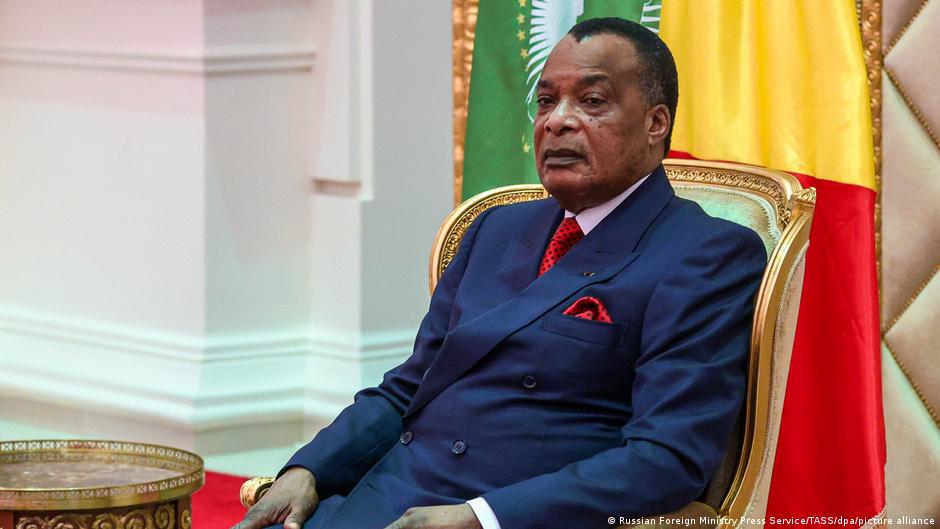
Republic of the Congo elections: A foregone conclusion?
This Sunday, voters in the Republic of the Congo (Brazzaville) will cast their votes to choose a new leader. Political observers suggest Denis Sassou Nguesso, the country’s long-serving president, is likely to secure another term. His tenure as a political figure has spanned nearly half a century, making him the most enduring leader in Congo’s history for most of the past 47 years.
Many citizens have never known a leader other than Sassou Nguesso, who first ascended to power in 1979 after years of influence within the nation’s elite. His leadership faced a five-year disruption in the 1990s, marked by a violent civil war. Yet, since the 2000s, he has symbolized a degree of stability in a region prone to unrest. Despite seven well-known candidates vying for the position, analysts believe Sassou Nguesso’s dominance remains unchallenged.
To view this video please enable JavaScript, and consider upgrading to a web browser that supports HTML5 video
His appeal extends beyond Congo’s borders. In a volatile region, Sassou Nguesso is seen as a reliable figure. While neighboring nations like Cameroon, the Central African Republic, and the Democratic Republic of the Congo endure ongoing crises, Brazzaville has maintained political calm for years. This is why his allies argue that his leadership is vital not just for Congo but for the entire region.
One of his vocal supporters is Adrien Poussou, a former Central African Republic communications minister. “A long period in power doesn’t equate to lack of legitimacy,” Poussou remarked in a recent interview. “Critics claim it’s improper to stay in office for so long, but that’s not illegal or unjust. What matters is the consistency of governance and the nation’s stability.”
To view this video please enable JavaScript, and consider upgrading to a web browser that supports HTML5 video
However, Paul Akoa, a Cameroonian geopolitical analyst, challenges this narrative. He argues that sustained stability should be judged by tangible outcomes, not just continuity. “As time goes on and key economic indicators decline, it becomes essential to evaluate whether the same leader or team should remain in charge,” Akoa noted.
Darrin McDonald, a British political scientist, shares similar concerns. He points to Congo’s economic struggles, highlighting a cycle of accumulating debt and restructuring it repeatedly. “The country keeps borrowing heavily from international lenders, then negotiating to ease the load—only to add more debt within a few years,” McDonald explained.
Yet McDonald also acknowledges Sassou Nguesso’s regional reputation. The 82-year-old leader is praised for his role as a mediator, having helped resolve conflicts between the Democratic Republic of the Congo and Rwanda. In 2023, he was among the first African leaders to offer support after a coup in Gabon and later called for peace between Russia and Ukraine. “In a region plagued by instability, his credibility can serve as a powerful asset,” McDonald added.