Judge Refuses to Block Trump Border Wall on Tribe’s Land
Federal Ruling Allows Wall Construction to Continue
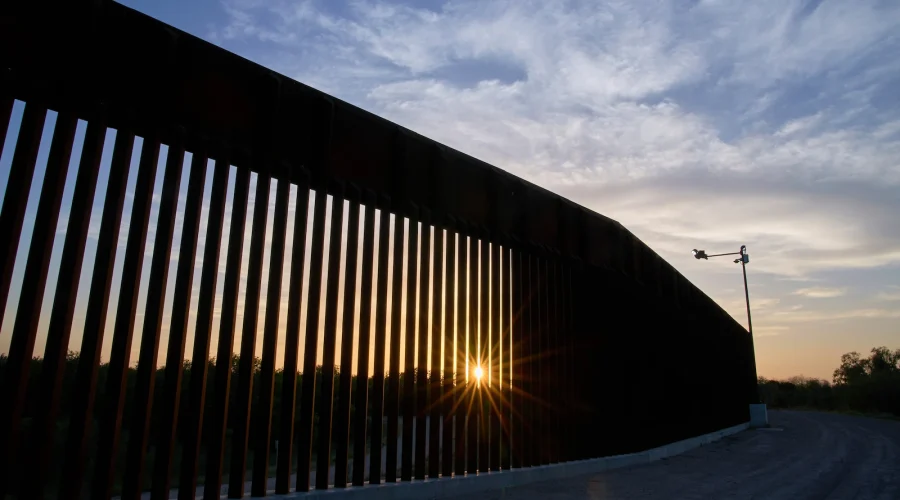
Cyberzenhub.com – A federal judge refuses to block Trump administration efforts to build a border wall across Native American territory. U.S. District Judge Richard Leon issued his decision on Friday, permitting the Trump administration to proceed with constructing 62 miles of international border wall on the Tohono O’odham Nation’s 2.8-million-acre reservation in Arizona. The judge declined to grant a temporary restraining order that would have halted construction activities pending further legal review.
The tribe’s legal challenge focused on whether the wall would fundamentally alter reservation boundaries without congressional approval. Leon determined that the Tohono O’odham Nation failed to demonstrate this burden of proof. The judge also dismissed arguments that the wall’s construction would amount to illegal trespassing on sovereign tribal lands.
And in any event, I find that the Government’s interests in securing the border, enforcing immigration laws, and ensuring public safety outweigh any surviving irreparable harms at this juncture, Leon wrote in his decision.
Why This Border Wall Matters to the Tohono O’odham
The Tohono O’odham reservation occupies a strategic position within the Sonoran Desert region of Arizona, sharing a 62-mile boundary with Mexico. This indigenous community includes more than 37,000 members, with thousands of families living on both sides of the international border. The wall’s construction threatens to disrupt centuries-old patterns of movement and cultural connection for these communities.
Tribal attorneys have emphasized that the border wall would cause extensive damage to the reservation’s landscape and sacred sites. Among the most significant concerns is the potential destruction of mountain peaks that hold spiritual importance for the O’odham people. The proposed infrastructure would also sever connections between O’odham communities and extended families living on opposite sides of the international boundary.
It would fray the ties between O’odham communities and families on opposite sides of the border, interfere significantly with O’odham religious rituals and practices, and destroy plant and animal resources sacred to the O’odham, the lawyers wrote in their legal filings.
Historical Context of the Land Dispute
The legal controversy has deep historical roots extending back to the early twentieth century. In 1907, President Theodore Roosevelt issued an executive proclamation that set aside a 60-foot-wide strip of public land running along the United States-Mexico boundary. This designated area became known as the Roosevelt Reservation, established as a buffer zone a full decade before the formal creation of the modern reservation.
Attorneys representing the Tohono O’odham Nation have argued that limiting wall construction to this narrow 60-foot corridor represents an unrealistic interpretation of the historical designation. They contend that the proposed infrastructure would extend well beyond this original boundary, encroaching upon lands that belong to the tribe under federal law.
What Happens Next in the Legal Battle
During a hearing held on July 22, Judge Leon expressed considerable doubt about whether existing U.S. statutes supported the tribe’s request for a preliminary injunction. He characterized the tribe’s position as an extraordinary legal claim that lacked precedent in comparable circumstances. Leon, who received his judicial appointment from Republican President George W. Bush, noted that he could not identify any previous court decisions addressing similar issues.
This is a novel case with novel issues, the judge stated during the proceedings.
The ruling carries implications beyond the immediate border wall construction project. It establishes a framework for how federal agencies may proceed with infrastructure development on tribal lands when congressional authorization has not been explicitly obtained. The decision also highlights the ongoing tension between federal immigration enforcement priorities and indigenous sovereignty rights.
Frequently Asked Questions
What is the Tohono O’odham Nation? The Tohono O’odham Nation is a Native American tribe with a 2.8-million-acre reservation in Arizona and parts of Mexico, home to more than 37,000 members.
How much border wall is being built? The Trump administration is constructing 62 miles of international border wall across part of the Tohono O’odham reservation.
Who is Judge Richard Leon? Judge Richard Leon is a U.S. District Court judge in Washington, D.C., appointed by Republican President George W. Bush.
What happens if the tribe appeals? The Tohono O’odham Nation may pursue further appeals or legislative solutions to protect their territory and modify the wall’s design and placement.
Why is this case legally significant? The ruling establishes precedent for federal infrastructure development on tribal lands without explicit congressional authorization, balancing immigration enforcement with indigenous sovereignty.