
Trump urges Iran to negotiate end to war or face further assassinations
Trump Urges Iran to Negotiate End to War or Face Further Assassinations
Donald Trump has called on Iranian leaders to engage in talks to halt the ongoing conflict, warning that failure to do so could lead to more targeted killings of key figures. The warning came as U.S. and Israeli forces escalated their military operations, with a recent strike on Bandar Abbas, Iran’s critical port, reportedly eliminating the Revolutionary Guards’ naval commander, Alireza Tangsiri, and several top-ranking officers. The attack intensified tensions in the region, with additional air raids reported near Isfahan, a hub for Iranian military installations and a nuclear facility targeted during a previous 12-day campaign.
Iran has rejected claims that it is seeking a deal, insisting it is not in a position of weakness. In response, the country launched retaliatory strikes across the Middle East, including in Tel Aviv, Modi’in, and Jerusalem, where Iranian missiles were intercepted by Israeli defenses. The Gulf region also saw clashes as Iran targeted Israeli and U.S. assets, while its air defenses managed to down incoming threats. Trump’s latest message was part of a broader critique of NATO allies and a reiteration of his belief that the war initiated last month has already been won.
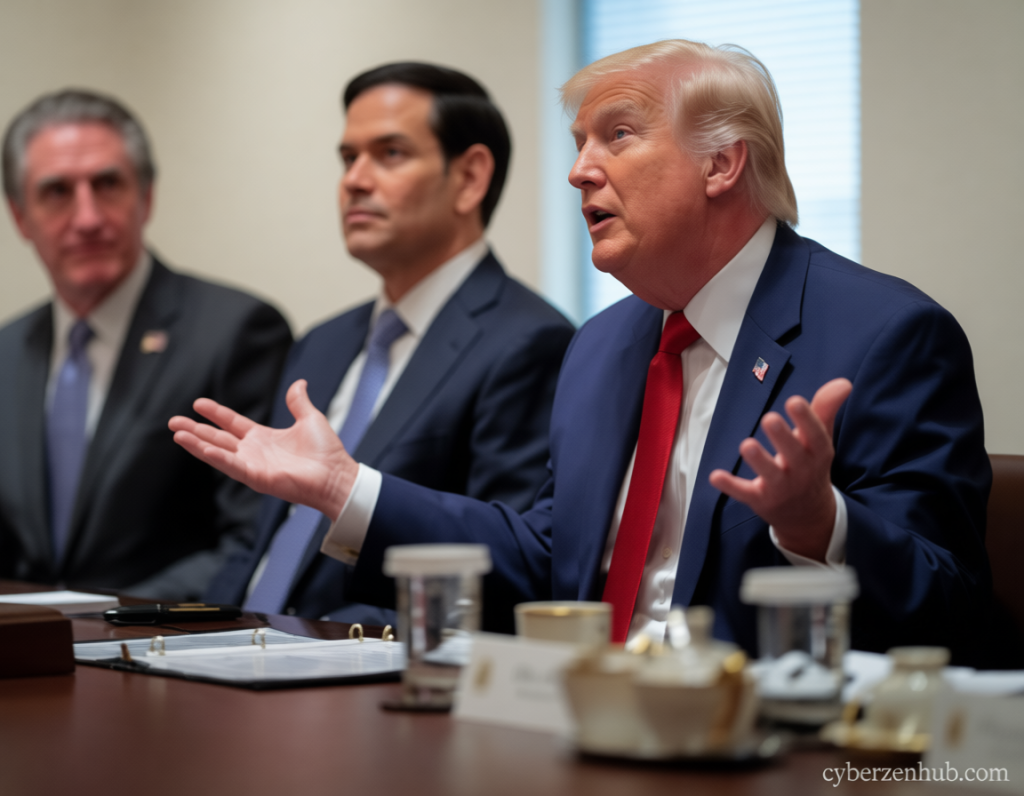
“They now have the chance to permanently abandon their nuclear ambitions and join a new path forward,” Trump stated during a White House cabinet meeting. “We’ll see if they want to do it. If they don’t, we’re their worst nightmare. In the meantime, we’ll just keep blowing them away.”
Trump emphasized that Iran’s desire for negotiations stems from its recent setbacks, citing the destruction of 10 oil tankers in the Strait of Hormuz as a sign of goodwill. However, the U.S. claims that the strait, a vital artery for global oil and gas trade, has been reopened by Tehran. The initial closure of the strait disrupted shipping and caused oil prices to rise, while threatening worldwide economic stability.
The conflict began with an Israeli airstrike that killed Ayatollah Ali Khamenei, leading to a wave of casualties among Iranian security officials and political leaders, including Ali Larijani, who headed the national security council. Mojtaba Khamenei, the new supreme leader, is believed to have sustained serious injuries in the attack that killed his father. U.S. Central Command’s Admiral Brad Cooper highlighted the significance of Tangsiri’s death, stating it signaled Iran’s navy toward “irreversible decline” and underscored the U.S. commitment to targeting naval assets.
Iran’s foreign minister, Abbas Araghchi, criticized the U.S. for its “double standards,” pointing out its support for Israel’s Gaza blockade while condemning Iran’s defense of the strait. He noted: “The U.S. backed Israel’s Gaza blockade … yet condemns Iran for defending itself in the Strait of Hormuz. Double standard: Israel’s crimes are OK while Iran’s defense against aggressors is condemned.”
Recent diplomatic efforts have seen Pakistan emerge as a crucial mediator, with its officials persuading the U.S. to ensure the safety of key Iranian figures like Mohammad Bagher Ghalibaf, the parliament speaker. Ghalibaf, whom Trump described as the “top man” in indirect negotiations, was reportedly removed from Israel’s hitlist. Despite this, Trump expressed doubt about achieving a lasting agreement, suggesting the conflict might continue unless Iran concedes to U.S. demands.