
Trump Orders Major Cutback to Joint U.S.-South Korea Military Drills, Pointing to Personal Rapport With Kim Jong Un
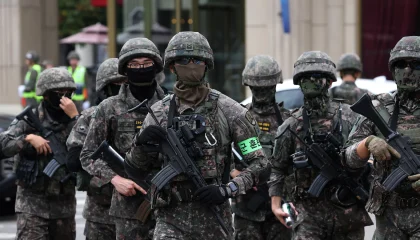
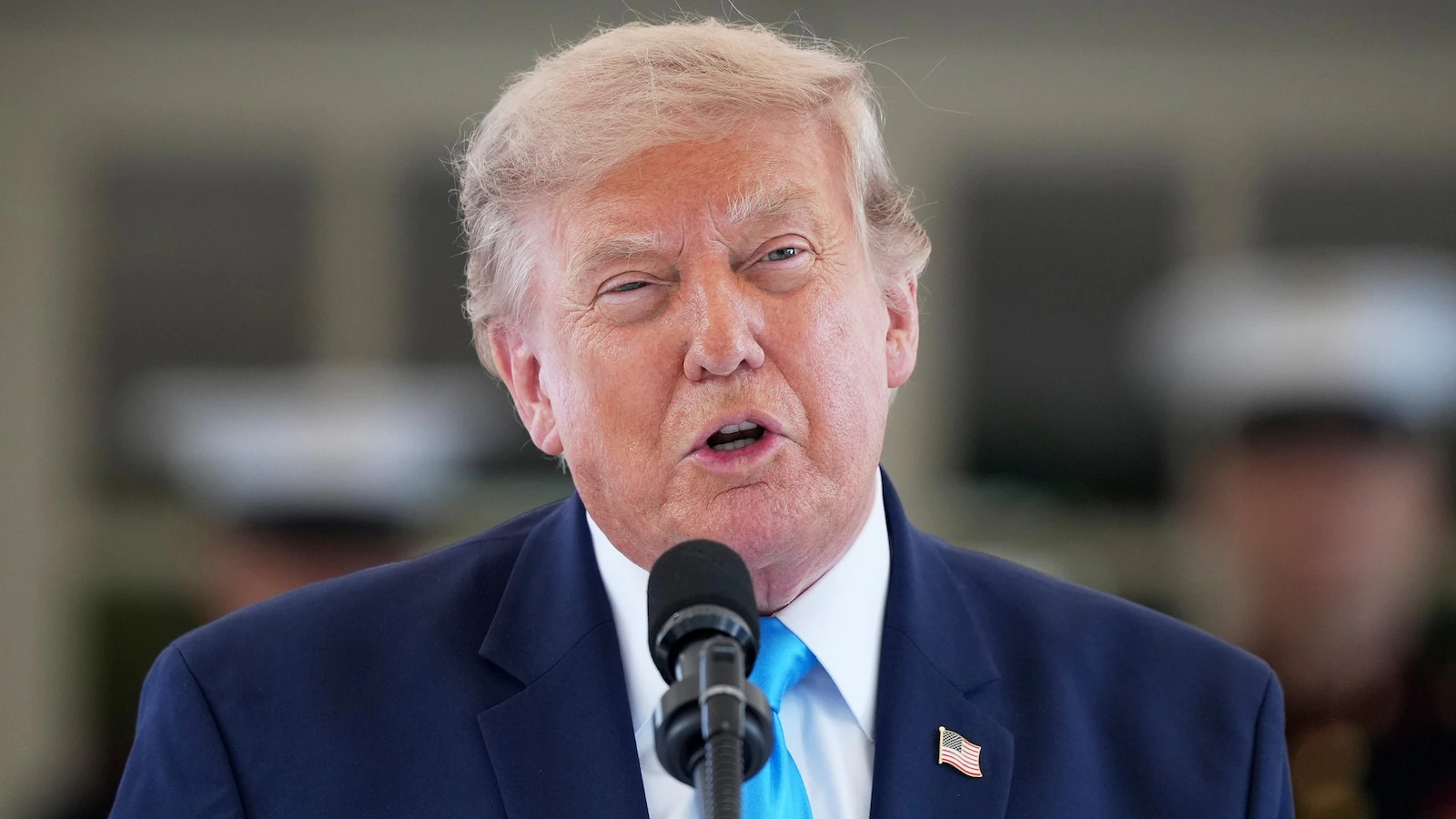
Cyberzenhub.com – President Donald Trump declared on Sunday that he has instructed Defense Secretary Pete Hegseth to scale down the annual joint military exercises conducted alongside South Korea, framing the decision around what he described as a warm personal bond with North Korea’s leader. The announcement landed just as the Ulchi Freedom Shield exercise was set to begin on Monday, prompting immediate clarification from Seoul that the drills already underway would proceed according to schedule.
“Based on my very good relationship with Kim Jong Un, of North Korea, I am not happy with the fact that the United States has, long ago, agreed to participate in Joint Military Exercises with South Korea,” Trump wrote on his social media platform. “Therefore, and based on the fact that it is too late to cancel, I have instructed Secretary of War, Pete Hegseth, to substantially reduce the Joint Military Exercises!”
The president characterized the large-scale drills as projecting “inappropriate and hostile” signals toward Pyongyang, a nation he insisted has behaved in an “unthreatening and respectful” manner toward Washington throughout his current presidency. The framing positions the exercise reduction not as a concession to North Korean pressure but as a deliberate signal of goodwill flowing from a personal diplomatic channel.
Seoul’s Immediate Reaction
A spokesperson for South Korea’s Ministry of Defense confirmed to ABC News that the Ulchi Freedom Shield exercise, already in motion, “will be carried on as planned.” The ministry’s Foreign Affairs counterpart offered a more diplomatic reading of the development, expressing the hope that the “friendly relationship between the leaders of the United States and North Korea will lead to meaningful dialogue between Washington and Pyongyang and pave the way for discussions aimed at advancing peace and stability on the Korean Peninsula.”
The ministry also noted that South Korea had “actively participated from the outset in international discussions aimed at securing a ceasefire in Iran and restoring freedom of navigation through the Strait of Hormuz,” a point Trump himself referenced in his post while acknowledging the Iran matter was “somewhat unrelated (?)” to his decision on the drills.
The Strategic Weight of the U.S. Garrison
Approximately 28,500 American service members remain stationed in South Korea, a footprint that has endured since the Korean War of 1950–1953 — a conflict that, despite decades of armistice, was never formally concluded by a peace treaty. The garrison has traditionally served two overlapping purposes: deterring a renewed cross-border confrontation and anchoring Washington’s broader strategic posture against Beijing, which has long functioned as Pyongyang’s principal patron and economic lifeline.
Any meaningful reduction in joint training and readiness exercises therefore carries implications well beyond the peninsula. Analysts have long noted that the scale of combined drills signals to both North Korea and China how seriously the alliance intends to maintain deterrence. A scaled-back posture, even if temporary, could be read in Beijing as a recalibration of American commitment in the region.
North Korea’s Nuclear and Missile Trajectory
The backdrop against which Trump’s announcement arrived is one of sustained North Korean escalation. In 2006, Pyongyang detonated its first nuclear device and has since expanded its atomic arsenal despite rounds of international sanctions administered by successive U.S. governments. Parallel to the nuclear buildup, a ballistic missile research program has produced warheads capable of reaching the continental United States, a capability that fundamentally altered the calculus of extended deterrence in the Pacific.
Since diplomatic talks with the Trump administration collapsed in 2019, North Korea has maintained a steady cadence of missile tests. Earlier this month, with the Ulchi Freedom Shield drills approaching, Pyongyang conducted two ballistic missile launches in rapid succession. On Friday, ahead of the exercise start date, North Korea threatened a “strong response” against both Washington and Seoul in reaction to the planned drills.
A Diplomatic History of Peaks and Valleys
Trump’s current posture toward Kim stands in sharp contrast to the opening months of his first term, when the two leaders exchanged barbed rhetoric and Trump repeatedly labeled Kim “little rocket man” while threatening Pyongyang with “fire and fury.” That period of friction eventually gave way to a brief détente: Trump and Kim met face-to-face three times between 2018 and 2019 — first in Singapore, then in Vietnam, and finally at the Demilitarized Zone dividing the two Koreas.
Those summits, however, did not produce the denuclearization outcome Trump had publicly declared as his objective. The breakdown of talks in late 2019 left the nuclear question unresolved and set the stage for years of incremental missile testing. In recent years, Pyongyang has also deepened its alignment with Moscow, adding another layer of complexity to any renewed U.S.-North Korea engagement.
Whether the current reduction in joint exercises represents a genuine shift in alliance posture or a tactical overture designed to reopen a stalled dialogue remains to be seen. What is clear is that the decision places the personal relationship between two heads of state at the center of a security arrangement that has shaped the Korean Peninsula for more than seven decades.
Related Reading
Frequently Asked Questions
What is Trump scales back US South Korea?
Trump scales back US South Korea is the main topic of this guide. The article explains the context, practical details, and next steps readers should understand.
Why does Trump scales back US South Korea matter?
Trump scales back US South Korea matters because readers are looking for a useful answer, not just a short summary. Good content should match search intent and help them decide what to do next.