Washington Bets on a Slow Squeeze as Iran Diplomacy Hits a Dead End
Cyberzenhub.com – The United States appears to be pivoting toward a prolonged economic campaign against Tehran, combining a naval chokehold on the Strait of Hormuz with a slate of fresh sanctions that Treasury officials say will be unprecedented in scope. With the 60-day memorandum of understanding that was meant to chart a path out of the war now lapsed and no successor framework in place, the administration’s posture has shifted from deadline-driven diplomacy to what insiders describe as a patient, grinding pressure strategy.
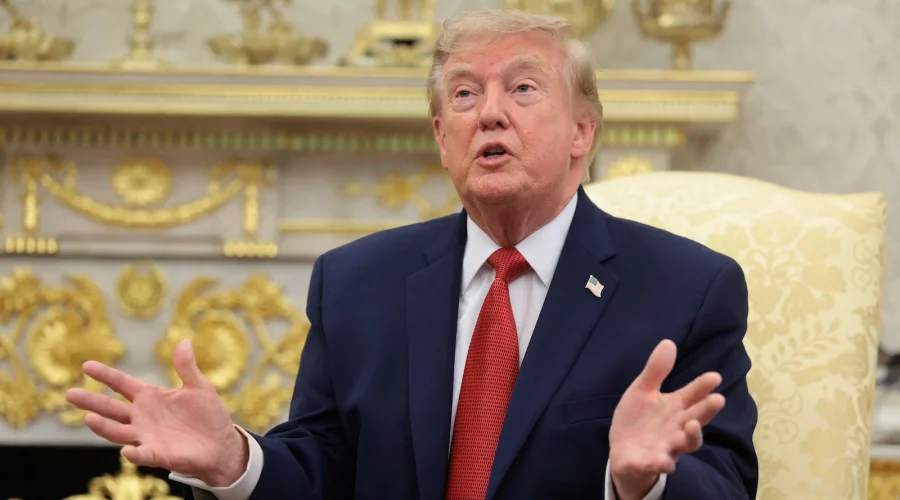
President Donald Trump made the change in tone explicit during a Monday interview with Fox News, telling the network he is “not in a hurry” to force a resolution. The remark marked a sharp departure from his earlier habit of setting countdown timers of mere days or weeks for a final settlement with Iran. On Tuesday, he compounded the signal with a social media post declaring there were “no talks or conversations going on” with Tehran — a flat contradiction of his own prior statements insisting the two sides were actively engaged.
The Expired Framework and the Vacuum It Left
The memorandum of understanding that expired was designed to lay the groundwork for ending hostilities and reopening the strait to normal commercial traffic. Its collapse has left both capitals without a shared negotiating architecture. Iranian officials had long maintained that no formal talks were underway, a position the president’s Tuesday post now effectively echoes. The result is a diplomatic vacuum in which economic coercion has become the primary instrument of statecraft.
What the Blockade Actually Does — and Does Not Yet Do
The naval blockade, intended to shut off Iranian exports through the strait, is a blunt instrument whose full economic bite may not register for months, according to analysts who track trade flows. Trump has publicly insisted the waterway remains “open and operating,” yet the operational picture tells a more constrained story. Energy Secretary Chris Wright disclosed on Saturday that roughly 30 vessels had transited the strait under military escort, moving in what he characterized as a clandestine manner.
Shipping-data firm Kpler reported that 28 vessels crossed the strait across a three-day window spanning Friday through Sunday. The firm’s broader tally put the weekly average at approximately 13 ships per day — a fraction of the more than 100 vessels per day that routinely passed through before the recent conflict. In practical terms, only a small slice of the world’s oil now moves through a waterway that once carried roughly one-fifth of global supply.
Sanctions Previewed: A “One-Two Punch”
Treasury Secretary Scott Bessent laid out the administration’s next move in a Newsmax interview last week, saying the president was prepared to order sanctions that would punish the Iranian economy at a scale he described as historically unmatched.
“We are going to apply measures like have never been seen in the history of economic isolation on a country,” Bessent said, adding that the package would form a “one-two punch” alongside the existing naval blockade.
The Treasury Department declined to comment on Tuesday when asked for specifics on timing or scope. The language suggests a coordinated escalation: the blockade strangling physical trade flows while new financial and sectoral restrictions tighten the screws on Iran’s ability to move money, purchase inputs, and service existing obligations.
An Economy Already Under Severe Strain
The targets of this pressure campaign are not abstract. Iran’s central bank has reported inflation hovering near 65 percent over the trailing twelve months, a figure that erodes household purchasing power and deepens public discontent. Bessent himself pointed to the widespread popular protests that swept the country last January, which he attributed to the economic pain following Trump’s earlier directive to impose “maximum pressure” measures on the Iranian economy.
Those protests, which erupted after months of compounding sanctions and currency depreciation, underscore how quickly external economic pressure can translate into domestic political stress — and how fragile the current equilibrium already is.
Tehran Pushes Back
Mohammad Ghalibaf, speaker of Iran’s parliament and the country’s lead negotiator with Washington, responded on X on Tuesday with pointed criticism. He called Bessent “way out of [his] league” and accused the United States of “trying to pull a rabbit out of their hat.”
“Americans think squeezing Iran harder will win concessions that were never part of the agreement,” Ghalibaf wrote, a reference that appears aimed squarely at the collapsed memorandum of understanding.
The exchange encapsulates the core disagreement: Washington views additional economic pain as leverage to extract new terms; Tehran regards the original framework as already settled and sees further pressure as bad faith rather than bargaining.
Beyond the Obvious: Who Else Gets Squeezed
Karen Young, a senior fellow at the Middle East Institute, noted that the administration has a wider menu of tools beyond direct sanctions on Iranian entities. She pointed to measures aimed at “squeez[ing] third parties and the interlocutors for money that gets to Iran” — a category that includes China, Gulf-state trading partners, banking intermediaries, so-called “Teapot” refineries that process Iranian crude, and shipping companies that carry the cargoes.
Such secondary-pressure tactics would extend the economic perimeter of the conflict well beyond Tehran’s own borders, potentially drawing in commercial actors who have so far managed to route around earlier restrictions. The ripple effects would reach commodity markets, shipping insurance premiums, and the financial plumbing of the Gulf region.
What Comes Next
With no active negotiation track, an expired framework, and a blockade whose full economic impact has yet to materialize, the coming weeks will test whether sustained pressure can alter Tehran’s calculus at a future table — or whether it simply hardens positions on both sides. The administration’s stated patience, combined with its previewed sanctions architecture, suggests it is prepared to let the squeeze run for an extended period before expecting movement. Whether that patience translates into leverage, or merely into prolonged economic pain without political payoff, remains the central open question of the standoff.
Related Reading
Frequently Asked Questions
What is Trump signals economic pressure in Iran?
Trump signals economic pressure in Iran is the main topic of this guide. The article explains the context, practical details, and next steps readers should understand.
Why does Trump signals economic pressure in Iran matter?
Trump signals economic pressure in Iran matters because readers are looking for a useful answer, not just a short summary. Good content should match search intent and help them decide what to do next.