National Security Question Trips Up Sen Graham
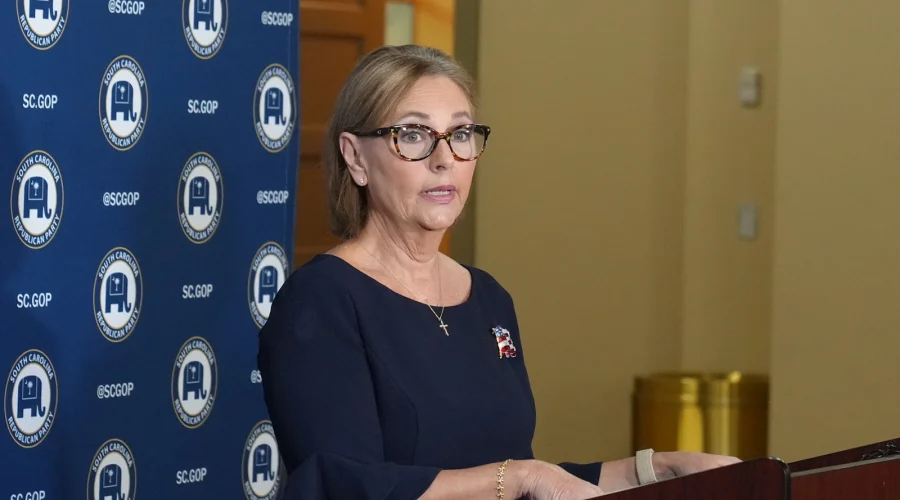
Cyberzenhub.com – The national security question trips up Sen. Darline Graham in a South Carolina debate moment that drew immediate national attention. Speaking at a Tuesday-night forum ahead of the state’s runoff vote, Graham conceded she was not deeply versed in the details of American national security strategy. She is locked in a head-to-head contest against Rep. Ralph Norman for a full term in the Senate seat her late brother Lindsey Graham once held.
The Exchange That Defined the Night
The moderator posed a direct question: do Taiwan and the South China Sea represent national security concerns for the United States, and what role should Washington play? Graham opted for candor over a rehearsed policy framework.
“I’m just going to be honest here. I’m not that informed on national security,” she told the audience, pausing before adding, “But I do support the military.”
The admission carried particular weight given how Graham first entered the chamber. Her brother, the late Sen. Lindsey Graham, died unexpectedly on July 11. The South Carolina governor appointed Darline to fill the vacancy on a temporary basis, and she subsequently chose to run for her own term in a special election. The runoff, scheduled for next week, will determine who holds the seat beyond the interim appointment.
Family Legacy and Institutional Loyalty
Graham’s answer was framed by familial obligation. Lindsey Graham had spent decades as one of the Senate’s most vocal advocates on foreign policy, particularly regarding China, Taiwan, and Indo-Pacific security. Darline acknowledged that lineage directly.
“My brother was in the Air Force for 33 years so I will do everything I can to support the military,” she said. “My dad was in the Army. I’m not a polished politician up here, national security is not my thing, not my area of expertise, but I do support the military.”
For voters watching, the distinction mattered. Graham was signaling that her foreign policy posture would rest on deference to the chain of command and to career military leaders’ strategic judgments, rather than on independent geopolitical analysis. The national security question trips up Sen. Graham moment thus became less about a policy gap and more about a candidate defining her role in terms of loyalty to institutions.
The Runoff Landscape and Presidential Endorsement
Both candidates advanced to the runoff after last week’s primary, in which neither secured the majority threshold needed to win outright. Graham carries the endorsement of President Donald Trump, a factor that has shaped campaign dynamics throughout the state. Norman, a longtime House member representing South Carolina’s Fourth District, has positioned himself as the candidate with deeper legislative experience on defense and foreign affairs committees.
The Senate seat carries particular weight in the current Congress. With the chamber divided narrowly, every vote counts, and the foreign policy questions that Graham struggled to answer on stage are precisely the kinds of votes that will define the seat’s influence in coming months. Issues ranging from Taiwan’s defense posture to freedom of navigation in the South China Sea routinely reach the floor, and the candidate who occupies this seat will be called upon to weigh in on each.
Why the Question Mattered
The moderator’s prompt about Taiwan and the South China Sea was not a random selection. Both subjects sit at the center of escalating tensions between the United States and China. Washington has repeatedly affirmed its commitment to the Taiwan Relations Act and to a rules-based order in the South China Sea, where overlapping territorial claims among Beijing, Manila, Hanoi, and other claimants have produced periodic standoffs. American naval patrols, arms sales to Taipei, and diplomatic consultations with regional allies all flow from the premise that these waters and this island are matters of direct U.S. interest.
For a candidate seeking a full Senate term, the inability to articulate a position on such questions invites scrutiny. Graham’s choice to answer with transparency rather than a scripted talking point was a calculated risk. Supporters may read it as refreshing honesty from a first-time officeholder still adjusting to the role. Critics may view it as evidence that the candidate lacks the policy depth expected of a senator who will vote on authorizations, confirmations, and treaty-related matters.
Frequently Asked Questions
What happened when the national security question trips up Sen. Graham in the debate? Graham acknowledged she was not deeply informed on national security strategy but affirmed her support for the military, citing her brother’s 33-year Air Force career and her father’s Army service as the basis for her position.
When is the South Carolina runoff election? The runoff is scheduled for next week following the debate. South Carolina voters will choose between Graham and Norman to fill the Senate seat beyond the interim appointment.
Why did the Taiwan and South China Sea question matter so much? Both topics sit at the center of U.S.-China tensions and routinely generate Senate votes on defense authorizations, arms sales, and diplomatic consultations. A candidate’s inability to articulate a position on them raises questions about readiness for the seat’s legislative responsibilities.
Does Graham have a presidential endorsement? Yes. Graham carries the endorsement of President Donald Trump, which has been a significant factor shaping campaign dynamics in the state throughout the primary and runoff cycle.