IndyCars Take Over the Streets of Washington, D.C. for a One-of-a-Kind 250th Anniversary Spectacle
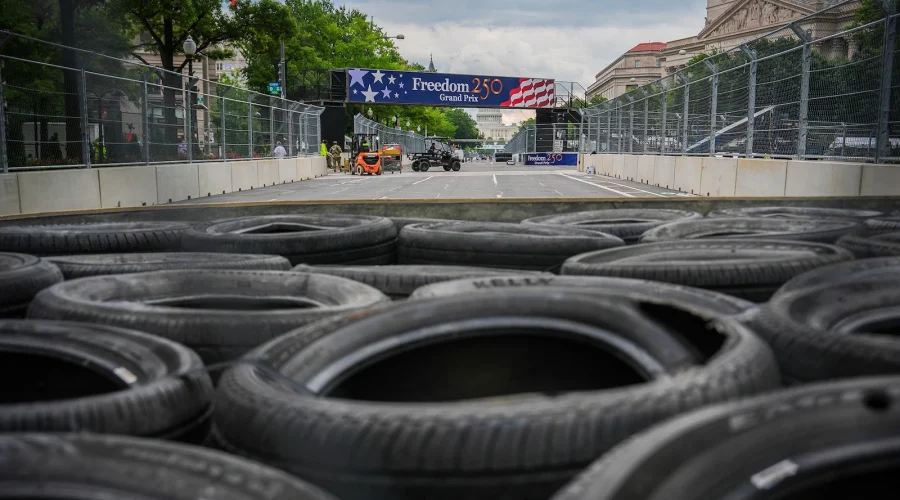
Cyberzenhub.com – For the first time in the history of American motorsports, the open avenues surrounding the National Mall will host full-speed IndyCar competition. This weekend, the normally stately thoroughfares of the nation’s capital become a 1.66-mile circuit where open-wheel machines scream past monuments and government buildings at velocities exceeding 190 miles per hour. The event, branded the Freedom 250 Grand Prix, marks the centerpiece of a broader series of festivities tied to the country’s 250th anniversary of independence.
Track Layout and Engineering Preparations
The circuit threads through two of the capital’s most recognizable corridors: Pennsylvania Avenue and Independence Avenue. On those long straightaways, drivers will push their twin-turbocharged V-6 powerplants to speeds more than seven times the posted 25-mph limit that governs everyday traffic in the area. The full race distance spans 250 miles, equivalent to 147 laps of the short loop, and organizers project a running time of roughly three hours. Fox will carry the event live to a national television audience.
Getting the streets ready required an enormous logistical operation. Dozens of blocks around the Mall have been sealed to regular vehicular traffic for the duration of the weekend. Concrete Jersey barriers and steel fencing line the course to shield both spectators and adjacent structures. Elevated viewing platforms have been erected at key sightlines, while temporary pedestrian bridges allow foot traffic to cross the closed sections. Beneath the surface, crews resurfaced the asphalt on every segment of the track and welded shut more than 200 manhole covers so that none could pop loose under the vibration of passing cars.
Roots in the 250th Anniversary
The race sits squarely within a wider program of patriotic observances marking two and a half centuries since the Declaration of Independence. President Donald Trump signed an executive order on January 30 that cleared the regulatory path for the event, writing in the document that the spectacle would “showcase the majesty of our capital city in celebration of the 250th anniversary of America’s independence.” The organizing entity, the Freedom 250 Grand Prix, describes itself on its website as “supported by a group of key partners,” among them IndyCar’s “promotional alliance with Monumental Sports & Entertainment.”
Trump has personally championed the race. In July, he invited the leading drivers slated to compete to the White House for a showcase event, where he posed alongside Felix Rosenqvist, David Malukas, and Alex Palou. Speaking at that gathering, the president declared:
“This will be like no other race ever. This will get the highest ever ratings of any such race.”
He added, with evident enthusiasm for the spectacle, that fans would witness “cars at a level they’ve never been at before, with cars racing more than 190 mph, and even higher than that, down Pennsylvania Avenue.”
Weekend Schedule and Spectator Access
The two-day program is entirely free to the public. Saturday opens with practice sessions for the NTT IndyCar Series field, followed by a qualifying run that sets the Sunday grid. An International Race of Champions (IROC) exhibition also figures on the Saturday card. The headline event arrives Sunday: the Freedom 250 Grand Prix of Washington, D.C., with the green flag dropping at approximately 1:10 p.m. Eastern Time on 3rd Street, directly in front of the U.S. Capitol Building.
Organizers anticipate roughly 140,000 attendees on each day. Approximately 100,000 complimentary tickets were distributed through a public lottery, ensuring broad access for residents and visitors alike. Among the expected participants is Rosenqvist, who captured the 2026 Indianapolis 500 earlier this season, lending the field considerable prestige.
Preservationists Sound the Alarm
Not every stakeholder is celebrating. The Living New Deal, a nonpartisan nonprofit devoted to preserving the legacy of Franklin Delano Roosevelt’s New Deal programs, has publicly raised concerns that sustained vibration from the race cars could compromise priceless fresco murals housed inside one of the historic structures bordering the course. Mary Okin, the organization’s assistant director, told ABC News that her group is particularly worried about the cumulative effect of repeated high-frequency oscillation on delicate painted surfaces.
The tension between spectacle and stewardship underscores a recurring question in urban motorsport: how much kinetic energy can a historic district absorb before its architectural fabric begins to suffer? No structural damage has been reported as of the weekend’s start, and organizers maintain that engineering analyses conducted before construction cleared the course for operation. Yet the preservationist critique persists, reminding viewers that the very buildings framing the race are themselves irreplaceable artifacts of American civic history.
Whatever the long-term debate, this weekend the avenues of the capital will belong to the engines. For three hours on Sunday afternoon, the sound of turbocharged V-6s will echo off the limestone of the Capitol, and the streets that have carried presidents and parades for two centuries will carry something else entirely: the raw, unfiltered velocity of open-wheel racing at the heart of the republic.
Related Reading
Frequently Asked Questions
What is What to know about this weekend?
What to know about this weekend is the main topic of this guide. The article explains the context, practical details, and next steps readers should understand.
Why does What to know about this weekend matter?
What to know about this weekend matters because readers are looking for a useful answer, not just a short summary. Good content should match search intent and help them decide what to do next.