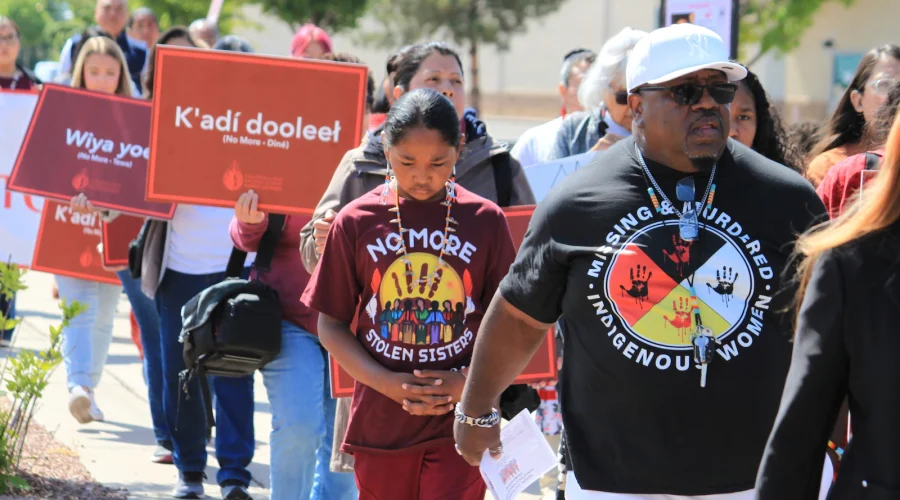
FBI Raises Minimum Bounty to $25,000 Across Dozens of Cold Cases on Tribal Lands
Cyberzenhub.com – For families who have waited years — sometimes decades — for answers about loved ones lost on tribal lands, the Federal Bureau of Investigation has moved to sweeten the pot. Beginning with a minimum reward of $25,000, the agency now attaches a guaranteed financial incentive to more than 50 unsolved homicides and missing-person investigations in Indian Country. The announcement, issued from Sioux Falls, South Dakota, marks a visible escalation in a long-running effort to crack cases that have lingered without resolution in communities where distrust of federal authorities runs deep.
The new floor applies broadly: most of the qualifying cases are fewer than ten years old, yet roughly a dozen have sat unsolved for over twenty years. At the close of 2025, the FBI’s National Crime Information Center logged just under 1,500 active cases involving missing Native Americans, though not every one of those escalates to a full federal investigation. The bureau works alongside the U.S. Bureau of Indian Affairs across nearly 200 reservations to pursue federal crimes on tribal land.
Why Families and Advocates Remain Skeptical
Money, advocates caution, does not erase the social and emotional barriers that keep witnesses silent. Mary Kathryn Nagle, an attorney and citizen of the Cherokee Nation of Oklahoma who represents families of missing Native Americans, described how federal investigators frequently “parachute in” to tight-knit communities where neighbors may stay quiet out of fear of retribution or longstanding distrust of outside authority. Larger payouts, she acknowledged, could nudge people toward speaking up and signal to grieving families that their cases are being treated with genuine urgency.
“We have people in Indian Country who know what happened to our relatives,” Nagle said.
Luana Ross, a Bitterroot Salish scholar and co-director of the Native Voices program at the University of Washington, offered a more pointed critique. Cash incentives, she argued, rarely translate into actual payouts and may do little to overcome the reluctance of community members to hand a friend or relative over to a criminal-justice system that has historically failed them.
“It is my opinion that in reservation communities, people would be extremely reluctant to turn a friend or relative into a criminal justice system that hasn’t served them well,” Ross said.
Voices from Families Still Waiting
Lisa Carlow’s father, Patrick Carlow Sr., a 73-year-old rancher well known in the Oglala community for mowing neighbors’ grass and spending time with his grandchildren, was found dead inside his Pine Ridge Reservation home in 2023. The reward attached to his case was raised to $25,000 in July, up from the previous $10,000. His family reported that phone calls began arriving with greater frequency after the increase, yet no answers have followed.
“Everybody’s scared in Oglala,” Lisa Carlow said. “So to me it’s like, okay, what do you guys know that you’re not saying?”
Her sister, JoDee Carlow, traced the silence to something older and deeper than any single investigation.
“I think that’s like deep-rooted within our people. It’s not just on Pine Ridge. It’s on every reservation,” JoDee Carlow said.
Lisa Carlow added the emotional toll of repeated false hope.
“It’s so hard to get your hopes up like that and think, ‘This is it, we finally got dad’s killer.’ And then nothing comes of it,” she said.
The FBI declined to provide an update on the Carlow investigation.
Other Cases Now Carrying the Higher Bounty
The agency’s recent announcement highlighted several investigations that now carry the elevated reward. Among them is the disappearance of 8-year-old Maleeka Boone, whom the bureau said was likely struck by a vehicle on the Navajo Nation. Another is the case of Emily Pike, a San Carlos Apache teenager whose body was recovered after she vanished from a group home in Arizona.
Lisa Foster, whose longtime friend Mona Renee Vallo was found dead following a suspected hit-and-run along historic Route 66 in Laguna Pueblo, New Mexico, in 2022, said she hopes the larger sum will rekindle investigative interest. Vallo, a member of the Confederated Tribes and Bands of the Yakama Nation, was remembered by Foster as a warm, energetic presence who could find joy in anything.
“Someone knows something there,” Foster said. “They have to. I mean, it’s weird that she went to work and then all of a sudden this happened to her.”
The Reagan Brothers: A Non-Native Case on Tribal Land
Not every case under the new minimum involves Native American victims. Matthew and Philip Reagan, two brothers from Ohio, were killed on the Navajo Nation while planning a visit to Canyon de Chelly National Monument during a trip to California. Authorities believe their SUV became mired in mud after a GPS malfunction sent them off course near the community of Sawmill. The FBI initially posted a $5,000 reward for information; that figure was later doubled and now reaches the $25,000 floor. Though the brothers were not tribal members, their deaths are listed on the bureau’s Indian Country cases website because they occurred on reservation land.
What the Higher Floor Means in Practice
The $25,000 minimum does not guarantee that every tip will be paid, nor does it resolve the structural challenges of investigating crimes in communities where social bonds make cooperation with outside law enforcement complicated. What it does represent is a formal acknowledgment by the bureau that these cases warrant a visible, standardized financial commitment — a signal aimed at both potential witnesses and families who have spent years wondering whether anyone outside the community still cares. Whether that signal is loud enough to overcome decades of institutional distrust remains the central question the new policy has yet to answer.
Related Reading
Frequently Asked Questions
What is FBI sets 25 000 minimum reward?
FBI sets 25 000 minimum reward is the main topic of this guide. The article explains the context, practical details, and next steps readers should understand.
Why does FBI sets 25 000 minimum reward matter?
FBI sets 25 000 minimum reward matters because readers are looking for a useful answer, not just a short summary. Good content should match search intent and help them decide what to do next.