White House Marks First Day of School by Celebrating the Dismantling of Its Own Education Agency
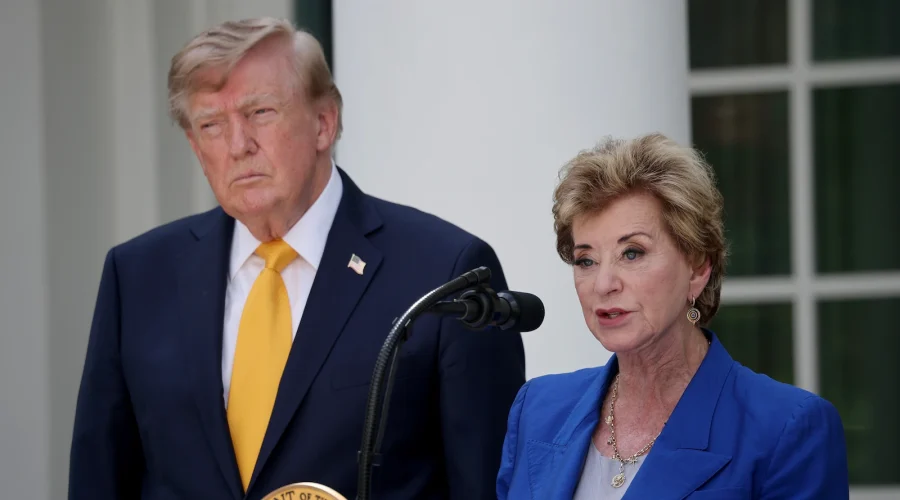
Cyberzenhub.com – As millions of American students laced up their backpacks and walked back into classrooms across the country on Monday, the administration chose to frame the occasion not around learning outcomes or classroom resources, but around the shrinking of the very federal agency tasked with overseeing K-12 policy. President Donald Trump and Education Secretary Linda McMahon gathered in the Rose Garden on the afternoon of August 24, 2026, for a “Back to School” ceremony whose centerpiece was a catalogue of what the White House calls victories in unwinding the Department of Education and redirecting its functions toward state-level control and private-sector alternatives.
A Rose Garden Agenda Built on Elimination
The event, which drew supporters of school-choice initiatives and parental-rights advocates alongside the two principals, was structured less as a celebration of the academic year ahead and more as a progress report on the department’s dissolution. Trump outlined provisions of the Working Families Tax Cuts Act that he said would channel public education dollars into family-directed scholarship programs. McMahon, meanwhile, presented her ongoing campaign to transfer federal education responsibilities back to the fifty state governments, a process she has described as her “final mission” at the agency.
The president had instructed McMahon, shortly after her confirmation, to use every legal mechanism available to render the department obsolete. Since then, the secretary has coordinated with multiple federal agencies capable of absorbing the department’s remaining functions and has reduced its workforce by roughly fifty percent, a contraction that has drawn sharp criticism from educators, civil-service advocates, and members of Congress.
Parental Rights as Policy Doctrine
McMahon’s remarks at the ceremony centered on a single governing principle: that parents, not school boards or federal regulators, should hold ultimate authority over their children’s schooling. She invoked the president’s directive to place families “back in the driver’s seats where they rightfully belong” and pledged to “defend parental rights like never before.”
“At his direction, we are working hand in hand with the Department of Justice to ensure no school district ever has more power over a child than their own parents,” McMahon said.
The framing resonated with advocates who have long argued that local school boards accumulate regulatory authority at the expense of individual family autonomy. Tiffany Justice, a parental-rights organizer, issued a statement praising the administration’s emphasis on choice.
“President Trump has always been crystal clear: every parent has the fundamental right to direct their children’s education,” Justice said. “Under his leadership, and with Secretary Linda McMahon at the helm, this administration is putting parents firmly in the driver’s seat — expanding real school choice so families, not bureaucrats, decide what’s best for their kids.”
School Choice: Promise and Controversy
School choice, the policy architecture at the heart of the administration’s education agenda, permits public education funds to follow individual students into whichever school or learning environment a family selects, whether public, private, charter, or homeschool. The White House has urged families to leave what it characterizes as underperforming public schools, citing what it describes as historic learning loss and stagnant test scores accumulated over recent years.
The concept has circulated in education policy debates for well over a decade, and its meaning shifts depending on the audience. For its proponents, school choice simply means restoring parental decision-making. For critics among public-education advocates, the mechanism functions as a funding drain: dollars that once supported neighborhood schools are redirected to private institutions, leaving public systems with fewer resources to serve the students who remain. The tension between those two readings has intensified as the administration accelerates implementation.
The Tax Credit Engine and State Waivers
The financial architecture underpinning the administration’s school-choice push rests on a charitable-donation incentive embedded in the president’s tax legislation. Beginning in 2027, individuals and businesses that contribute to scholarship funds covering K-12 expenses at public or private schools will receive a tax credit. The Education Department has spent more than a year lobbying state governors to opt into the model, positioning the credit as a voluntary, market-based alternative to direct federal funding streams.
In parallel, the agency has issued more than two dozen unrestricted waivers to individual states. These waivers release millions of dollars in federal education aid while stripping away specific federal compliance requirements, effectively reducing the conditions attached to government money. The administration argues that most American families will qualify to benefit from the resulting choice programs. Critics note that the waivers also diminish federal accountability mechanisms that historically safeguarded funds for students with disabilities, English-language learners, and other protected populations.
Political Fallout and Institutional Uncertainty
The department’s contraction has not gone unchallenged. A Democratic lawmaker has launched an impeachment effort against McMahon, arguing that her actions exceed the scope of her confirmed authority. Republican lawmakers, meanwhile, have occasionally sparred with the president over unrelated trade and immigration matters, but have largely supported the education agenda. The Iowa education-funding waiver, granted earlier this year, was described by the administration as a first-of-its-kind arrangement, signaling that additional states may receive similar tailored exemptions in coming months.
For the hundreds of thousands of students who returned to classrooms in Washington, D.C., and other major districts on Monday, the practical implications of the Rose Garden ceremony remain uncertain. What is clear is that the federal government’s role in shaping education policy, funding distribution, and accountability standards has been deliberately and rapidly narrowed, and that the administration intends to complete the process within the current term. Whether the resulting patchwork of state-level authority and private-sector scholarship programs will deliver the outcomes its architects promise, or whether it will leave vulnerable students without adequate support, will become the defining question of the coming school years.
Related Reading
Frequently Asked Questions
What is Trump admin touts efforts to shut?
Trump admin touts efforts to shut is the main topic of this guide. The article explains the context, practical details, and next steps readers should understand.
Why does Trump admin touts efforts to shut matter?
Trump admin touts efforts to shut matters because readers are looking for a useful answer, not just a short summary. Good content should match search intent and help them decide what to do next.