Devastating Flash Floods on the Nepal-Tibet Border Leave Hundreds Missing, Dozens of Americans Among Them
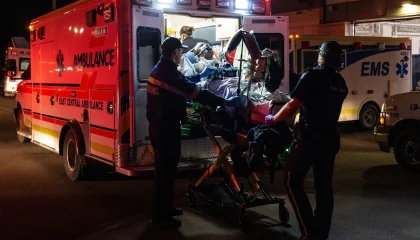
Cyberzenhub.com – A catastrophic wall of water ripped through the high-altitude corridor where Nepal meets Tibet’s autonomous region on Wednesday morning, killing at least 157 people and sending hundreds into unknown circumstances. Among the missing are at least 47 American tourists who lost all contact with the outside world when floodwaters surged through the Rasuwa district at roughly 8:40 a.m. local time on August 26, 2026. The event, captured in harrowing video clips that quickly spread across social platforms, represents one of the worst single-day natural disasters to strike Nepal’s northern frontier in recent memory.
The Scale of Destruction
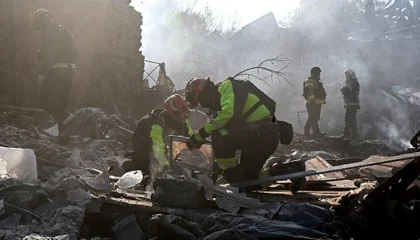
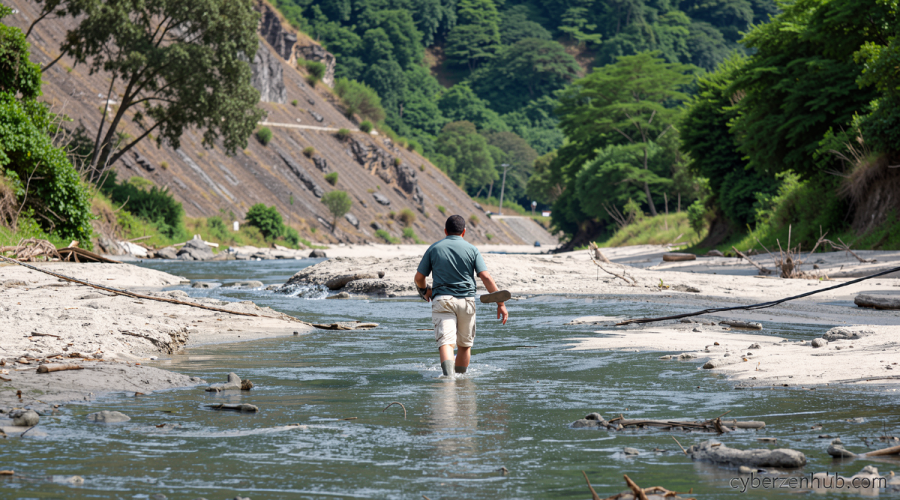
The Trishuli River, which carves through the region’s narrow valleys, overflowed with such force that entire structures were buried under mud and debris. Bridges spanning the waterway were torn apart, and roadways connecting remote settlements to the outside world were rendered impassable. In the Nuwakot district, including the town of Trishuli Bazar, muddy water stood waist-high along riverside properties, and residents were seen wading through streets thick with silt. Power infrastructure was knocked out across the affected zone, compounding the difficulty of coordinating relief efforts in what is already a geographically isolated stretch of terrain.
Nepali police tallied 157 bodies recovered from the flood-affected zones by the time authorities issued their initial count. China’s state-run Xinhua News Agency separately reported three fatalities on its side of the border. Officials emphasized that identification work was still underway and that the final death toll could rise as rescue teams reach more remote pockets of the valley.
Missing Counts and International Dimensions
The Prime Minister’s Office of Nepal stated that at least 403 foreign nationals and 93 Nepali tourists were unaccounted for in the immediate aftermath. Chinese media outlets put the missing figure at 265. The Nepali Tourism Board singled out at least 47 American visitors who had been traveling through the Rasuwa region when the waters arrived, noting that all had gone silent since the event.
The U.S. State Department acknowledged that the number of Americans affected had shifted throughout the day as information trickled in from multiple channels. A department spokesperson issued a statement reading:
“Department of State staff in Washington, D.C. and Kathmandu are monitoring the situation and are in touch with the Government of Nepal. The United States stands ready to provide assistance.”
No confirmed figure for American casualties or missing persons had been finalized as of the latest updates.
The Isha Foundation Group and Mount Kailash Pilgrims
A large contingent of travelers was caught at an immigration checkpoint straddling the Nepal-Tibet border when the floodwaters arrived. Sadhguru, the Indian spiritual leader and entrepreneur who heads the Isha Foundation, posted on social media that 77 individuals on tours organized by his organization were at that checkpoint at the moment of impact. The foundation confirmed to ABC News that 22 of those 77 were American citizens. Many in the group had been en route to or returning from Mount Kailash, the 6,638-meter Himalayan peak that anchors one of Hinduism’s most sacred pilgrimages, the Kailash Mansarovar Yatra. For centuries, Hindus have regarded the mountain as the earthly dwelling place of Lord Shiva, making the annual trek a deeply significant spiritual undertaking for devotees across South Asia and the diaspora.
The Isha Foundation, headquartered in India, maintains a satellite center in McMinnville, Tennessee. A group coordinator told ABC News that the organization had been in direct contact with family members in the United States, though details on the well-being of individual travelers had not been released.
Fishtail Tours and Travel
Three additional American nationals were listed as traveling with a Nepali outfitter called Fishtail Tours and Travel. The company confirmed to ABC News that three U.S. citizens were among its missing clients. The agency stated that efforts to locate and rescue the group were ongoing but declined to offer specifics about their last known position or condition.
Government Response and Rescue Operations
In a statement shared on social media, the office of Nepal’s prime minister expressed “deep sorrow” over the loss of life:
“Offering heartfelt tribute to all those who lost their lives in this natural disaster, it extends its sincere condolences to the bereaved families and relatives.”
The prime minister’s office added that search-and-rescue operations conducted by the Nepali Army would continue through the night, deploying personnel into areas where daylight had made ground-level assessment impossible. Local tourism authorities and law-enforcement agencies were described as working to verify the whereabouts and safety status of every registered visitor in the affected corridor.
Why This Corridor Is So Vulnerable
The Rasuwa district sits in a steep, glacially carved valley system where monsoon-season rainfall can trigger rapid snowmelt and debris flows within minutes. The Trishuli River, a major tributary of the Ganga system, has a history of sudden, violent flooding when upstream ice dams or saturated slopes release stored water all at once. The narrowness of the valley floor means that even a modest rise in water level can inundate the only available road and river crossings, trapping communities and tourists with little warning. The proximity of the Nepal-Tibet border compounds the challenge: rescue assets must coordinate across two national jurisdictions, and the immigration checkpoint where many pilgrims gather becomes a natural bottleneck during peak trekking season.
For Nepal, whose economy depends heavily on trekking and pilgrimage tourism, a disaster of this magnitude in a single morning carries implications well beyond the immediate human toll. Operators, guides, and local communities along the Rasuwa–Trishuli corridor face questions about infrastructure resilience, early-warning systems, and the capacity of mountain rescue units to respond before the next monsoon pulse arrives.
Related Reading
Frequently Asked Questions
What is Hundreds missing including 47 Americans in deadly?
Hundreds missing including 47 Americans in deadly is the main topic of this guide. The article explains the context, practical details, and next steps readers should understand.
Why does Hundreds missing including 47 Americans in deadly matter?
Hundreds missing including 47 Americans in deadly matters because readers are looking for a useful answer, not just a short summary. Good content should match search intent and help them decide what to do next.