Tennessee Mourns the Loss of Its Most Beloved Daughter
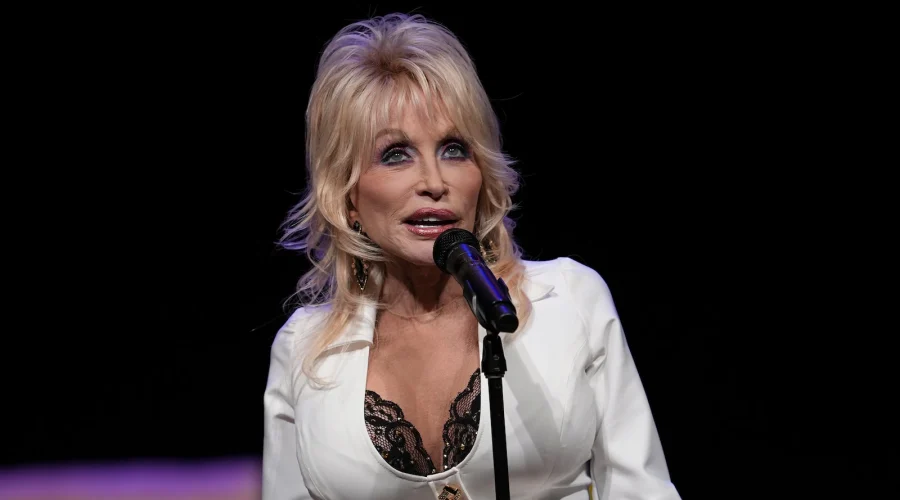
Cyberzenhub.com – The state of Tennessee has been gripped by grief following the passing of Dolly Parton, the country music icon whose voice shaped the cultural identity of the region for more than five decades. Parton died at age 80 on Tuesday in Nashville after what her publicist described as a “brief battle” with cancer. Within hours of the announcement, tributes began accumulating at landmarks across the state — from the pink-lit façade of the Nashville Metropolitan Courthouse to the small mountain town where she was born, from the steps of the Sevier County Courthouse to the spot where her star sits embedded in the Music City Walk of Fame in downtown Nashville.
For a state that has produced countless musicians, Parton’s departure carries a weight that goes beyond the entertainment industry. She was, in the words of Tennessee Governor Bill Lee, “Tennessee’s favorite daughter.” When she celebrated her 80th birthday on January 19, Lee declared the date a statewide Dolly Parton Day, a gesture that underscored how deeply her identity was woven into the fabric of the state’s civic life.
From a Mountain Kitchen to the World Stage
Parton grew up in Pittman Center, a tiny community nestled in the Appalachian foothills of Sevier County, one of twelve children in a family that struggled to put food on the table. She left that world immediately after finishing high school, heading south to Nashville with little more than ambition and a guitar. In a 1977 conversation with ABC News correspondent Barbara Walters, early in her career, she described the leap from a backwoods kitchen to the recording studios of Music City as both terrifying and inevitable.
What followed was a career that made her one of the most commercially successful and widely admired entertainers of her generation. Songs like “Jolene” became global touchstones, and her first taste of mainstream fame came more than 50 years ago on the stage of the Grand Ole Opry, the institution that has served as Nashville’s musical gateway since the 1920s. Yet throughout decades of international stardom, Parton never severed the thread connecting her to the state that raised her.
A Lifelong Commitment to Tennessee
In the 1980s, she opened Dollywood, a theme park in Pigeon Forge that has since become one of the state’s most visited attractions, drawing millions of visitors annually and anchoring the local economy of the Smoky Mountains region. Beyond the park, she donated millions of dollars over the years to programs supporting fellow Tennesseans, from education initiatives to disaster relief.
Her most enduring philanthropic legacy is the Imagination Library, a program that mails a free book each month to every child in a given community from birth through age five, regardless of family income. The initiative was born in her home county of Sevier County, inspired by her father, Robert Lee Parton, who never learned to read or write. What began as a local literacy project eventually expanded across the United States and into other countries, reaching millions of young readers.
Nashville Mayor Freddie O’Connell captured the city’s gratitude in a statement issued Tuesday:
“While Nashville wasn’t her original home, she helped change it forever with an incredible, unprecedented thing: filling a little library in every childcare center in the city with books from her Imagination Library. She’s given Nashville — and the world — story and song and done so in a way that she remained universally beloved in challenging times.”
Answering When the State Needed Her Most
Parton’s generosity was never confined to peacetime. When catastrophic wildfires swept through East Tennessee in 2016, displacing thousands of families, she established the My People Fund, which delivered $1,000 per month for six months to households that had lost their homes. In 2024, after Hurricane Helene battered the state’s mountain communities, she announced a $1 million personal donation to relief efforts, matched by another $1 million from her business ventures.
During the pandemic, she contributed $1 million to Vanderbilt University Medical Center in 2020 to support COVID-19 research, followed by a second $1 million gift two years later directed toward pediatric infectious disease research. Each of these acts reinforced a pattern: when Tennessee faced a crisis, Parton answered with resources and visibility.
The Final Chapter, Written at Home
Fittingly, her last public in-person appearance before her death took place in Tennessee. In June, she made a surprise visit to the grand opening of Dolly’s Tennessean Travel Stop, a gas station and restaurant in Cornersville, a town roughly 60 miles from Nashville. The appearance was brief, warm, and unmistakably local — a woman stepping out of the spotlight to stand beside the people who had shaped her.
Now, as flowers pile up beside her statue on the courthouse lawn in Sevier County and as fans lay bouquets at the base of her Walk of Fame star, the state is processing the loss of a figure who transcended genre, geography, and generation. Tennessee remembers not merely a singer or a businesswoman, but a daughter who carried her mountain roots into every room she entered and never stopped giving back to the soil that made her.
Related Reading
Frequently Asked Questions
What is After Dolly Parton s death Tennessee?
After Dolly Parton s death Tennessee is the main topic of this guide. The article explains the context, practical details, and next steps readers should understand.
Why does After Dolly Parton s death Tennessee matter?
After Dolly Parton s death Tennessee matters because readers are looking for a useful answer, not just a short summary. Good content should match search intent and help them decide what to do next.