Michigan Senate Candidate El-Sayed Issues Formal Apology to Jewish Caucus Over Synagogue Attack Remarks
Cyberzenhub.com – With weeks remaining before Michigan voters head to the polls in a contest that could tip the balance of power in the U.S. Senate, Democratic candidate Abdul El-Sayed took the stage at a party convention in Lansing on Saturday to deliver a pointed apology to the state’s Jewish Democratic Caucus. The gesture came after months of friction over remarks he made in March following a deadly attack on a Detroit-area synagogue, remarks that many in the Jewish community felt blurred the line between offering context and excusing violence.
The Apology in Lansing
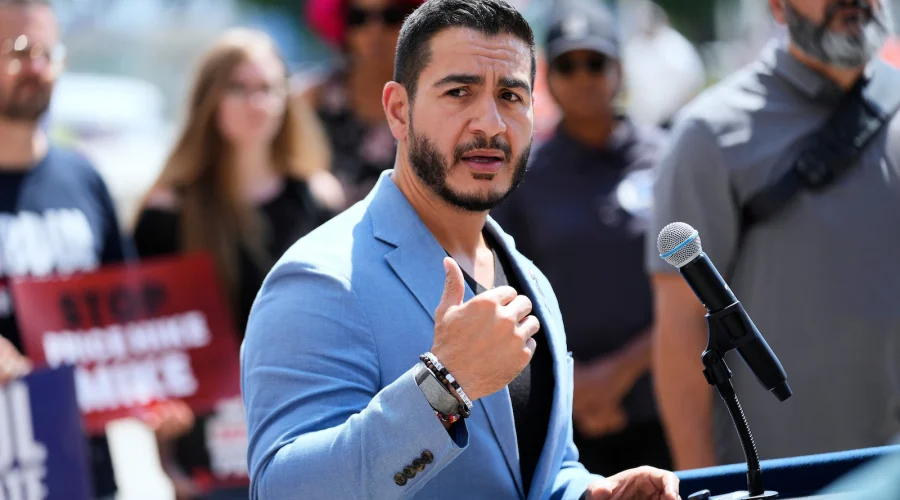
Speaking directly to caucus members after addressing the broader convention audience, El-Sayed acknowledged that his words had landed differently than he intended. He framed the moment as one of personal accountability rather than political calculation.
“My comments may have been misconstrued to justify something I did not mean to justify,” El-Sayed told reporters gathered outside the caucus session. “To anyone who feels like my comments might have been hurtful, I’m really sorry. That was not my intention.”
The apology represented the most recent in a series of conciliatory moves El-Sayed has made since winning a bruising Democratic primary in which he unseated incumbent U.S. Rep. Haley Stevens. That primary left deep wounds within the party, and El-Sayed has spent the months since working to stitch together a fractured coalition ahead of the general election.
What Happened at Temple Israel
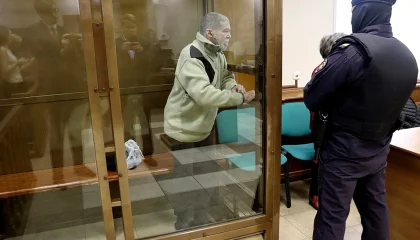
The controversy traces back to March, when Ayman Mohammad Ghazali drove his vehicle into the entrance of Temple Israel synagogue in a Detroit suburb, then opened fire on a security guard stationed at the building. Ghazali subsequently took his own life. The attack sent shockwaves through Michigan’s Jewish communities and prompted an outpouring of statewide solidarity.
In the days before the shooting, Ghazali had lost four family members in an Israeli airstrike on Lebanon. That personal tragedy became the backdrop against which El-Sayed’s public response was judged.
The Original Remarks and the Backlash
In a video statement released shortly after the attack, El-Sayed condemned the violence and called for prayers for the victims. He then added the phrase “hurt people hurt people,” a line widely interpreted as a reference to Ghazali’s family losses in Lebanon. While many viewers read the remark as an expression of empathy, a significant number of critics — including voices within Michigan’s Jewish community and national Democratic leadership — argued that invoking the attacker’s personal grief in the immediate aftermath of a synagogue shooting risked normalizing the act itself.
El-Sayed, on Saturday, offered his own retrospective reading of the moment:
“What I was trying to do was offer context for why it happened, but it wasn’t the time for context,” he said. “And you don’t ever want to trample somebody’s pain.”
The distinction he drew — between explaining causation and excusing behavior — did not fully assuage those who felt the timing and framing were themselves the problem. For many in the Jewish community, the issue was not whether Ghazali’s grief was real, but whether invoking it publicly, within hours of a shooting at a house of worship, sent the wrong signal to a community already reeling from fear.
A Broader Pattern of Controversy
The synagogue-attack remarks were not an isolated stumble. El-Sayed’s campaign has also been dogged by questions over his association with Hasan Piker, a popular internet commentator whose own public statements have drawn antisemitism accusations from multiple quarters. El-Sayed has not formally distanced himself from Piker, and that choice has been cited by opponents and some party insiders as evidence that he underestimates how closely his social circle is scrutinized.
Together, these episodes have created a narrative — particularly among Republican strategists — that El-Sayed is out of step with Michigan’s Jewish voters, a constituency that has historically turned out reliably for Democrats. The Saturday apology was, in practical terms, an attempt to close that gap before the general-election window narrows.
What Is at Stake
El-Sayed’s opponent in the general election is Republican nominee Mike Rogers, a former congressman and former Army colonel who has made national security and immigration central themes of his campaign. Michigan’s two Senate seats are among the handful of races that will ultimately determine which party controls the chamber in January. A loss by El-Sayed would hand Republicans a firmer grip on the Senate and, by extension, greater latitude to advance their legislative agenda.
For El-Sayed, the calculus is straightforward: he cannot afford to lose a single bloc of voters who feel personally slighted by his past words. The Lansing apology, delivered face-to-face to the very group most affected, was designed to signal that he hears their concerns and intends to govern with their trust intact. Whether that signal is sufficient remains to be tested at the ballot box in November.
Related Reading
Frequently Asked Questions
What is El Sayed apologizes for comments responding?
El Sayed apologizes for comments responding is the main topic of this guide. The article explains the context, practical details, and next steps readers should understand.
Why does El Sayed apologizes for comments responding matter?
El Sayed apologizes for comments responding matters because readers are looking for a useful answer, not just a short summary. Good content should match search intent and help them decide what to do next.