Driscoll Resigns After Warning White House on Hegseth
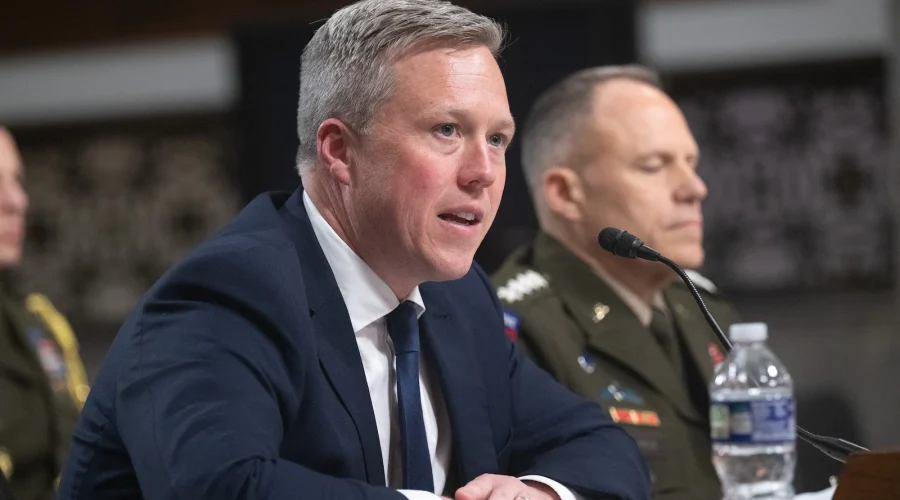
Cyberzenhub.com – The Army secretary frequently warned White House officials about Defense Secretary Pete Hegseth’s sweeping personnel purges before ultimately submitting his resignation last Monday. Dan Driscoll, the civilian head of the U.S. Army, stepped down during an already strained operational window in which the service is absorbing the fallout of the ongoing Iran conflict while fielding a backlog of modernization demands. His departure leaves the largest ground force in the world without its top civilian leader at a moment when institutional stability matters most.
Months of Escalating Friction
According to multiple people familiar with internal communications, Driscoll did not file a single complaint and walk away. Instead, he maintained a sustained pattern of alerts directed at the president’s inner circle — including Chief of Staff Susie Wiles — flagging what insiders described as Hegseth’s indiscriminate stripping of experienced officers from key posts. The Army secretary frequently warned White House aides that the pace and breadth of these removals were destabilizing command structures across the force.
A second thread of concern involved Hegseth’s attempts, described by Driscoll as unprecedented, to block officers who had completed full vetting from reaching the Army’s most senior ranks. In practical terms, qualified candidates were frozen out of career progression without any transparent rationale.
The Resignation Conversation
When Driscoll formally tendered his resignation, he spoke directly with President Donald Trump. Two sources familiar with the exchange said Driscoll told the president that Hegseth’s chaotic removal of some of the Army’s most seasoned commanders — often executed with little or no public explanation — was degrading the force and shrinking the bench of officers available for future senior commands. Trump, one source noted, appeared taken aback by the scale of the problem.
“This is a big hit to the Army,” one senior defense official said, speaking on condition of anonymity because the person was not authorized to brief the press.
The scale of the personnel upheaval is measurable: more than two dozen senior U.S. military officers have been dismissed or effectively sidelined by Hegseth without any public accounting of the reasons behind their removals.
Official Responses Project Unity
The White House moved quickly to close ranks. Spokesperson Anna Kelly declared that the president retains “complete trust in Secretary Hegseth, who is doing an incredible job leading the Pentagon,” and added that outcomes in recent military operations, including the war in Iran, “speak for themselves.”
Pentagon spokesperson Sean Parnell offered a parallel statement noting that Hegseth “communicates with the president daily and is grateful to serve a commander-in-chief who loves our military,” and that the secretary “takes great pride in keeping the White House informed.”
An Unconventional Pick That Found Its Footing
Driscoll’s arrival at the Pentagon had been widely viewed as an outlier appointment. Before his nomination he carried no national-security portfolio; his professional life had centered on venture capital and Republican political work. His military service was brief — a cavalry officer assigned to the 10th Mountain Division from 2007 to 2010, deployed to Iraq in 2009, and separated as a first lieutenant, a junior rank that afforded limited exposure to large-scale operational planning.
In 2020 he ran unsuccessfully for North Carolina’s 11th Congressional District, finishing sixth in a crowded Republican primary. He subsequently advised the Trump-Vance transition team and worked for the Republican National Committee before his Pentagon appointment. Yet within months of taking office, Driscoll had earned bipartisan goodwill on Capitol Hill and positioned himself as a driving force behind Army modernization — updating doctrine, integrating robots and drones, and weaving emerging technologies into the force structure.
Frequently Asked Questions
Why did the Army secretary resign?
Driscoll cited sustained friction with Defense Secretary Hegseth over personnel decisions. He had repeatedly warned the White House that the pace and scope of officer removals were destabilizing the institution, and that vetted candidates were being blocked from senior ranks without transparent justification.
When did Driscoll submit his resignation?
He submitted his resignation on a Monday last week, during an active operational period tied to the ongoing conflict with Iran.
How many senior officers were affected by Hegseth’s personnel actions?
More than two dozen senior U.S. military officers have been dismissed or effectively sidelined without any public accounting of the reasons behind their removals.
What was Driscoll’s military background?
He served from 2007 to 2010 as a cavalry officer in the 10th Mountain Division, deployed to Iraq in 2009, and separated as a first lieutenant. Before his Pentagon role he worked in venture capital and Republican politics, advised the Trump-Vance transition team, and served with the RNC.