Tarrant County Cuts 92 Polling Sites Amid Public Outcry
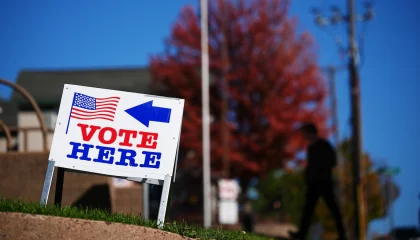
Cyberzenhub.com – Amid public outcry, Tarrant County commissioners voted Tuesday to slash 92 Election Day polling locations, shrinking the county’s ballot-box footprint from 316 sites to 224 ahead of the 2026 midterm cycle. The five-member Commissioner’s Court approved the reduction in a closed-door session after weeks of heated public comment, during which dozens of residents argued the cuts would disproportionately burden elderly voters, working families, and neighborhoods with limited transit access.
A Partisan Split on the Floor
The vote tracked the court’s ideological lines. County Judge Tim O’Hare and commissioners Matt Krause and Manny Ramirez, all Republicans, supported the measure. Democratic commissioners Alisa Simmons and Rodrick Miles Jr. dissented, a split that observers expect will invite legal scrutiny in the months before Election Day.
The timing sharpened criticism. Roughly a year earlier, the same board had approved a separate plan eliminating nearly half of the county’s early-voting sites for the 2025 cycle. Opponents framed the two actions as a coordinated effort to compress voting infrastructure; supporters called them routine administrative housekeeping.
Residents Take the Microphone
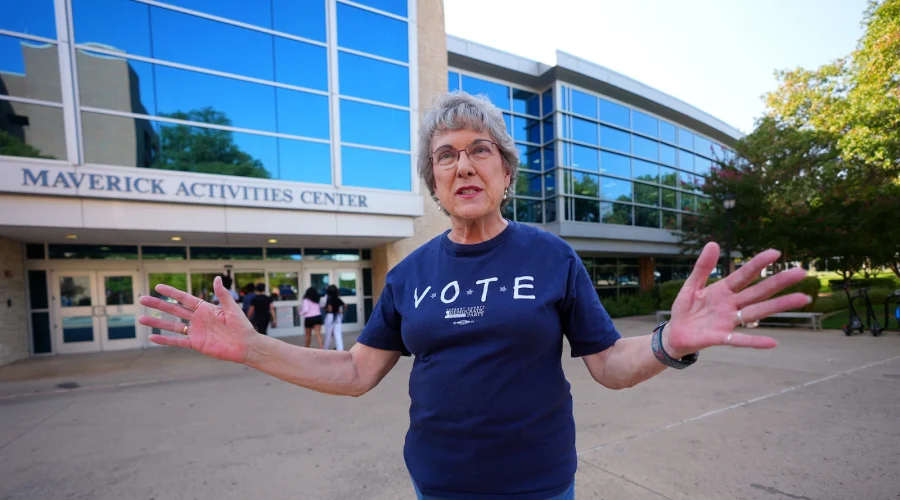
Public meetings over the preceding month became venues for emotional testimony. Catherine Godby, a local resident who spoke during one session, cast the debate in moral rather than logistical terms.
“People have fought and died for the right to vote,” Godby said. “It’s wrong to suppress that right. You’re on the wrong side of history. You’re dishonoring what it means to be an American, and more than that, you’re losing your humanity.”
Her words echoed a broader sentiment among opponents: that trimming access points, even incrementally, signals who the system expects to show up at the ballot box and who it does not.
The Administration’s Justification
In a Monday statement, O’Hare laid out the arithmetic behind the plan. Fifty-four polling places would remain above the state-mandated minimum for Election Day; average spacing between early-voting sites would settle at 2.85 miles, and average spacing between Election Day locations at 1.56 miles.
“All of this is accomplished without the wasteful practice of placing polling sites directly across the street from one another,” O’Hare said.
He added that certain closures reflected practical realities — buildings that had ceased operating and facilities failing Americans with Disabilities Act accessibility standards. State law requiring early-voting equipment to be stored in a locked room, he noted, would continue to be honored.
“Every voter deserves a safe, accessible location with secure equipment, and this plan does that,” O’Hare said.
The Dissent’s Case
Rodrick Miles Jr. countered in his own Monday statement, arguing that a growing electorate makes the cuts indefensible.
“Our population hasn’t shrunk. Our electorate hasn’t shrunk. I need a clear, convincing explanation for why a growing county is providing meaningfully fewer places to vote, and I haven’t gotten one yet,” Miles said. “The legal minimum cannot become the moral standard.”
Simmons amplified the point at a Sunday press conference joined by Democratic U.S. Senate candidate James Talarico, who is running against a Republican opponent in November.
“The minimum is never my standard, and it should not be a standard of a county this size,” Simmons said.
Why the Numbers Matter Locally
Tarrant County, which encompasses Fort Worth and surrounding suburbs, is home to more than 2.2 million residents and roughly 1.3 million registered voters. Its demographic profile — approximately 40 percent white, 31 percent Hispanic or Latino, 19 percent Black, and 7 percent Asian — means that site placement intersects with language access, transit availability, and historical patterns of voter suppression in ways a simple distance metric does not capture.
Frequently Asked Questions
How many polling locations will remain after the cut?
The county will operate 224 Election Day sites, down from 316. Officials say the remaining locations still exceed the state-mandated minimum by 54 sites.
When does the reduced map take effect?
The trimmed configuration applies to the 2026 midterm election cycle. Voters should check the county’s election office website closer to Election Day for their assigned location.
Can residents challenge the decision?
Dissenting commissioners have signaled intent to pursue legal or political remedies. Voters who believe their neighborhood lost access unfairly may file complaints with the county election office or contact their state representative.
Will early voting be affected?
A separate 2025-cycle action already reduced early-voting sites by nearly half. The current vote addresses Election Day locations specifically, though average early-voting spacing under the combined plans would measure 2.85 miles.