Whistleblower Sounds Alarm on USPS Mail-Ballot Portal Ahead of Midterms
Cyberzenhub.com – A federal employee with inside knowledge of the Postal Service’s new ballot-tracking technology has raised what may be the most urgent warning yet about the Trump administration’s push to reshape how Americans cast votes by mail. Speaking through Democratic Senator Richard Blumenthal of Connecticut, the anonymous source described a development process so hurried and poorly tested that it threatens to collapse the entire mail-in voting infrastructure weeks before the November elections.
The whistleblower’s account, made public in a report Blumenthal released Tuesday morning, paints a picture of a system built under extreme time pressure, with inadequate quality assurance, and in possible defiance of a court order. The senator characterized the USPS framework as “set up to fail — and risk the right to vote for millions of Americans who cast their ballots by mail.”
“Catastrophic failure” of the election system that could “derail the midterm elections.”
How the Proposed System Would Work
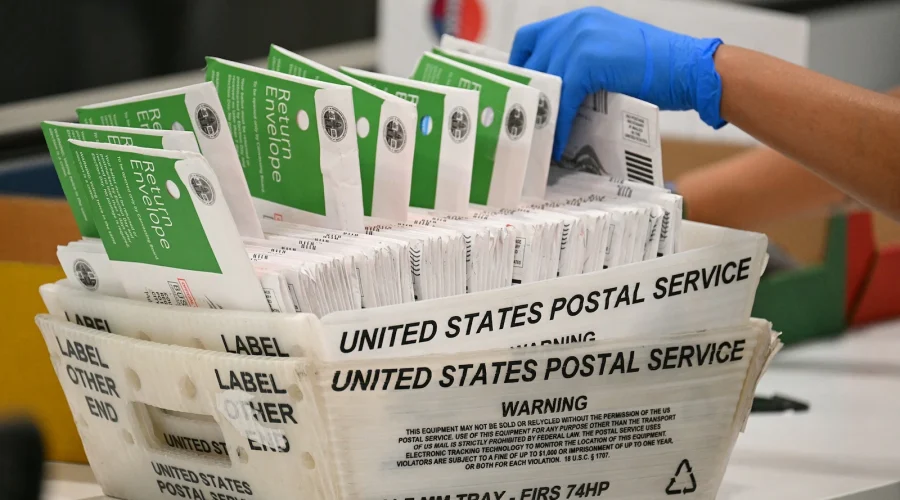
Under the executive order Trump signed earlier this year, the Postal Service would operate a new electronic portal through which states transmit basic voter data — names, home addresses, and a unique barcode assigned to each mail-in ballot. Once that list is loaded, postal workers would be instructed to deliver ballots only to voters whose names and addresses match the state-supplied database. In effect, the USPS becomes a gatekeeper between the state election office and the voter’s mailbox.
The rule was formally published the previous week but has since been frozen by a federal judge who is weighing whether the framework is likely unlawful. The court has not yet issued a final ruling, leaving unclear which components, if any, will be permitted to go live before Election Day. The first batch of mail-in ballots under the new protocol is scheduled to depart for overseas military voters based in North Carolina this Friday, even as the broader legal fight continues.
Notably, the finalized USPS rules fall short of the sweeping changes Trump outlined in his original executive order, suggesting the administration’s ambitions have already been trimmed by practical and legal constraints.
The Whistleblower’s Account of a “Slapdash” Build
The report describes a “secretive, rushed, chaotic and fundamentally flawed process” behind the creation of what the whistleblower calls an “untested” federal ballot-mail portal. According to the source, the IT software at the heart of the system has not undergone sufficient testing or debugging. At the time the report was written, the whistleblower stated there was not enough time left to complete validation before a September 1 delivery deadline.
The consequences, as laid out in the filing, are stark:
“Potentially millions of American voters may not receive their mail-in ballot this election cycle in a timely manner or at all.”
The whistleblower also alleged that USPS officials continued working on the portal even after a judge ordered a pause, effectively defying a court directive while the litigation proceeded. If accurate, that claim would compound the legal jeopardy already hanging over the program.
Blumenthal Presses the Postmaster for Answers
On Monday, Blumenthal sent a letter to Postmaster General and CEO David Steiner demanding detailed responses to the whistleblower’s allegations. The senator urged Steiner to “abandon this ill-conceived, unconscionable plan and ensure that all Americans can exercise their constitutional right to vote, including by mail, without interference by USPS.”
Neither the Postal Service nor the White House had issued a response as of publication.
Why Voter-Advocacy Groups Are Watching closely
Civil-liberties organizations and election-watch groups have long flagged the added bureaucratic layer the portal introduces. Under the old process, states mailed ballots directly to registered voters without a federal intermediary verifying each address in real time. The new architecture inserts a federal database check at the point of delivery, creating a single point of failure: if the state list is incomplete, outdated, or misformatted, ballots simply do not go out.
For voters in rural areas, military families stationed abroad, and citizens with disabilities who rely heavily on mail ballots, a missed delivery is not an inconvenience — it can mean losing the ability to vote in a given cycle. The September 1 deadline, combined with the ongoing injunction, compresses any remaining window for correction into days rather than weeks.
The broader implication is that the November midterms may proceed under a patchwork of rules: some states operating under the old direct-mail protocol, others attempting to integrate the partially built portal, and overseas voters receiving ballots under an expedited but legally contested procedure. That fragmentation, critics argue, is precisely the kind of inconsistency that invites confusion, disputes, and post-election litigation.
As the legal battle plays out in federal court, the question facing voters, election officials, and postal workers alike is whether a system built in haste, tested in fragments, and paused by a judge can be brought online safely before millions of ballots must reach mailboxes. The whistleblower’s report suggests the answer, as of now, is no.
Related Reading
Frequently Asked Questions
What is Catastrophic failures?
Catastrophic failures is the main topic of this guide. The article explains the context, practical details, and next steps readers should understand.
Why does Catastrophic failures matter?
Catastrophic failures matters because readers are looking for a useful answer, not just a short summary. Good content should match search intent and help them decide what to do next.