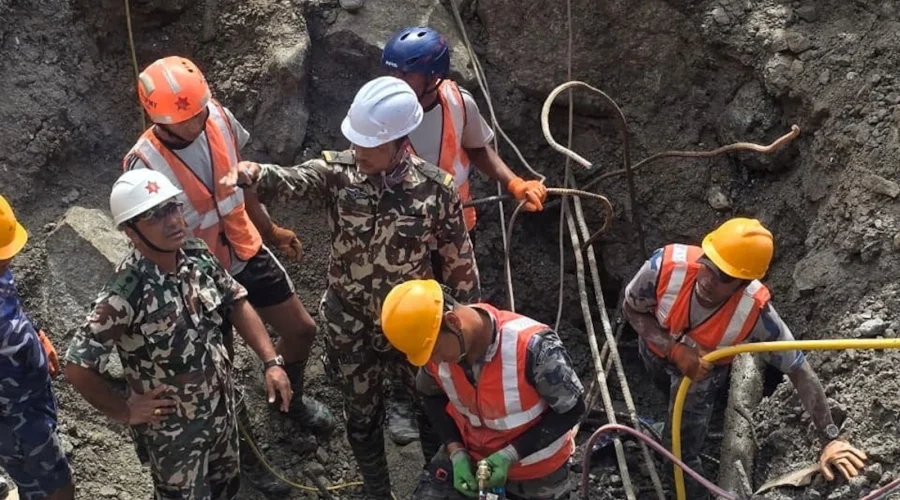
Cyberzenhub.com – LONDON — Two people have been rescued from a hydropower tunnel at the Trishuli 3A construction site, Nepal's Army confirmed Friday after posting videos and images from the scene on Facebook. Nepalese lawmaker Shri Ram Neupane, an engineer who has been involved in the search operations, also posted about the two rescues on his Facebook page, including photos and videos from the scene. He identified the two workers rescued as Sanjay Sah and Kabir Maharjan.
In an earlier Facebook post, Neupane said rescuers had heard voices from people trapped inside the tunnel. "It has been confirmed that more than one person's voice has been heard from inside," Neupane wrote in the post. "When the rescue team said, 'Don't panic, we are rescuing,' a response of 'yes' was received from inside." At least 557 workers are missing from the Trishuli 3A hydropower projects along the Trishuli River, with about 115 believed to be trapped in the tunnel, according to the Independent Power Producers Association of Nepal.
Nepal's Communication Minister Bikram Timilsina said officials remain hopeful that more workers will be rescued. "We are waiting for the rescue of more and more people," Timilsina wrote on his Facebook page. The death toll following last week's unprecedented flash flood at the Nepal-Tibet border has climbed to 1, 287, with an additional 4,216 people believed to still be missing as of Thursday, officials said.
Popular Reads Lindsay Clancy trial: Tensions flare as defense blames 1 juror for deadlock 14 hours ago Iran live updates: Trump excuses Lutnick saying there were no US deaths in Iran war 13 hours ago ‘Dancing With the Stars’ reveals new celeb cast and their pro partners 2 days ago Those figures increased from 1,114 deaths and 3,916 missing people, respectively, a day earlier, according to Nepal's National Disaster Management Authority. Members of a search and rescue team work to remove the body (not pictured) of a person who was trapped inside a tunnel at the Upper Trishuli-3A Hydropower Project following devastating floods and mudslides that struck the Bhotekoshi River in Rasuwa, Nepal, September 4, 2026. Apf Nepal/via Reuters Chinese state media have reported an additional 16 deaths and 546 missing people in Tibet, bringing the total death toll to 1,268 and the number of missing people on both sides of the border to 4,762.
Relief and rescue efforts are continuing, with almost all communication towers restored and nearly 12,000 people rescued through international and domestic aid. Additionally, almost 21,500 security personnel have been mobilized in an effort to speed up search and rescue operations, with more than 5,000 people receiving treatment for injuries, officials said. Nepali Prime Minister Shah said earlier this week that his government would begin focusing on "rehabilitation" as the length of time since the initial disaster grows.
ABC News' Anna Bourke contributed to this report.
Related Reading
Frequently Asked Questions
What is 2 people rescued alive from tunnel?
2 people rescued alive from tunnel is the main topic of this guide. The article explains the context, practical details, and next steps readers should understand.
Why does 2 people rescued alive from tunnel matter?
2 people rescued alive from tunnel matters because readers are looking for a useful answer, not just a short summary. Good content should match search intent and help them decide what to do next.