Labor Day Weekend Brings a Patchwork of Calm and Chaos Across the United States
Cyberzenhub.com – For most Americans heading into the three-day Labor Day holiday, the forecast paints a picture of mild skies, comfortable temperatures, and little reason to worry about the weather. Yet tucked beneath that broad calm are narrow corridors of genuine atmospheric danger — pockets of severe thunderstorms in the Southeast on Saturday and a renewed flash-flood risk in the Southwest on Sunday that could catch holiday travelers off guard in some of the country’s most visited national parks.
The contrast between the tranquil majority and the threatened minority is what makes this particular weekend worth watching. Millions of people will be outdoors, on roads, in campgrounds, and along coastlines during the peak travel days. Even a localized gust event or a sudden downpour in a burn-scarred canyon can turn a routine outing into an emergency within minutes.
Saturday Afternoon: Wind-Driven Storms Aim at the Mid-Atlantic and Carolinas
The first organized threat of the weekend arrives Saturday afternoon, when a band of severe thunderstorms is expected to push through portions of Virginia and both North and South Carolina. Cities squarely in the path include Norfolk, Virginia; Raleigh, Charlotte, and Wilmington in North Carolina; and Myrtle Beach and Columbia in South Carolina.
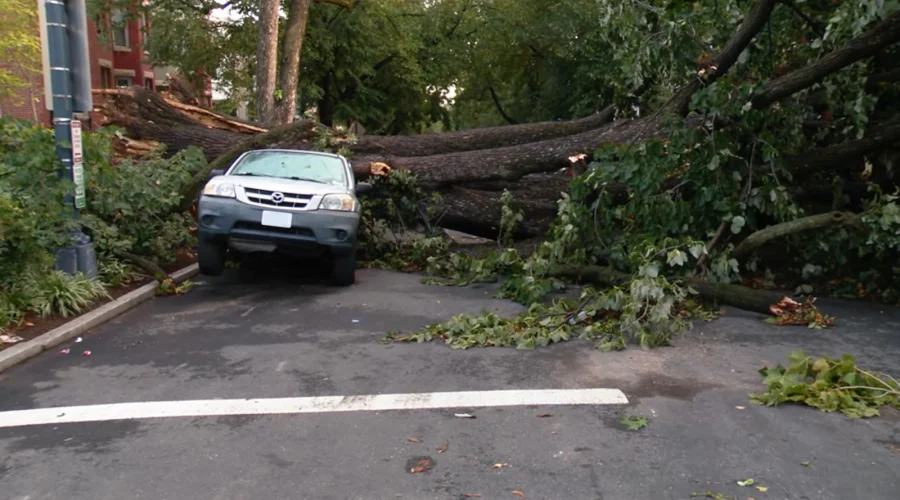
Severe thunderstorm watches remain in effect through the evening hours for stretches of North Carolina and South Carolina, covering Raleigh, Charlotte, and Asheville in the north, as well as Greenville in the south. Meteorologists identify the principal hazard as strong, potentially damaging wind gusts — the kind that can snap tree limbs, topple unsecured objects, and knock out power lines across wide swaths of suburban and rural areas.
For residents and visitors in those zones, the practical implication is straightforward: keep an eye on the sky after mid-afternoon, secure anything lightweight on porches and patios, and avoid open fields or isolated tall trees if the first thunderclap rolls in. The storms are not expected to produce widespread tornado activity, but the wind component alone is sufficient to cause property damage and brief outages.
Sunday: The Threat Migrates South, Then Jumps to the Southwest
By Sunday, the Southeastern storm axis drifts further south, bringing the same wind-dominant hazard to parts of South Carolina and Georgia. Charleston and Columbia, South Carolina, along with Savannah, Georgia, sit within the expected corridor. Damaging gusts remain the headline risk, but forecasters also flag the possibility of flash flooding where storm cells stall and dump heavy rain in a short window.
Meanwhile, a separate and arguably more consequential threat reactivates in the Southwest. A level-2 (out of 4) flash-flood risk is in place over portions of southern Nevada, northern Arizona, and Utah on Sunday. That designation places several of the nation’s most popular national parks directly in the danger zone: Grand Canyon National Park, Zion National Park, and Bryce Canyon National Park — all of which sustained significant flash-flood damage from monsoon storms earlier in the season.
A Flood Watch has been issued for Sunday across parts of Utah, encompassing Cedar City, Beaver, Richfield, and Price, as well as the Zion and Bryce Canyon park boundaries. Visitors should note that canyon floors and slot canyons can fill with water in minutes, turning a dry trail into a rushing torrent. Park rangers typically close lower-elevation routes when monsoon cells approach, and those closures should be treated as firm guidance rather than suggestions.
One factor that amplifies the Southwest risk this year is the network of burn scars left by recent wildfires in Utah and Arizona. Charred, hydrophobic soil absorbs far less rainfall than healthy ground, so even moderate downpours can generate outsized runoff. Where the heaviest rain intersects a burn scar, flash flooding becomes considerably more likely and more rapid than in undisturbed terrain. Scattered thunderstorms later in the day could deliver frequent lightning and localized downpours, and any burn-scar area beneath those cells warrants extra caution.
Monday: A Quiet Close to the Holiday
The Labor Day holiday itself — Monday — carries no organized severe-weather threat. Much of the country is expected to enjoy rather tranquil conditions, with only the occasional scattered thunderstorm producing brief lightning, gusty winds, or a short downpour. For the vast majority of travelers, that means a low-risk final day of the long weekend.
Still, the weekend’s pattern underscores a recurring seasonal reality: late-summer weather in the United States is increasingly bifurcated. The Southeast and Gulf Coast remain prone to wind-heavy thunderstorms well into September, while the Southwest’s monsoon season keeps delivering flash-flood events to arid landscapes that have grown more vulnerable each year as wildfire scars expand. Holidaymakers who plan outdoor activities in either region would be wise to check the latest watches and warnings the morning of their outing, and to treat any posted closure or advisory as a hard boundary rather than a minor inconvenience.
The broader takeaway is not alarm but awareness. The storms and flood risks affecting Saturday and Sunday are geographically limited and time-limited. They will not define the entire holiday for most Americans. But for the communities and park visitors sitting directly in their path, the next 48 hours demand the same respect one would give any natural hazard: monitor conditions, respect warnings, and give the weather room to move before you move into it.
Related Reading
Frequently Asked Questions
What is Severe weather to impact parts of US?
Severe weather to impact parts of US is the main topic of this guide. The article explains the context, practical details, and next steps readers should understand.
Why does Severe weather to impact parts of US matter?
Severe weather to impact parts of US matters because readers are looking for a useful answer, not just a short summary. Good content should match search intent and help them decide what to do next.