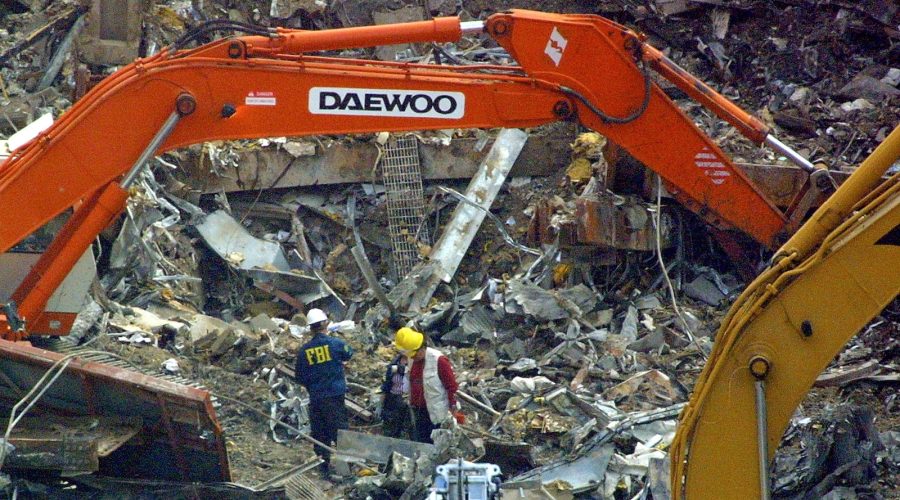
Top FBI Official Warns 9 11 Still Inspires Terror
Cyberzenhub.com – Top FBI official warns 9 11 remains a live psychological weapon in the hands of foreign networks, even a full quarter-century after nearly 3,000 Americans were killed in a single morning. Chris Raia, the bureau’s co-deputy director, made that assessment explicit in a recent interview, arguing that the threat landscape has shifted from large, coordinated cells to a harder-to-detect model: a single individual radicalized in a bedroom, armed with nothing but a smartphone and a curated feed of propaganda.
The distinction matters because the FBI has grown substantially stronger at intercepting multi-stage, multi-actor operations of the kind executed in 2001. What it struggles with now is the lone offender — someone who may never have set foot abroad yet feels a personal, direct obligation to strike at the United States. Raia framed the problem bluntly: the agency is “way better postured now in 2026, based on legislation, based on how far we’ve come in the [FBI] bureau, based on how far we’ve come in the U.S. intelligence community.” Yet that institutional strength does not fully offset the agility of an adversary that recruits through algorithms rather than warehouses.
How the Lone-Offender Pipeline Works in Practice
In the roughly eighteen months before the interview, agents made at least 16 domestic arrests of individuals accused of plotting or supporting plots to kill Americans on behalf of al-Qaeda or ISIS. Each case followed a recognizable arc: online radicalization, a personal sense of mission, and a drift toward action that investigators had to identify before execution.
The most recent arrest drew particular attention. In late August, agents took Jessica Bowie, a 35-year-old Albany, New York resident, into custody on charges that she had plotted to bomb the state capitol building. Charging documents revealed that in the weeks before her arrest, Bowie posted on social media: “Praise be to Allah for September 11th.”
Craig Tremaroli, who leads the FBI’s Albany field office, offered a detail at a post-arrest briefing that captured how personal the radicalization trajectory can be.
“[She] went from a little girl waving the American flag after 9/11 to now having stickers of the fallen towers.”
Tremaroli paused after the line, adding simply, “Let that sink in.” Bowie had not yet entered a plea as of the latest court filings.
Why the Date Itself Remains Propaganda Infrastructure
Top FBI official warns 9 11 symbolism is not a relic but an active recruiting tool. Raia noted that when investigators examine the media and communications of suspects, references to September 11, 2001, appear with near-constant frequency.
“That is their Super Bowl. Every time you start digging into their media, digging into their communications, there’s always, always references to 9/11.”
The symbolism cuts both ways. For victims’ families still processing the loss of nearly 3,000 lives, the continued invocation of that date by foreign networks can feel like a second wound. For investigators, it confirms that the psychological architecture of the original attack has not been dismantled; it has been repurposed as propaganda infrastructure.
The numbers behind that strategy are not shrinking. A report issued by the U.S. intelligence community in March this year assessed the global threat environment and found that, while these organizations lean heavily on digital platforms to reach audiences stateside, their overseas membership bases are actually expanding. ISIS now fields an estimated 18,000 members worldwide, and al-Qaeda’s ranks have climbed to roughly 28,000.
What Comes Next: Drones and Resource Shifts
Looking ahead, Raia identified unmanned aerial systems as the variable most likely to reshape the domestic threat picture. He described drones as a force multiplier that could allow a small number of operatives to project effects previously reserved for larger formations, complicating detection and response timelines for local law enforcement.
FAQ
Who is the top FBI official who warns 9 11 still inspires terrorists? Chris Raia, the FBI’s co-deputy director, made the remarks in a recent interview discussing the evolving domestic threat environment.
How many arrests has the FBI made of lone offenders in recent months? In the roughly eighteen months preceding the interview, the FBI made at least 16 arrests within the United States of individuals accused of plotting or supporting plots linked to al-Qaeda or ISIS.
What are the current estimated membership numbers for ISIS and al-Qaeda? According to a March U.S. intelligence community report, ISIS fields an estimated 18,000 members worldwide, while al-Qaeda’s ranks have climbed to roughly 28,000.
What role does social media play in the radicalization process? Top FBI official warns 9 11-era symbolism is amplified through social media and internet platforms, allowing recruiters to reach isolated individuals in their homes without any physical infrastructure. Investigators describe this as the primary detection challenge facing the bureau today.