
Israel strikes southern Lebanon after US-Iran ceasefire
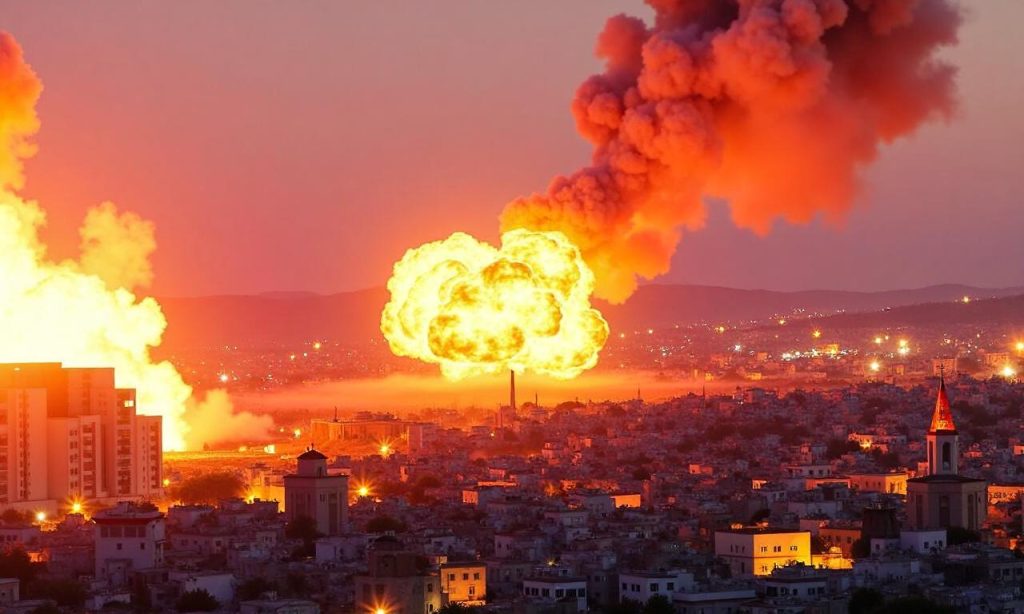
Israel strikes southern Lebanon after US-Iran ceasefire
On Wednesday morning, the Israeli military launched a series of aerial assaults in southern Lebanon, signaling that the US-Iran ceasefire agreement does not extend to the region, where Israel is engaged in conflict with the Iranian-backed group Hezbollah. The strikes targeted areas such as Tyre and Nabatieh, among others, shortly after the deal was announced. Israeli Prime Minister Benjamin Netanyahu has rejected claims by Pakistan, a mediator in the agreement, that the deal also addresses the ongoing conflict in Lebanon.
Lebanon has seen over 1,500 fatalities, including 130 children, and more than 1.2 million people have been forced to flee their homes. One in five of the population is displaced, predominantly from Shia Muslim communities in southern Lebanon, the eastern Bekaa Valley, and Beirut’s southern suburbs—areas under Hezbollah’s influence. The attacks have led to the destruction of border villages, as Israeli forces seek to establish a security buffer zone to neutralize Hezbollah’s infrastructure and displace its fighters.
“Efforts to include Lebanon in regional peace will continue,” stated the Lebanese presidency, following the US-Iran ceasefire announcement. However, Hezbollah has yet to issue an official response, despite not claiming any attacks since the deal was reached.
Although a ceasefire was declared in the US-Israel-Iran conflict, which began in late February, the situation in Lebanon has escalated. This was triggered by Hezbollah’s rocket attacks on Israel, in response to the killing of Iranian supreme leader Ayatollah Ali Khamenei and Israeli strikes on Lebanese territory. The conflict has reignited sectarian tensions, with displaced families now settling in other communities and fears of renewed attacks growing.
Israeli officials had previously indicated their intent to persist in operations against Hezbollah even with a deal with Iran. Recent reports from Israeli media, however, suggest the military may no longer plan to advance further into Lebanon, acknowledging their inability to disarm the group through force alone. Observers were surprised by Hezbollah’s resilience, as it was thought to have been weakened in prior battles.
The Lebanese government, which aims to disarm Hezbollah—a militia formed in the 1980s during Israel’s occupation of the country—has faced challenges. Despite announcing plans to reduce the group’s armaments, Hezbollah has shown no willingness to discuss its weapons. President Joseph Aoun, a former army chief, has cautioned against military action, fearing it would deepen divisions and spark violence. His government, meanwhile, has made a historic move by offering direct negotiations with Israel, a country with which Lebanon does not maintain diplomatic ties.