
Israel backs US-Iran ceasefire but Netanyahu’s war goals remain unfulfilled
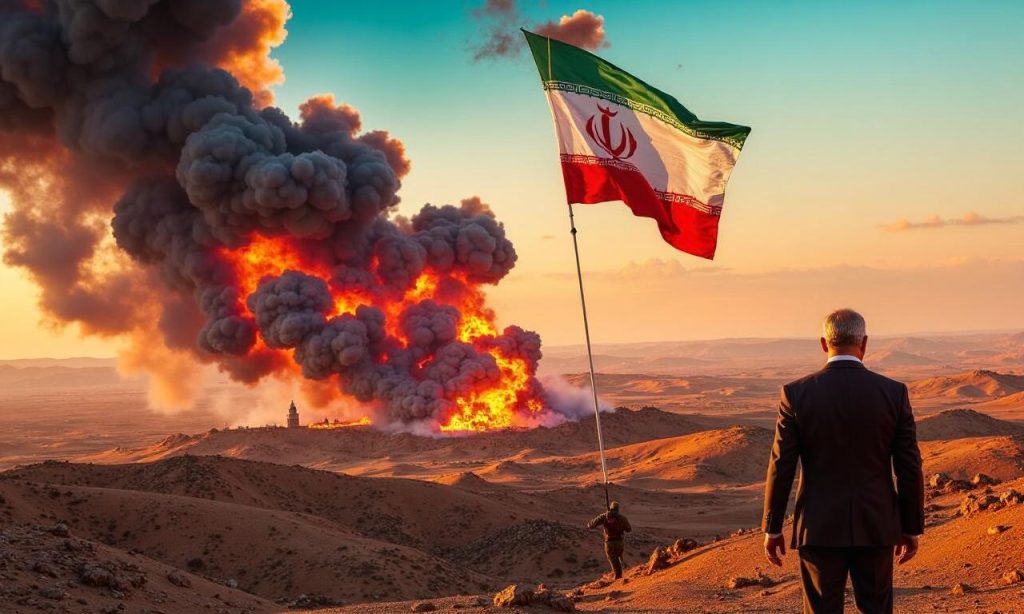
Israel backs US-Iran ceasefire but Netanyahu’s war goals remain unfulfilled
Israeli Prime Minister Benjamin Netanyahu expressed confidence in the early stages of the joint US-Israeli military campaign against Iran, launched in late February. However, the recent announcement of a ceasefire, as noted in remarks from his office, carried a more subdued tone, highlighting that the agreement was spearheaded by President Donald Trump. This marked a departure from the earlier optimism, as both the United States and Iran boasted about their respective victories after five weeks of hostilities.
Netanyahu’s acknowledgment of the ceasefire hinted that the operation had not reached its intended conclusion. While he described the campaign as successful, he emphasized that the peace was not final, with Israel still pursuing further objectives. The conflict now leaves the country and its leader facing unmet ambitions, despite the efforts of the Israeli Defense Forces (IDF) and US military coordination.
At the outset, Netanyahu stated that the “goal of the operation was to eliminate the threat posed by Iran’s Ayatollah regime.” He insisted the campaign would persist “as long as needed.” Yet, these aims have not been fully realized. Iran’s armed forces continue to operate, and the clerical leadership remains intact, though Supreme Leader Ayatollah Ali Khamenei and key officials were eliminated in strikes. The nuclear program and stockpiles of enriched uranium remain unresolved, and Iran has persisted in launching missile attacks toward Israel throughout the conflict.
“Netanyahu had only mentioned a ‘suspension’ of hostilities, prior to negotiations between the US and Iran, but he hadn’t publicly accepted the war’s conclusion,” said Anshel Pfeffer, a veteran Israeli journalist and biographer of Netanyahu. He added: “The prime minister’s inability to achieve his stated objectives is ‘not good’ for his political standing, and a potential rift with the Americans could emerge if Israel’s influence was overlooked in the ceasefire agreement.”
Yair Lapid, head of Israel’s opposition, called the outcome a “political catastrophe” for the country, stating that “Israel was not even at the table when decisions were made on matters of national security.” He argued that while the military executed its tasks and the public showed resilience, Netanyahu had failed in both political and strategic terms.
Shira Efron, Israel policy chair at the RAND Corporation, noted that Netanyahu had promised “this campaign would end the Islamic regime” and “remove an existential threat.” However, she observed that the war had not delivered those outcomes, as Iran’s nuclear and missile capabilities were still intact. “For Israelis, whether 70 or 80 percent of capabilities were reduced, the missile threat has not changed significantly over the last five weeks,” she explained.
Yossi Kuperwasser, former military intelligence officer and director of the Jerusalem Institute for Strategy and Security (JISS), offered a contrasting view. He argued that “practical goals were completely achieved,” citing the destruction of Iran’s nuclear and missile production sites. “The military leadership was decimated,” he said, though “wishful goals,” such as regime change, had not materialized, leaving room for criticism of Netanyahu’s approach.