
Lebanon thought there was a ceasefire – then Israel unleashed deadly blitz
Lebanon thought there was a ceasefire – then Israel unleashed deadly blitz
Unexpected Strike Amid Ceasefire Hopes
Lebanon had anticipated a pause in hostilities after U.S. President Donald Trump declared a two-week ceasefire to halt the Middle East conflict. Yet, Israeli jets launched a 10-minute aerial assault, resulting in at least 203 deaths and over 1,000 injuries, as reported by Lebanon’s health ministry. The sudden attack shattered the fragile optimism, with local and international leaders swiftly condemning the violence.
“Lebanon was not part of the deal because of Hezbollah,” stated Donald Trump, framing the war in the country as a separate skirmish.
Iran called the strike a “grave violation” of the ceasefire, urging the U.S. to stop Israeli aggression. Lebanese officials noted that more than 1,700 people have perished since Israel’s recent campaign began. The Israeli government defended its actions, claiming they aimed to weaken Hezbollah and pursue remaining military goals.
Origins of the Conflict
The war erupted on 28 February when U.S. and Israeli strikes targeted Iran, prompting retaliation from Tehran against U.S. allies in the Gulf. Iran’s proxies, Hezbollah in Lebanon and the Houthis in Yemen, also attacked Israel. In response, Israel intensified its operations against Hezbollah, even deploying troops into significant areas of Lebanon.
Mediation and Ceasefire Terms
Pakistan’s Prime Minister Shehbaz Sharif, acting as a mediator, announced the two-week ceasefire. He stated that “US and its allies have agreed to an immediate ceasefire everywhere, including Lebanon and elsewhere.” The negotiations are set to continue in Islamabad on Friday, with a U.S. 15-point plan and an Iranian 10-point counter-proposal under discussion.
Iran’s proposal emphasized a complete halt to hostilities on all fronts, including against Lebanon’s resistance groups. However, Israeli Prime Minister Benjamin Netanyahu’s government argued the ceasefire excluded Lebanon, citing Hezbollah as the reason.
Devastation in Beirut
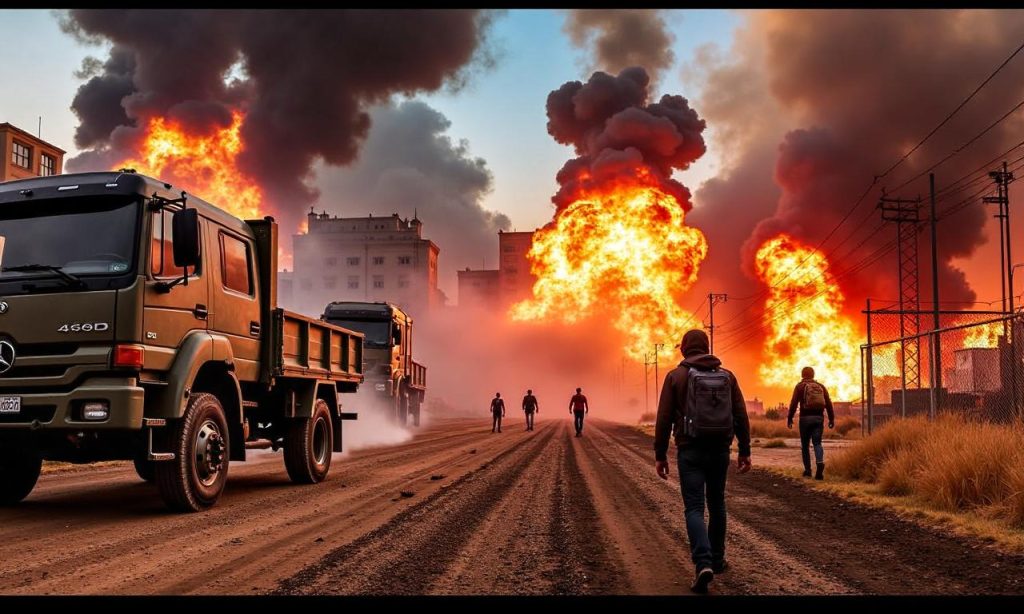
At around 14:00 local time, skies over Beirut darkened as Israeli jets executed a coordinated strike. The IDF claimed it had “completed the largest co-ordinated attack across Lebanon since Operation Roaring Lion,” targeting over 100 Hezbollah facilities, military positions, and command centers in Beirut, Bekaa, and southern Lebanon.
Densely populated zones in central Beirut faced the brunt of the strikes, described as among the most intense since Hezbollah entered the conflict in March. The city center, including areas not typically targeted, was hit. A 10-storey residential building in Tallet el Khayat, a affluent western Beirut district, was reduced to rubble. The attack came without warning, leaving residents unprepared.
“Teams were exhausted, after more than six weeks of constant Israeli attacks,” said Ziad Samir Itani, leading the civil defense efforts. “This is new to Beirut.”
Search and recovery operations are ongoing, with many families still searching for missing loved ones. The attack marked a pivotal moment, reigniting fears of escalating violence despite earlier agreements to de-escalate tensions.