
UK says Russia ran submarine operation over cables and pipelines
UK says Russia ran submarine operation over cables and pipelines
Defence Secretary’s Statement
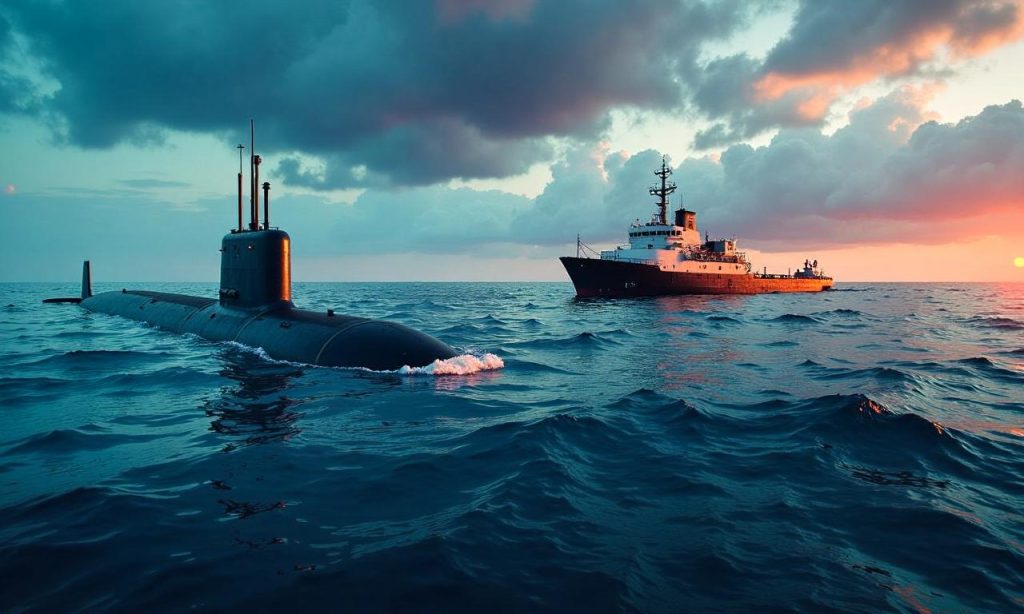
Defence Secretary John Healey confirmed that three Russian submarines carried out a covert mission targeting undersea cables and energy infrastructure in the UK’s northern waters. He stated that a British warship and aircraft were deployed to counter Moscow’s “malign” actions, with no damage to UK infrastructure detected in the Atlantic. In a direct address to Russian President Vladimir Putin, Healey remarked:
“We see you. We see your activity over our cables and our pipelines, and you should know that any attempt to damage them will not be tolerated and will have serious consequences.”
Royal Navy Response
Healey explained that Russia used an Akula-class submarine as a diversion while two Guggi vessels performed surveillance on the cables. The first Akula submarine departed UK waters after being tracked, returning to Russia, while the Guggi subs stayed. The Royal Navy deployed a Type 23 frigate HMS St Albans, RFA Tidespring, and Merlin helicopters to monitor all three submarines. Other countries participated in the operation, though Healey specifically named Norway.
“Our armed forces left [Russia] in no doubt that they were being monitored, that their movements were not covert, as President Putin planned, and that their attempted secret operation had been exposed,” Healey said. “We watched them, we were able to track them, we dropped sonar buoys to demonstrate to them that we were monitoring every hour of their operation.”
Critical Infrastructure Context
Undersea cables and pipelines are vital for global connectivity and energy distribution. Over 600 cables span 870,000 miles (1.4 million km) of ocean, transmitting electricity and data across continents. These cables often land at discreet coastal points, including East Anglia and South West England. The UK also depends on a network of underwater gas pipelines, mainly in the North Sea, which supply energy from the UK and Norwegian Continental Shelves. The Langeled pipeline, stretching 724 miles (1,166km), connects Norway to the UK, with around 77% of the nation’s gas imports arriving through this route.
Hybrid Warfare Context
BBC InDepth uncovered in 2025 that Russia was conducting “hybrid warfare” against the UK and Western Europe, aiming to punish or deter continued military aid to Ukraine. Hybrid warfare involves anonymous, deniable attacks in suspicious conditions without direct attribution to a state. The Russian embassy had earlier claimed it was “not interested in British underwater communications,” but this operation appears to challenge that assertion.