Helicopter Fire in Chatsworth Leaves Three Dead Near Separate Fatal Traffic Crash
Cyberzenhub.com – A helicopter crash and fire in Chatsworth on Tuesday evening killed at least three people and sent one additional person to a hospital, creating a second deadly emergency within a short distance of an earlier collision involving a Metro bus and an SUV.
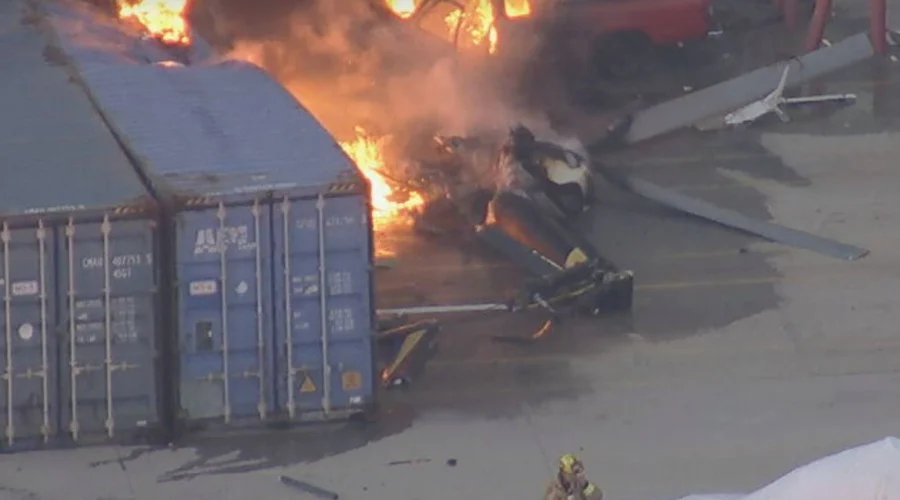
The aircraft went down shortly before 7 p.m. local time on Mason Avenue, a suburban commercial area in the northwest San Fernando Valley. The helicopter crashed in the space between two commercial buildings, where the impact sparked a fire that damaged nearby property.
Los Angeles Fire Department personnel confirmed that three people died at the crash scene. One other person was transported for medical treatment, though their condition was not immediately known.
Early information from the fire department indicated that one of the people killed was a pedestrian on the ground. Authorities had not released further details about the identities of those involved or the circumstances that placed the helicopter in the area before the crash.
Fire Damages Vehicles and Storage Containers
The fire spread to four vehicles and two storage containers after the helicopter came down. Firefighters responded to the burning wreckage and the damage surrounding the crash site, which sits among commercial buildings along Mason Avenue.
Aircraft crashes in developed areas can create dangers beyond the people aboard because fuel, debris and fire may affect pedestrians, vehicles and neighboring structures. The reported death of a person on the ground underscores the risks faced by people near an impact site even when they were not connected to a flight.
Emergency crews were also dealing with the consequences of another fatal incident nearby. Roughly a block and a half from the helicopter crash, a Metro bus and an SUV had been involved in a separate collision earlier in the evening.
Earlier Bus and SUV Collision Also Proves Fatal
That roadway crash killed two people and injured several others. The close timing and location of the two incidents placed significant pressure on emergency responders in the Chatsworth area as they worked at separate scenes involving fatalities, injuries and damaged vehicles.
Details about the people injured in the bus collision, as well as the factors that led to that crash, were not immediately available. It was also unclear whether either event affected traffic patterns or access around the surrounding commercial corridors.
Residents and drivers in an area affected by major emergency activity may encounter road restrictions, active fire apparatus and investigative personnel. People traveling through the neighborhood should remain alert for changing conditions, obey directions from emergency workers and avoid entering restricted areas.
Federal Investigation Will Examine Helicopter Crash
The cause of the helicopter crash has not been determined. The National Transportation Safety Board and the Federal Aviation Administration will investigate the incident, a process expected to focus on the aircraft, its flight history, operating conditions and the events leading up to the impact.
Investigators typically document the wreckage, review available maintenance and operational records, and seek information that can help establish how a crash unfolded. Preliminary findings may clarify the sequence of events, but a final determination can take substantially longer as agencies examine evidence and technical data.
The investigation will be separate from the inquiry into the nearby Metro bus and SUV collision. Although the two emergencies occurred close together, no connection between them has been established.
For the Chatsworth community, the incidents marked an unusually severe evening: a vehicle collision had already resulted in deaths and injuries when the helicopter crash brought another fire, additional fatalities and a broader emergency response to the neighborhood.
Authorities are expected to provide more information as the helicopter investigation proceeds and as officials continue to assess the victims, property damage and circumstances surrounding both crashes.
Related Reading
Frequently Asked Questions
What is 3 dead after helicopter crashes in Los?
3 dead after helicopter crashes in Los is the main topic of this guide. The article explains the context, practical details, and next steps readers should understand.
Why does 3 dead after helicopter crashes in Los matter?
3 dead after helicopter crashes in Los matters because readers are looking for a useful answer, not just a short summary. Good content should match search intent and help them decide what to do next.