Carney Urges Canada and Europe to Deepen Partnership
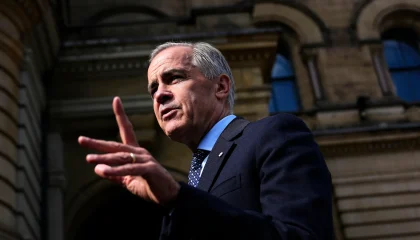
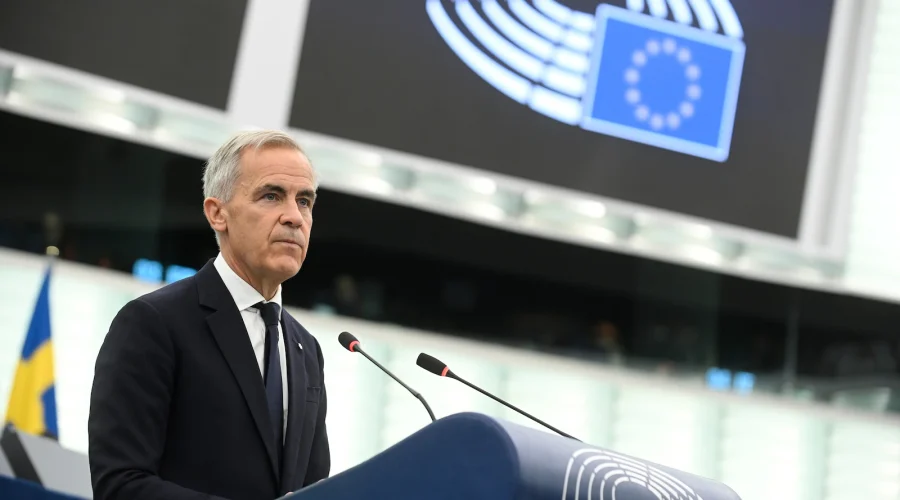
Cyberzenhub.com – Canadian Prime Minister Mark Carney used a speech in Strasbourg, France, on Sept. 17, 2026, to argue that Canada and the European Union should move more quickly toward a closer strategic relationship as tensions continue between Ottawa and the administration of U.S. President Donald Trump.
Speaking during a formal sitting of the European Parliament, Carney presented stronger transatlantic cooperation as a practical response to a more uncertain global environment. His message centered on the value of combining Canadian and European capabilities in areas that affect economic security, technology, defense and trade.
“Canada and Europe are each strong. Canada and Europe are stronger together.”
Carney told members of the European Parliament that the two sides have different advantages that can reinforce one another. In his view, shared priorities could create greater scale and resilience if pursued with urgency rather than through slow, incremental arrangements.
“Where our strengths differ, they complement. Where they overlap, they create scale. We should build on each other’s strengths — deliberately, systematically and rapidly.”
Focus on strategic autonomy
A central theme of the address was “strategic autonomy,” a term used to describe the ability of countries and institutions to protect essential interests without becoming overly dependent on outside powers. Carney called for Canada and Europe to cooperate more closely in several sectors that have become increasingly important to national security and long-term economic competitiveness.
Those areas include critical minerals, defense-industrial capacity, artificial intelligence, computing, energy security and space. Critical minerals are particularly significant because they are used in technologies ranging from batteries and renewable-energy equipment to advanced electronics and defense systems. Cooperation on these materials could help partners secure supply chains that are less vulnerable to disruption.
Carney also highlighted the need for stronger capacity in defense-related industry. That objective goes beyond military spending: it involves the ability to develop, produce and maintain equipment, technology and infrastructure needed for security. His broader argument was that cooperation can make both Canada and Europe more capable of withstanding economic pressure or geopolitical instability.
Technology featured prominently in the prime minister’s vision. Artificial intelligence and computing power have become major elements of economic policy because they influence research, productivity, communications and security. Building links in these fields could give Canadian and European institutions more opportunities to coordinate investment, talent and standards.
Trade and mobility across the Atlantic
Carney proposed a more integrated economic relationship, including progress toward digital trade that would operate with fewer barriers for non-agricultural goods and many services. Such an approach could make it easier for companies to exchange information, conduct business and provide services across borders in an increasingly digital economy.
He also argued for expanding personal connections between Canada and Europe. The prime minister described a future in which younger people could more easily work, study and live on either side of the Atlantic. Greater mobility could support educational exchange, professional opportunities and enduring ties between communities.
“I’m not proposing a third bloc in order to become a great power rival — only with better manners.”
The remark prompted laughter in the chamber, but it also underscored an important distinction in Carney’s pitch. He said the goal is not to form a competing power center designed to dominate others. Instead, he framed deeper ties as a way to preserve independence, openness and democratic decision-making.
Carney did not name the United States or Trump directly during the speech. Even so, his visit came amid a continuing diplomatic and trade dispute between Canada and the Trump administration, lending added significance to his appeal for a more ambitious European partnership.
“We do not seek power to dominate others.”
He described resilience as the purpose of closer cooperation, warning against a future in which open markets, sovereignty, territorial integrity, freedoms, democratic institutions or the rule of law could be undermined by external pressure.
“On the contrary, we are pursuing resilience so no one — no one — can control our open markets, impair our sovereignty, threaten our territorial integrity, or undermine our freedoms, our democracies, our rule of law.”
EU signals openness to a new arrangement
Carney’s European trip followed an unusually significant offer from the European Union. European Commission President Ursula von der Leyen said on Sept. 16 in Strasbourg that she wanted Canada to become the EU’s first-ever “associate member.”
The proposal signals a desire to take the Canada-EU relationship beyond conventional cooperation. The EU and Canada already have strong commercial and political links, but associate membership could point toward a more structured framework for work on common priorities. The details of any such arrangement would be crucial, including which areas of policy it would cover and how participation would operate in practice.
“We want to bring the relationship with Canada to the highest level possible. We must urgently reimagine our partnerships. So, I would like to work with you on opening the door for Canada to be the first associate member of the EU.”
For Canada, closer engagement with Europe could broaden options at a time when trade relationships and security partnerships are under pressure. For the EU, Canada offers a like-minded democratic partner with substantial natural resources, advanced institutions and close ties across the Atlantic.
Carney’s speech made clear that he sees the relationship as more than a response to one dispute. His argument was for a durable partnership built around shared interests: reliable supply chains, technological capability, energy stability, trade links and the freedom of citizens to learn and work across borders. Whether the associate-member proposal develops into a formal new framework remains to be seen, but both sides have publicly indicated that they want to move their relationship to a higher level.
Related Reading
Frequently Asked Questions
What is Canada and Europe stronger together Carney?
Canada and Europe stronger together Carney is the main topic of this guide. The article explains the context, practical details, and next steps readers should understand.
Why does Canada and Europe stronger together Carney matter?
Canada and Europe stronger together Carney matters because readers are looking for a useful answer, not just a short summary. Good content should match search intent and help them decide what to do next.