
Diesel Prices at Record Highs as Supply Risks Persist
Cyberzenhub.com – Diesel prices at record highs are continuing to strain transportation companies, households and businesses across the United States. GasBuddy data showed the national average at $6.43 per gallon Friday, although prices varied widely by location.
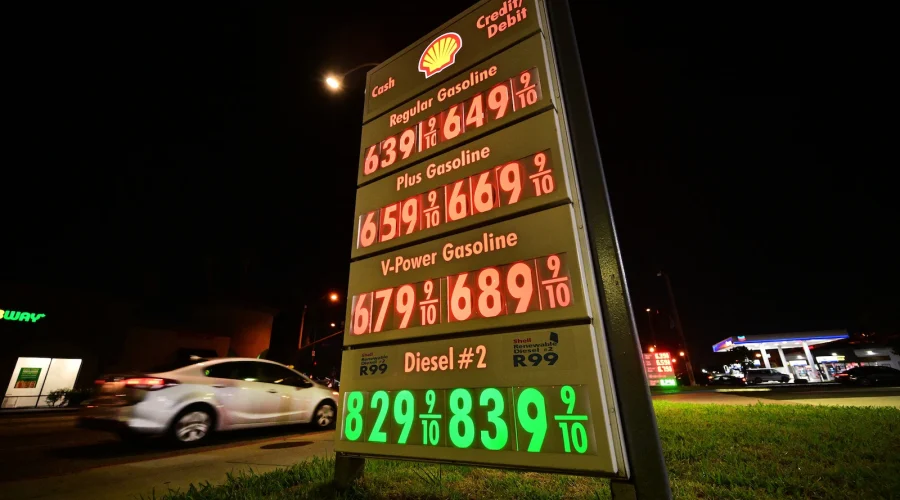
In Los Angeles, one service station displayed diesel above $8 per gallon on Sept. 17, 2026. The increase reflects pressure on global oil markets as shipping routes and energy infrastructure remain exposed to disruption.
Strait of Hormuz and Ukraine War Raise Supply Concerns
Disruption in the Strait of Hormuz has remained a major source of uncertainty for oil markets since the U.S.-Israeli attack on Iran in February. The waterway is a critical route for global oil shipments, and threats to its operation can affect fuel supplies far beyond the region.
Russia’s war in Ukraine is adding to those concerns. Ukraine has intensified long-range strikes on Russian oil facilities in recent years, creating further risks for crude production and refining capacity. These overlapping conflicts have helped keep diesel prices at record highs even as daily oil trading fluctuates.
Crude prices slipped modestly Friday but remained above $100 per barrel. Brent crude traded near $103, down about 1.3%, while West Texas Intermediate stood at roughly $102 per barrel, down 0.4%.
Higher Diesel Costs Reach Beyond Trucking
Diesel powers much of the economy’s daily activity, including freight trucks, farm machinery, construction equipment and backup generators. When fuel costs rise, businesses may absorb the expense, accept lower margins or pass part of the increase on to customers.
That pressure can extend into grocery distribution, retail deliveries, construction and other services that depend on transportation. Higher costs do not guarantee immediate price increases for every product, but prolonged fuel inflation can add to broader supply-chain expenses.
Regular gasoline prices have climbed as well. The nationwide average reached $4.47 per gallon Friday, up $1.53 since the U.S. war with Iran began. Although gasoline and diesel serve different markets, both are influenced by crude prices, refinery output and available supply.
Heating Oil Bills Could Rise This Winter
For households that use heating oil, the rise in diesel prices at record highs has a direct consequence. Heating oil is closely linked to diesel fuel, so increases at fuel markets can quickly affect seasonal home-energy costs.
The National Energy Assistance Directors Association projected that households relying on heating oil could face winter expenses more than 31% higher than a year earlier. Overall winter heating costs are expected to increase by more than 8.7%, according to the organization.
A household’s final bill will also depend on local weather and fuel use during colder months. Even people who do not purchase diesel or heating oil directly may feel its effects through the cost of delivered goods and energy-dependent services.
FAQ: What High Diesel Prices Mean for U.S. Consumers
Why are diesel prices so high?
Supply concerns tied to the Strait of Hormuz disruption and risks to Russian oil infrastructure have kept global oil markets under pressure. Refinery output, crude prices and regional fuel availability also influence local diesel prices.
Will diesel prices fall quickly if crude oil declines?
Not necessarily. A one-day decline in crude prices may take time to reach fuel stations, especially while shipping disruptions and supply risks remain unresolved.
How can households prepare for higher heating-oil costs?
Households can monitor local heating-oil prices, plan fuel purchases when possible and review available energy-assistance programs. Reducing heat loss through basic insulation and weatherproofing may also help limit consumption.
For now, the outlook for diesel prices at record highs remains closely tied to developments in global shipping lanes, military conflict and oil production. Until those pressures ease, consumers and businesses may continue to face elevated fuel and heating costs.