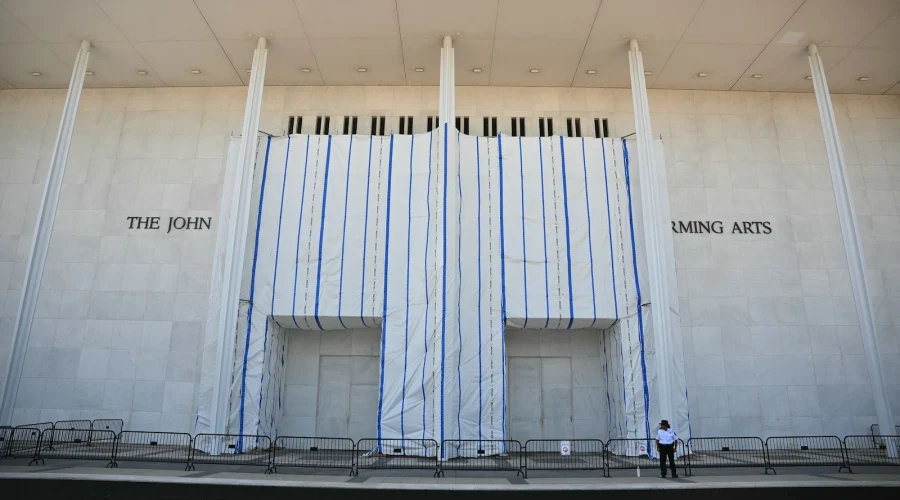
Activists Prepare Kennedy Center Demonstration as Demolition Dispute Intensifies
Cyberzenhub.com – Several hundred demonstrators are expected to gather outside Washington’s John F. Kennedy Center for the Performing Arts on Friday evening, protesting President Donald Trump’s leadership of the institution and his recent comments about potentially closing or demolishing parts of the landmark.
The rally, organized by Hands Off the Arts, is set to begin on the center’s steps with music, personal accounts and speeches. Participants then plan to join hands in a human chain encircling the building, turning the venue itself into the focus of a public challenge over its future.
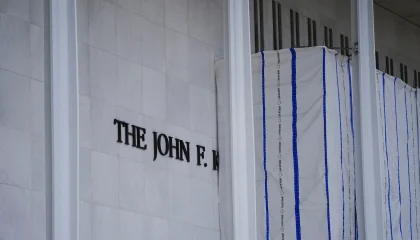
Organizers want Trump removed as chairman, arguing that he has not protected or properly managed the presidential memorial. Their objections also encompass the facility’s sudden closure, newly installed security fencing and political pressure involving possible changes to the building.
“The demonstration opposes the recent sudden closure of the facility, the installation of security fencing, and political efforts to alter or demolish portions of the presidential memorial,” the group said on its website.
A fight over the nation’s cultural center
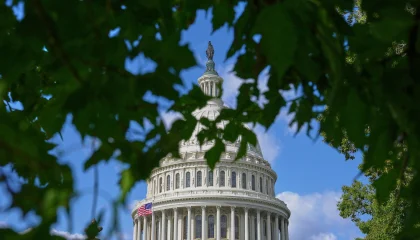
The Kennedy Center occupies a distinctive place in Washington: it is both a major performing arts venue and a memorial to President John F. Kennedy. The dispute has therefore moved beyond a routine disagreement over arts administration, raising questions about who can direct major changes to a federally significant cultural institution.
Trump took over as chairman last year after the center’s prior leadership was removed and board positions were filled with his appointees. Hands Off the Arts says it was created in response to those changes and has organized several demonstrations at the venue during the year.
The coalition describes its wider mission as protecting cultural institutions from what it calls authoritarian overreach. Its members say they seek to restore the Kennedy Center as a public-facing home for performances and artistic expression.
“This is not the Kennedy Center you know and love. It’s not the Kennedy Center you deserve,” the group said on its website.
“We know what the Kennedy Center is meant to be, and can be again — the nation’s cultural center, active with life, joy, and incredible art.”
For protesters, the planned human chain is intended to convey that the building’s identity should not be reshaped through unilateral political action. The gathering is also expected to draw attention to concerns that decisions affecting the memorial could have consequences for other arts and cultural organizations.
Trump raises possibility of demolition
Tensions increased earlier this week when Trump suggested that the Kennedy Center might be shut down and ultimately torn down if his administration did not receive recognition at the site. The remark came amid disagreement over the removal of his name from the building.
“I think that the Trump administration should certainly have recognition. Because frankly, if we don’t do that, it’s going to close. It’ll end up being ripped down,” Trump told reporters.
Trump has maintained that the complex is in severe condition and needs substantial federal backing to continue operating. He described the building as unsafe during remarks on Wednesday.
“It’s in very, very bad shape, very dangerous shape,” Trump said. “You see steel falling down. You see plaster falling off ceilings. You see a lot of dangers.”
The statements have sharpened the conflict between the administration, arts advocates and members of Congress over the legal limits on altering the property. The question is not merely whether repairs are needed, but whether a president or a center board may transform the memorial’s physical appearance without legislative authorization.
Federal judge imposes notice requirement
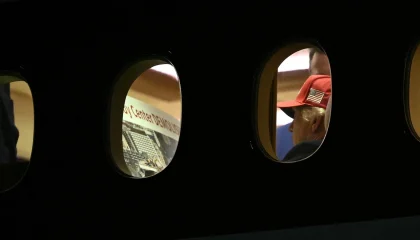
On Thursday, U.S. District Judge Christopher Cooper ordered the Kennedy Center to give 30 days’ notice before undertaking major physical work, including any demolition. The order followed a request tied to Trump’s comments and to photographs that appeared to show him reviewing a placard labeled “Kennedy Center DEMOLISHED.”
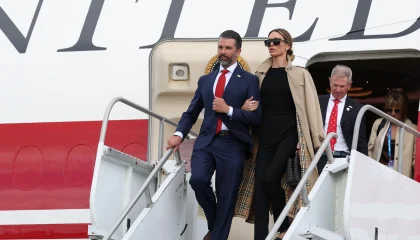
The images were taken Wednesday night through a cabin window on Air Force One after Trump landed at Joint Base Andrews, Maryland. Lawyers for Democratic Rep. Joyce Beatty, an ex officio board member, submitted the photographs as part of their arguments before the court.
Cooper’s order places an immediate procedural constraint on substantial alterations while the broader dispute continues. It means that any move toward demolition or another major physical change would have to be disclosed in advance, giving opponents and the court time to respond.
The judge also ruled that memorials honoring Trump, or any other person or entity, cannot be installed at the Kennedy Center without congressional approval.
The venue “cannot install memorials for President Trump or anyone or anything else at the Kennedy Center without Congress’s blessing,” Cooper ruled.
Earlier in the week, Cooper had determined that Trump’s name could not be placed on the exterior of the center unless Congress authorized it. The board had added the name to the facade, then removed it in June following an earlier court decision.
Friday’s demonstration will unfold against that legal backdrop. While activists press for a change in leadership, the court’s rulings have focused on the memorial’s status and the authority required to alter it. The planned chain around the building is expected to make those competing claims visible outside one of the country’s most prominent arts institutions.
Related Reading
Frequently Asked Questions
What is Protesters plan to form human chain?
Protesters plan to form human chain is the main topic of this guide. The article explains the context, practical details, and next steps readers should understand.
Why does Protesters plan to form human chain matter?
Protesters plan to form human chain matters because readers are looking for a useful answer, not just a short summary. Good content should match search intent and help them decide what to do next.