Police Maintain Security Perimeter Near RAF Fairford After Terror Arrests
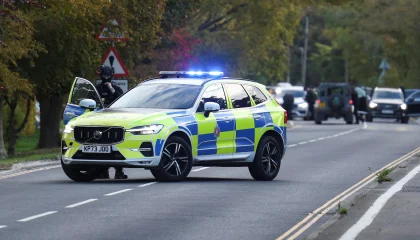
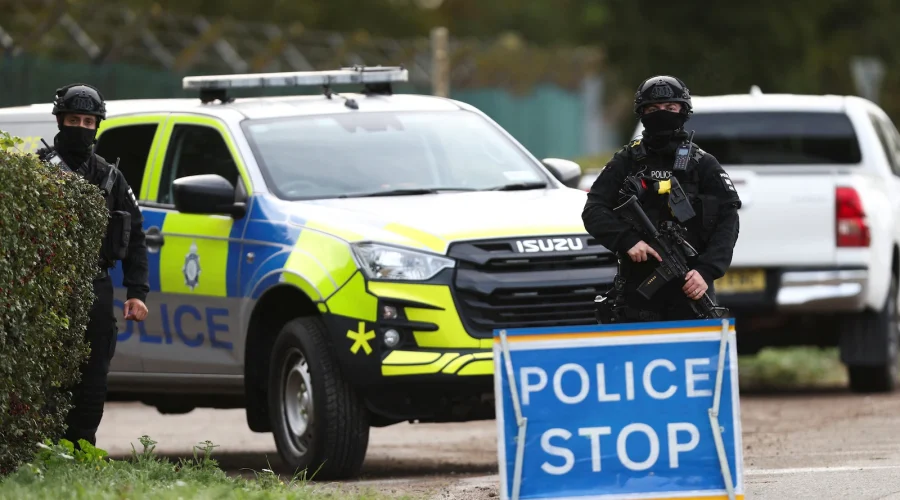
Cyberzenhub.com – A police cordon remained in place Monday near RAF Fairford in southwest England after five British men were arrested close to the air base on suspicion of terrorism and explosives-related offenses. The incident prompted a major emergency response in the nearby village of Whelford, where at least 85 homes were evacuated on Sunday.
RAF Fairford has long held strategic importance for the United States Air Force in Europe. The Gloucestershire base has been used as a staging location for long-range U.S. military operations, including missions involving B-52 and B-1 bombers deployed toward the Middle East during the continuing conflict with Iran.
Counter Terrorism Policing said the five suspects are all British nationals from London and are between 23 and 25 years old. They were detained with three vans near the base during the early hours of Sunday.
The men are being held on suspicion of offenses under the Explosives Act and of preparing a terrorist act under Section 5 of the Terrorism Act. Investigators are working to determine the complete circumstances surrounding their activity, what they knew and what may have motivated them.
Investigation Continues Amid Limited Public Detail
Defense Secretary Wes Streeting said the investigation was already well advanced, but he declined to discuss operational matters that could reveal information useful to hostile actors. He thanked police, emergency responders and others involved in the arrests, evacuations and subsequent inquiry.
“Because, often, the more we might say the more insight we give to those who would wish us harm, and do us harm given the opportunity.”
Streeting also praised an anonymous farmer whose call to authorities helped trigger the response. The farmer said she encountered masked, hooded men and vans in Whelford in the early hours of Sunday and alerted officials.
While recognizing the importance of that call, Streeting said the person who raised the alarm had only a limited understanding of the overall situation. He did not elaborate further, citing security concerns.
“I won’t go beyond that, in terms of commenting on operational security matters.”
The farmer expressed concern that the suspects had been able to get close to the base. Streeting acknowledged that people may be frustrated by the lack of public detail, but said protecting sensitive information was more important.
“A small price to pay”
He did not identify the suspects, describe their alleged intended targets or disclose whether authorities had prior intelligence about a possible plot. He also avoided commenting on what police or intelligence agencies may have known before the arrests.
Questions Over Possible International Links
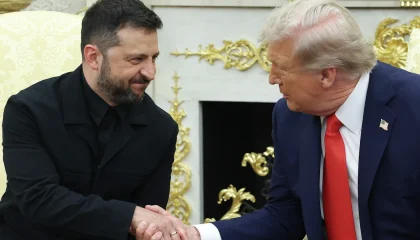
President Donald Trump praised the operation on Sunday and said it had been underway for a long time. He characterized the detained men as people who were seeking to cause major damage to U.S. personnel based at RAF Fairford.
“The arrest in the U.K. was fantastic. Working with Britain, it was an amazing job.”
Despite the base’s current role in supporting U.S. military activity connected to the war with Iran, authorities have not established any link between the suspects and Iran. Streeting said he was not making such a connection, although he noted that Iran and groups aligned with it have sought to harm Britain and its allies.
“We know that Iran and their proxies wish to do us harm.”
The Iranian embassy in London rejected any involvement. In a post on X, it condemned what it described as unfounded and malicious speculation by British individuals and media organizations.
The embassy argued that claims tying Tehran to the incident would fuel anti-Iran sentiment in Britain. It also referred to what it called criminal aggression by the United States and Israel against the Iranian people, and said Iran reserved the right to pursue legal measures where necessary.
A Base With a Major Strategic Role
RAF Fairford’s importance helps explain the scale and sensitivity of the police response. Its airfield has repeatedly supported U.S. heavy bomber deployments and other long-range operations. Security incidents near facilities of that kind are treated not only as local policing matters, but also as potential threats to military personnel, aviation infrastructure and allied operations.
The evacuation of dozens of nearby homes reflected the possibility of an explosives risk while police assessed the vans and secured the surrounding area. Armed officers were stationed on roads outside the base perimeter as the operation continued.
For residents in the Fairford area, the visible security presence has brought an international military issue directly into a rural community. Officials have emphasized that the investigation remains active and that many details cannot yet be released without compromising security work.
Police are expected to focus on the suspects’ movements, the contents and purpose of the three vans, communications between those involved and any evidence of planning. Establishing motive will be central to determining whether the arrests relate to a specific intended attack, a broader ideological threat or another form of criminal activity.
For now, the confirmed facts remain limited: five young men from London were detained near RAF Fairford, homes were evacuated as a precaution, and counterterrorism officers are examining suspected explosives and terrorism offenses. Officials have urged restraint while the inquiry develops, particularly as speculation grows around possible foreign involvement.
Related Reading
Frequently Asked Questions
What is Tipster in RAF Fairford plot had partial?
Tipster in RAF Fairford plot had partial is the main topic of this guide. The article explains the context, practical details, and next steps readers should understand.
Why does Tipster in RAF Fairford plot had partial matter?
Tipster in RAF Fairford plot had partial matters because readers are looking for a useful answer, not just a short summary. Good content should match search intent and help them decide what to do next.