
FlyDubai incident suspect had earlier security concerns, officials say
Cyberzenhub.com – Officials say the suspect in FlyDubai incident was previously identified as a potential security risk before he allegedly attacked the captain of a flight bound for Israel, triggering an emergency diversion to Saudi Arabia.
The Omani co-pilot is accused of assaulting Captain Smit Machchhar and attempting to crash the aircraft as it traveled toward Israel on Wednesday. The captain resisted, while passengers moved forward to help restrain the first officer.
The plane landed safely in Tabuk, Saudi Arabia. Officials said the suspect was transferred to the United Arab Emirates on Thursday and has cooperated with investigators. He reportedly indicated that he intended to crash the aircraft in Israel.
Questions over earlier warnings
Senior intelligence and law-enforcement officials identified the suspect as an Omani national who had been suspended from flying by Oman Air after concerns that he posed a security risk.
While training as a co-pilot for Oman Air in 2024, the man was found with extremist materials, according to officials. He later remained with the airline in an administrative role.
Investigators are now examining how the suspect in FlyDubai incident was previously flagged during his aviation career but later became eligible to fly for FlyDubai as a first officer on a route to Israel.
The investigation is expected to focus on how security information is shared among airlines, regulators and countries when pilots change employers or return from non-flying jobs to operational duties.
FlyDubai, Oman Air and the Omani Embassy did not immediately comment on the allegations.
Passengers and crew stop cockpit struggle
The alleged confrontation caused the aircraft to enter a steep dive, according to accounts from passengers. Machchhar fought back as passengers helped overpower the co-pilot before the situation worsened.
Israeli plumber Yaniv Hayoun said he assisted by pulling back on the controls to stabilize the plane. A third pilot traveling as a passenger then entered the cockpit and took over, he said.
Dr. Shota Musaev, another passenger who went toward the front of the aircraft, said the alleged attacker was bloodied and being held on the floor outside the cockpit.
Musaev said the suspect identified himself as being from Oman and pleaded for death during the incident.
“He said, ‘Kill me please, kill me please,’” Musaev said.
The episode illustrates the danger of any struggle involving cockpit controls. Even with reinforced cockpit security measures, a confrontation in the flight deck can quickly put an aircraft and everyone aboard at risk.
Israeli officials expected to join investigation
Israeli officials are expected to take part in questioning as authorities investigate whether the suspect acted alone and whether anyone else knew about the alleged plan.
Israeli Prime Minister Benjamin Netanyahu said Friday that the man had undergone what he called “Islamist radicalization.” Netanyahu said investigators were also examining whether another party directed the alleged attack.
“He came to crash the plane with all passengers on board,” Netanyahu said in a video released by his office. “We are investigating whether he was sent, and whoever sent him will pay a very heavy price.”
Netanyahu praised Machchhar, Hayoun and the passengers who intervened, saying their actions prevented a potential disaster.
FlyDubai pauses Tel Aviv flights
FlyDubai said Friday that it had temporarily suspended flights to Tel Aviv at the request of authorities. The airline said it was cooperating fully with the official investigation.
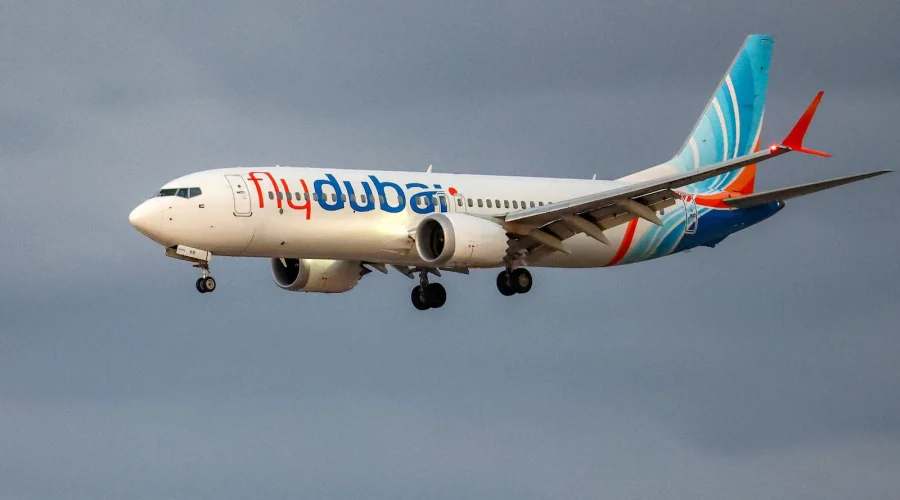
The airline operates Boeing 737 MAX 8 aircraft on regional and international routes. Despite the alleged cockpit attack, the aircraft involved was able to divert and land safely in Tabuk.
Frequently asked questions
Where did the FlyDubai flight land?
The aircraft diverted and landed safely in Tabuk, Saudi Arabia.
What are investigators examining?
Authorities are investigating the alleged attack, the suspect’s earlier security history, how he was cleared to fly for FlyDubai, and whether anyone else may have been involved.
Are FlyDubai flights to Tel Aviv operating?
FlyDubai said it temporarily halted Tel Aviv service at the request of authorities while the investigation continues.