
The US blockade of Iran is a gamble. Will it work?
The US Blockade of Iran Is a Gamble. Will It Work?
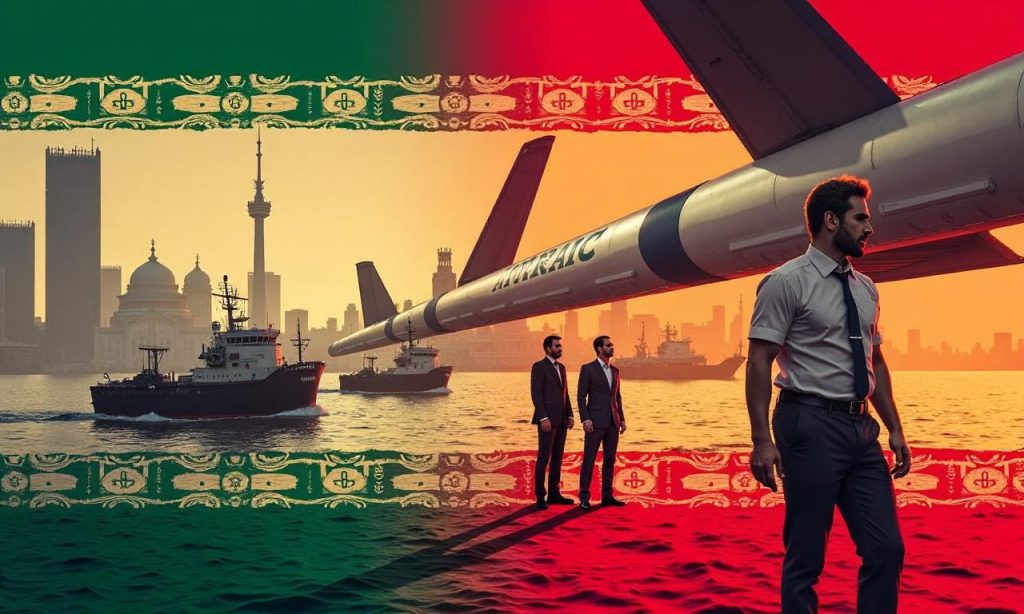
The United States has the military might to establish a blockade of maritime traffic in and out of the Gulf, but the question of its purpose remains unclear. Retired Rear Admiral Mark Montgomery, speaking to the BBC, acknowledged the feasibility of such an operation. “It’s certainly less risky than other alternatives,” he noted, highlighting the potential for a more controlled approach.
Strategic Risks and Assets
Compared to direct military action, a blockade offers a safer alternative for US forces. Rather than confronting Iranian assets in narrow waters, ships can patrol farther out, monitoring exits from Iranian ports without immediate exposure to missile or drone threats. The presence of mines in the region adds complexity, but the US navy has the tools to mitigate these dangers. Special forces, helicopters, and fast boats are among the assets ready for deployment.
“There’s less risk in this than there is in the very confined area of the Strait,” Montgomery added.
Recent examples, such as the blockades of Venezuela and Cuba, suggest the US has the experience to execute such maneuvers. Earlier this month, the seizure of the Russian oil tanker Marinera in the Atlantic further illustrated the effectiveness of these strategies.
Economic Leverage and Resilience
Centcom claims the latest blockade will target all vessels entering or leaving Iranian ports, though ships using other ports will remain unaffected. Humanitarian cargo will be allowed, “subject to inspection,” according to the command. However, the effectiveness of this move hinges on its ability to disrupt Iran’s oil exports, which have sustained the regime’s finances despite ongoing attacks.
“They believe they can outweigh this,” said David Satterfield, a former US special envoy for Middle East humanitarian affairs. “The US will feel pain from oil prices, and Gulf states may push for the Strait to reopen.”
Iran, already demonstrating resilience against sustained assaults, might view the blockade as another challenge it can endure. The country’s economy could face further strain, but rising oil prices might offset the losses, keeping its financial footing.
Current Monitoring and Observations
Maritime analysts are closely tracking the movement of ships from Iranian ports. “If I were a seafarer, I’d be very worried,” remarked Michelle Wiese Bockmann, a maritime intelligence expert. Richard Meade, editor-in-chief of Lloyd’s List, noted a surge in traffic through the Strait of Hormuz in the days following the blockade’s announcement. “We saw a flurry of vessels trying to get out,” he explained, citing 30 traceable transits in the past 48 hours.
With activity slowing, it may take time before the US navy intercepts ships in or out of Iranian waters. The conflict has shifted from active combat to a strategic standoff, with the global economy caught in the crossfire. China’s involvement in diplomatic talks in Islamabad hints at its potential role in pressuring Iran to ease tensions, offering Washington a diplomatic edge.