High Costs Put Family Budgets at the Center of the 2026 Midterms
Cyberzenhub.com – For voters heading toward the Nov. 3 midterm elections, everyday expenses are shaping political choices in states expected to play an outsized role in deciding control of Congress. From remote Alaskan communities to Iowa farm country, fuel bills, heating costs and trade policy are becoming central tests of President Donald Trump’s administration.
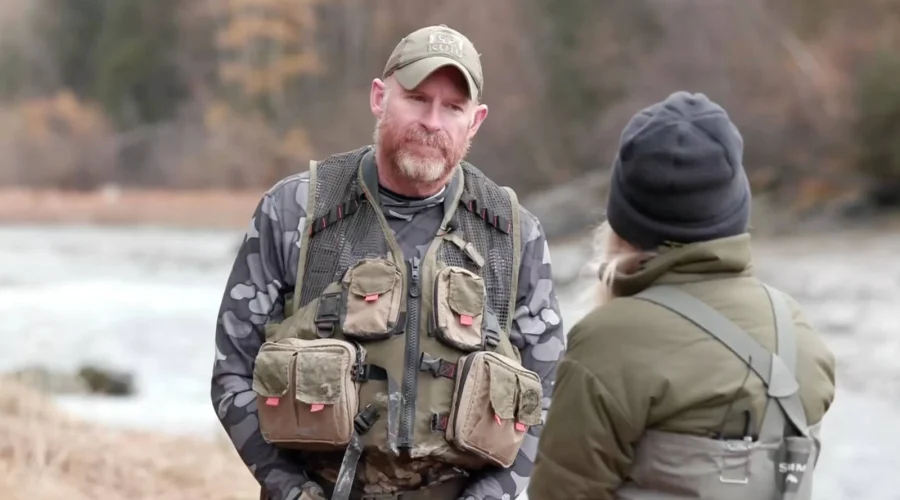
In Alaska, the cost of getting around can be especially punishing. Josh York, a retired Army major who now works in health care administration near Anchorage, has watched fuel prices remain high despite expectations that they might ease.
“The gas prices don’t seem to be coming down, and believe me, I watch,” York said.
York, who has voted for Trump in each of the president’s three campaigns, recently encountered prices of $8.99 per gallon while traveling through rural Alaska. In some of the state’s most isolated areas, fuel prices have reached as much as $24 per gallon. The state’s geography, vast distances and limited road access can make transportation costs a direct burden for households and businesses.
“Recently, we were out in the middle of rural Alaska, and we were paying $8.99 a gallon for gas,” York said.
He tied the increase to the war in Iran, a conflict that has sharply disrupted movement through the Strait of Hormuz. Before the war, roughly one-fifth of the world’s oil and gas passed through the strategic waterway. Slower traffic there has added pressure to global energy markets, with consequences that can be felt far from the Middle East.
A Competitive Race in Alaska
Trump traveled to Alaska this week to support Republican Sen. Dan Sullivan, who is seeking another term while facing Democratic Rep. Mary Peltola. Democrats view the contest as one of four Senate opportunities that could help them take control of the chamber.
The race is considered highly competitive even though Trump carried Alaska by 13 points in 2024. Voter concerns about affordability have given the campaign added urgency, particularly as the president’s approval ratings have weakened. A new ABC News/Washington Post/Ipsos poll found that 52% of Americans strongly disapprove of Trump.
At a rally in Wasilla, about 45 miles north of Anchorage, Trump argued that the conflict with Iran would end soon and that prices would fall afterward. He also pushed back on Democratic criticism focused on household expenses.
“Every time they want to try and get me, they say ‘affordability, sir. This and that.’ I said, ‘They caused the problem,’” Trump said. “But we have reduced it very substantially.’”
Sullivan, who has supported Trump and backed the Iran war, has acknowledged that the conflict has contributed to higher prices. He has said the war should end “soon.” For some Alaskans, the financial strain extends beyond gasoline. One Fairbanks voter said heating bills had risen beyond the cost of a mortgage payment.
York said he disapproves of Trump’s handling of the economy, the Iran war and the country’s overall direction. Still, he has not settled on a Senate candidate. He sees both candidates as offering plans for Alaska, but said the decision will be personal rather than strictly partisan.
“I know that they both have their ideas for Alaska and how they want to do things. And I’m not gonna say one’s right versus the other being wrong,” York said. “But at this point, I’ve got to look at what’s best for my family. I’ve got to look at what’s best for my kids.”
Iowa Farmers Feel Diesel Costs
Economic concerns are also dominating conversations in Iowa, where a closely watched Senate campaign is unfolding. Farmers depend heavily on diesel to move livestock, run equipment and transport goods, leaving them particularly exposed when energy prices rise.
Dan Pederson, a cattle farmer in Underwood who has voted for Trump three times, said the price of filling his fuel storage has changed dramatically. His tanks hold 3,500 gallons, and he said filling them now costs $20,000, compared with roughly $12,000 a year earlier.
“The ripple effect – hauling cattle, pickups, trucks, everything [is] just– it’s just astronomical. It’s crazy,” Pederson said.
The added expense does not stop at the farm gate. Higher diesel prices can affect the cost of moving cattle, supplies and equipment, placing pressure throughout rural businesses that rely on trucking and agricultural transportation. For farmers, the issue is not abstract: fuel spending can quickly alter operating budgets during a single season.
Pederson said even some of his most committed Republican friends have begun to question Trump’s direction. He described significant “wavering” among voters who had previously been firmly supportive of the president.
Republican Rep. Ashley Hinson, the party’s Senate candidate in Iowa, has separated herself from Trump on the Iran war, urging the president to bring the conflict to a close. That position reflects the challenge facing Republican candidates who must navigate voter frustration over costs while remaining connected to a president whose policies have become a major part of the midterm debate.
Trade, Energy and Voter Confidence
Trump’s trade approach is also part of the Iowa discussion. Last week, he announced what he called a “diesel deal” after a phone conversation with Russian President Vladimir Putin. Trump said the arrangement would permit Russian diesel to reach world markets after sanctions and Ukrainian strikes on Russian oil refineries had limited supplies.
The announcement underscored how international conflicts, sanctions and energy markets are now intertwined with domestic campaigns. In Alaska, voters are weighing the price of fuel and heat against their views of the Iran war. In Iowa, farmers are calculating the cost of diesel against the expense of moving livestock and maintaining their operations.
As the midterms approach, candidates in both states face a simple but demanding question from voters: whether their policies will make life more affordable for families. For many undecided or frustrated voters, the answer may matter more than past party loyalty.
Related Reading
Frequently Asked Questions
What is Midterm vote is about what s best?
Midterm vote is about what s best is the main topic of this guide. The article explains the context, practical details, and next steps readers should understand.
Why does Midterm vote is about what s best matter?
Midterm vote is about what s best matters because readers are looking for a useful answer, not just a short summary. Good content should match search intent and help them decide what to do next.