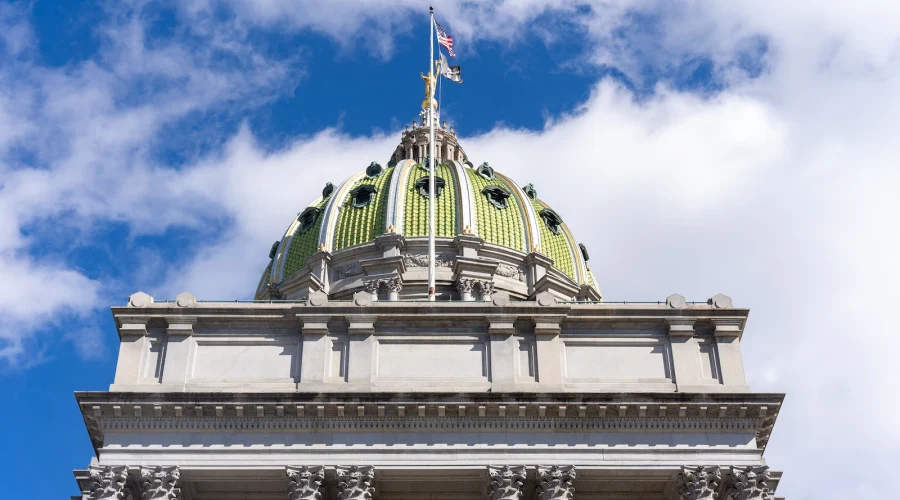
Cyberzenhub.com – The balance of power in state governments is on the ballot in many states this November. Both parties could win "trifectas" — control of the governor’s mansion and both chambers of the state legislature — in some states, which would give them more power to advance their agendas. The Arizona State Capitol complex in Phoenix, Feb.
2, 2026. Jim West/UCG/Universal Images Group via Getty Images Where Democrats are eyeing trifectas "It's a great environment for Democrats this year and the opportunity in state legislatures is huge," Will Rusche, an official with the Democratic Legislative Campaign Committee, told ABC News. One opportunity is in Pennsylvania, where Democrats control the state House (103 Democrats to 100 Republicans) but the GOP holds the state Senate (23 Democrats to 27 Republicans).
Democrats are hoping to net three seats to flip the Senate and hold onto the governorship if Democratic Gov. Josh Shapiro wins reelection. Only half of Pennsylvania’s state Senate seats are up for reelection.
Democrats have said they’ll raise the minimum wage, codify abortion rights and work on transportation funding if they have a trifecta. The Pennsylvania Democratic Party, in partnership with Shapiro, is running the “Rise Up Pennsylvania Initiative” for getting out the vote for congressional, gubernatorial and statehouse elections. “You've got the power to help us get more stuff done here in Pennsylvania,” Shapiro said at a recent campaign event in Bucks County, Pennsylvania.
Pennsylvania Gov. Josh Shapiro delivers the keynote speech during the AI Horizons Summit at Bakery Square, Sept. 17, 2026, in Pittsburgh.
Jeff Swensen/Getty Images But Republicans are ready to defend the state Senate. “The Pennsylvania State Senate has been a critical shield for the Commonwealth against the radical, socialist ideologies of the Democrats in the PA State House, and the failed policies of Governor Josh Shapiro,” James Markley, the executive director of the Republican Party of Pennsylvania, told ABC News in a statement. Minnesota has a state House that is currently split: 67 Democrats, 66 Republicans and one vacancy (in a GOP-leaning seat).
Democrats need to net one seat to gain full control. Related Democratic enthusiasm in the 2026 primaries and what it could mean for midterm elections They already control the state Senate (34 Democrats to 33 Republicans) and the governorship, which they also hope to hold. If Democrats gain a trifecta, they said they want to work on affordability and the costs of housing and healthcare, according to Minnesota Public Radio.
Popular Reads Trump claims executive privilege to keep Kennedy Center conversations secret Oct 15 Iran updates: Trump admin prepares options, including 'mother of all bombs' Oct 17 Dems lead GOP in House vote choice as Trump's approval rating hits record low: Poll 1 day ago Nevada has a state Assembly and Senate where Democrats hold comfortable majorities. They’re trying to flip the governorship held by Republican Gov. Joe Lombardo.
They’ll get a trifecta if Democratic candidate Aaron Ford wins the election and Democrats hold the other chambers. One implication: Democrats could repeal Nevada’s “right-to-work” law that lets workers get union benefits without paying dues. Where Republicans, or both parties, could notch trifectas Republicans have fewer opportunities to go on the offense this year in statehouses.
“Our focus has been on making strategic investments that will give Republicans a chance to overcome historical headwinds and hold as many majorities as possible this fall,” Republican State Leadership Committee President Edith Jorge-Tuñón told ABC News. One state where Republicans are eyeing a trifecta: Kansas. The GOP already holds comfortable majorities in the state House (88 Republicans to 37 Democrats) and state Senate (31 Republicans to nine Democrats).
Republicans are hoping to flip the governorship. One step Republicans might pursue with a trifecta is redrawing the state’s only Democratic-held congressional district. The state’s term-limited Democratic governor had previously blocked efforts to do so.
Related Democratic Senate candidate Adam Hamilton says he's fighting for the 'rights of all people' Kansas state senator and candidate for Governor Ty Masterson listens as U.S. Vice President JD Vance speaks during an event at Webco Manufacturing on Sept. 14, 2026, in Olathe, Kansas.
Mark Schiefelbein-Pool/Getty Images In Arizona, Democrats hope to flip both GOP-controlled chambers of the statehouse while Republicans hope to flip the governorship. GOP gubernatorial candidate Andy Biggs’ campaign has pointed to working on eliminating or replacing income taxes as well as moves on tax reform and affordability. Democrats, meanwhile, said in 2024 they’d aim for workers and reproductive rights legislation if they got a trifecta.
A Republican operative familiar with state level politics told ABC News that Republican gubernatorial candidates in states like Arizona and Pennsylvania who are lagging behind the Democrats in polling present a challenge for down-ballot candidates, who might outperform the gubernatorial candidates. The operative also pointed to the challenging national environment for Republicans and cautioned that Democrats seem too optimistic over making inroads in some statehouses like in Texas and Florida. Michigan, which has a Democratic governor and a split legislature, is also a jump ball.
Democrats need to net four seats to flip the state House (currently 52 Democrats, 58 Republicans) and Republicans need to net two seats to flip the state Senate (currently 20 Democrats, 18 Republicans). Republicans are trying to win the governorship as well. Democratic gubernatorial nominee and Michigan Secretary of State Jocelyn Benson, talks during a televised debate, Oct.
6, 2026, at WOOD-TV, in Grand Rapids, Mich. Paul Sancya/AP Democrats, if they win a trifecta, could address education, prescription drug pricing and ethics reforms as well as work on a voting rights act, according to The Detroit News and Votebeat. Republicans could institute voting reforms such as a proof-of-citizenship requirement, per Votebeat , and gubernatorial candidate John James has focused on affordability and safety priorities on the campaign trail.
Related Reading
Frequently Asked Questions
What is Democrats Republicans seek trifectas in the 2026?
Democrats Republicans seek trifectas in the 2026 is the main topic of this guide. The article explains the context, practical details, and next steps readers should understand.
Why does Democrats Republicans seek trifectas in the 2026 matter?
Democrats Republicans seek trifectas in the 2026 matters because readers are looking for a useful answer, not just a short summary. Good content should match search intent and help them decide what to do next.