
Trump administration pitches others to join new coalition to reopen Strait of Hormuz
Trump Pitches New Coalition to Reopen Strait of Hormuz
Initiative Seeks Global Partners for Strategic Control
Trump administration pitches others to join – The Trump administration is urging other nations to join a coalition aimed at ensuring the free flow of maritime traffic through the Strait of Hormuz. This diplomatic effort, outlined in a recent State Department memo, seeks to align international actors to counter potential disruptions to the vital waterway. A U.S. official explained that the initiative would facilitate coordinated sanctions and intelligence exchanges to protect the strait. The memo also directed embassies to promote the coalition’s formation, with a deadline for additional participation by Friday.
Maritime Security and Economic Implications
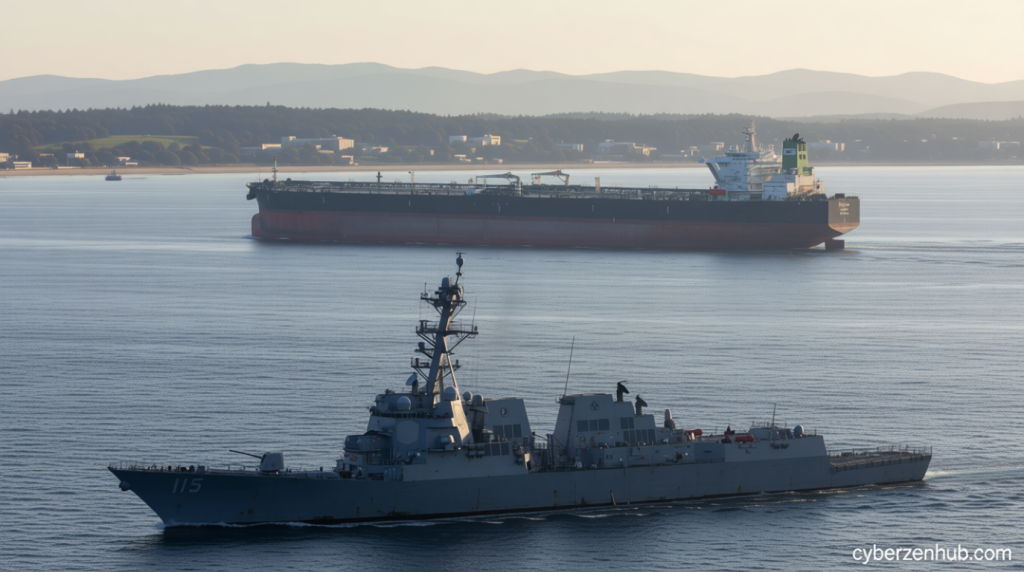
The Strait of Hormuz serves as a crucial artery for global oil transportation, making it a focal point for geopolitical maneuvering. Recent U.S. military actions, such as the interception of the Iranian vessel MT Stream by the USS Rafael Peralta, have underscored the administration’s commitment to securing the passage. These operations highlight the importance of a unified coalition to deter Iranian influence in the region. The initiative emphasizes both diplomatic and military strategies to maintain the strait’s open status, addressing concerns over energy security and economic stability.
The coalition’s structure involves the U.S. Central Command overseeing operational aspects, while the State Department handles diplomatic coordination. This division aims to streamline efforts by connecting allies with commercial shipping interests. Meanwhile, the Pentagon is tasked with real-time monitoring of maritime activity, ensuring swift responses to threats. By integrating these roles, the administration hopes to create a sustainable framework for protecting the strait and reinforcing its strategic significance.
European Tensions and U.S. Leadership
The Trump administration has expressed skepticism about European-led initiatives to secure the strait. Defense Secretary Pete Hegseth recently criticized European efforts, arguing that nations should take direct action rather than relying on symbolic diplomatic gestures. He called their approach “silly,” emphasizing the need for decisive military involvement. Despite this, the U.S. is positioning itself as the central force in a more assertive coalition, signaling a shift in regional leadership dynamics.
“Europe and Asia have benefited from our protection for decades, but the time for free-riding is over,” Hegseth stated. His comments highlight the administration’s belief that European allies must contribute more actively to U.S. strategic goals. While the UK and France have been vocal in their coalition-building, the Trump administration is pushing for a more aggressive stance, which could reshape the balance of power in the region.
Iranian Reactions and Global Energy Risks
Iran’s response to the coalition’s formation has been sharp, with Navy Commander Shahram Irani accusing the U.S. of engaging in “piracy” and calling it “maritime terrorism.” Irani argued that Iran’s closure of the strait from the Arabian Gulf was a necessary measure to assert control over its territorial waters. His remarks reflect the broader Iranian stance that the U.S. is overreaching in its efforts to dominate the region’s maritime routes. Analysts warn that any sustained disruption of the strait could send shockwaves through global oil markets, affecting prices and supply chains worldwide.
The coalition’s formation comes at a critical time for international energy security. With tensions rising between the U.S. and Iran, the initiative aims to prevent any further escalations that might threaten the flow of crude oil. The administration’s push for broader participation underscores its focus on consolidating alliances to counter Iranian actions. While the coalition’s success depends on diplomatic unity, its military component could serve as a deterrent against potential threats, reinforcing the strategic importance of the Strait of Hormuz in global trade.