
Italy tells Rubio that Europe needs America and vice versa
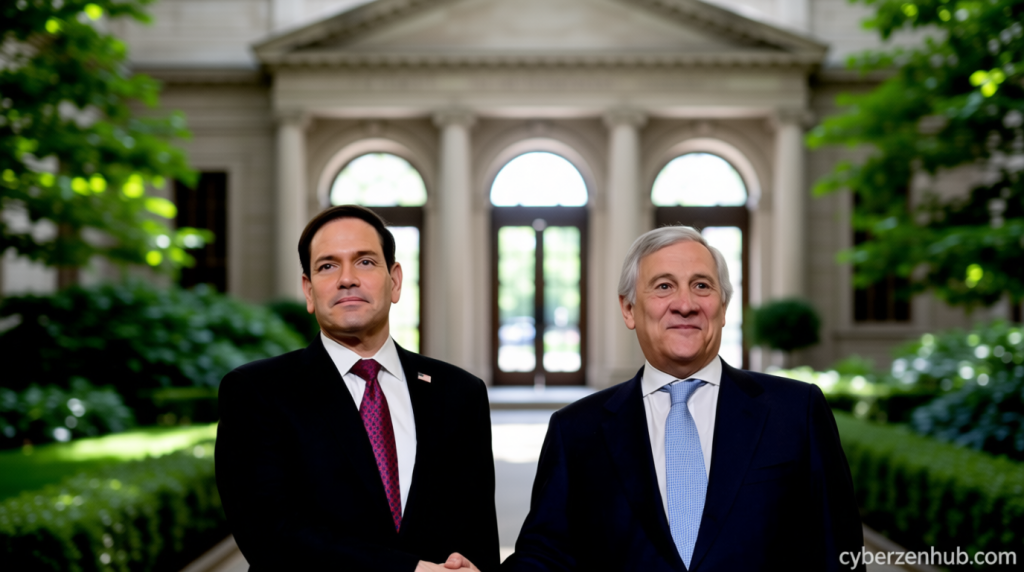
Italy and U.S. Strengthen Bonds Amid Strategic Interdependence
Italy tells Rubio that Europe needs – During a pivotal diplomatic encounter in Rome, Italian Foreign Minister Antonio Tajani highlighted the reciprocal importance of transatlantic unity, asserting that Europe and the United States depend on one another as U.S. Secretary of State Marco Rubio concluded a two-day diplomatic initiative in Italy and the Vatican. The meeting, held on Friday, aimed to mend fractures caused by recent disputes over the U.S.-Israeli military campaign in Iran. Tajani underscored the necessity of maintaining robust ties with Washington, stating that tensions have been eased through Rubio’s visit. The dialogue centered on the ongoing Iran conflict, its repercussions in Lebanon, and broader geopolitical challenges such as the situations in Venezuela and Cuba.
Rubio’s Discussions and Mutual Priorities
Rubio engaged in talks with Tajani, emphasizing the shared interests of both regions. He expressed optimism about the potential for progress, stating that “things can go in the right direction” during the exchange. Tajani echoed this sentiment, reinforcing that Italy’s reliance on American support remains critical. He added that the United States also requires Europe’s partnership, underscoring the mutual benefits of collaboration. This dialogue followed a period of friction, fueled by former President Donald Trump’s policies, including his imposition of tariffs, criticism of European countries for not aiding in the Iran war, and his public remarks targeting Pope Leo XIV.
Italy’s Stance on the Iran Conflict
Italy’s position on the Iran war has been a focal point of recent disagreements. Tajani clarified that Italy is committed to aiding the U.S. in maritime security efforts, particularly in the Strait of Hormuz, once a permanent ceasefire is achieved. He highlighted the nation’s readiness to deploy naval forces for demining operations and its existing involvement in Lebanon through the United Nations peacekeeping mission. The Italian leader also stressed the significance of U.S. troop presence in Europe, particularly within NATO, as a reinforcement of collective defense. This aligns with Trump’s concerns about reducing American military commitments in the region.
Meanwhile, the U.S. State Department noted Rubio’s focus during the talks on promoting freedom of navigation and safeguarding maritime security. He also pressed for an end to the war in Ukraine and urged Western nations to protect their economic interests from potential disruptions. Trump’s critique of Italy and the Vatican for opposing the Iran conflict has intensified the divide, with Meloni accused of lacking courage and being “negative” on U.S. efforts. Despite this, Meloni has remained a key figure in European diplomacy, seeking to position herself as a reliable partner for Washington.
Domestic Challenges and Political Shifts
Italy’s domestic political landscape has added complexity to its foreign policy stance. Meloni, who had previously been viewed as a staunch U.S. ally, faces growing opposition from within her own party. A recent referendum loss in March has strained her authority, and the country’s export-dependent economy now grapples with concerns over U.S. tariff threats. Meloni has warned that the closure of the Strait of Hormuz has exacerbated energy costs, affecting household budgets and economic stability.
The Italian government’s constitutional framework further defines its role in the conflict. The nation’s treaties specify that military bases may be used for logistics and training under NATO, but direct offensive operations—such as bombing—require parliamentary approval. This provision has become central to Italy’s argument that it should not be compelled to support the Iran war without domestic consensus. Meloni and Tajani have consistently maintained that Italy’s involvement depends on parliamentary decisions, reflecting a shift from previous unconditional backing of U.S. military actions.
Vatican Engagement and Peace Efforts
Rubio’s itinerary extended to the Vatican, where he spent over two and a half hours in discussions with Pope Leo XIV and Vatican Secretary of State Cardinal Pietro Parolin. These talks focused on initiatives to secure a lasting peace in the Middle East and other collaborative priorities. The Vatican’s involvement underscores its role as a mediator in international conflicts, with Rubio leveraging the Pope’s influence to address the ongoing tensions. The U.S. State Department described the sessions as productive, highlighting the shared goals of both entities in fostering stability.
Italy’s strategic significance as a logistics hub for U.S. and allied operations in the Mediterranean, Middle East, and North Africa remains a critical concern. The nation’s potential role in these efforts could be jeopardized if troop levels are reduced, prompting worries about NATO’s defensive posture in southern Europe. The recent decision to withdraw 5,000 military personnel from Germany has already signaled a shift in U.S. military strategy, with Trump threatening to pull more troops from Italy and Spain due to their opposition to the Iran war.
Historical Context and Future Implications
The tensions between Italy and the U.S. trace back to late March, when Italy refused to allow U.S. bombers to use Sigonella base in Sicily for missions to the Middle East without parliamentary approval. This incident highlighted the growing divide between the two allies, as Italy sought to assert its autonomy in military decisions. Meloni, who had positioned herself as a bridge between Washington and Europe, now finds her leadership tested by both domestic and international challenges.
Despite these challenges, the meeting with Rubio signals a renewed effort to stabilize the transatlantic relationship. Tajani’s emphasis on mutual need suggests a willingness to reconcile differences, though the path forward remains uncertain. The Italian government continues to balance its strategic partnerships with the U.S. and its domestic priorities, navigating a complex geopolitical landscape. As the situation evolves, the role of Italy in NATO and its economic interests will remain central to the discourse on transatlantic cooperation.
Popular reads from recent news include updates on Iran: Rubio stated the U.S. anticipates Iran’s response to a potential deal on May 8 at 9:13 AM. Additionally, the DOJ is investigating $2.6 billion in oil trades linked to the Iran war, as reported on May 7 at 7:46 AM. On May 3 at 9:04 PM, Trump reiterated his commitment to guiding ships out of the Strait of Hormuz, reflecting his ongoing influence in shaping U.S. policy despite his departure from office.
“I believe things can go in the right direction,” Tajani said. “I am convinced Europe needs America — Italy needs America — and the United States also needs Europe and Italy.”
The dialogue between Tajani and Rubio has reignited hopes for a stronger transatlantic alliance, even as disputes over military involvement and economic policies persist. Italy’s position as a key player in regional stability and its commitment to democratic values will be crucial in determining the future of its relationship with the U.S. As both sides seek to rebuild trust, the outcome of their discussions may set the tone for renewed cooperation in an increasingly volatile international environment.