
Trump calls Iran strikes a ‘love tap,’ says ceasefire still in effect
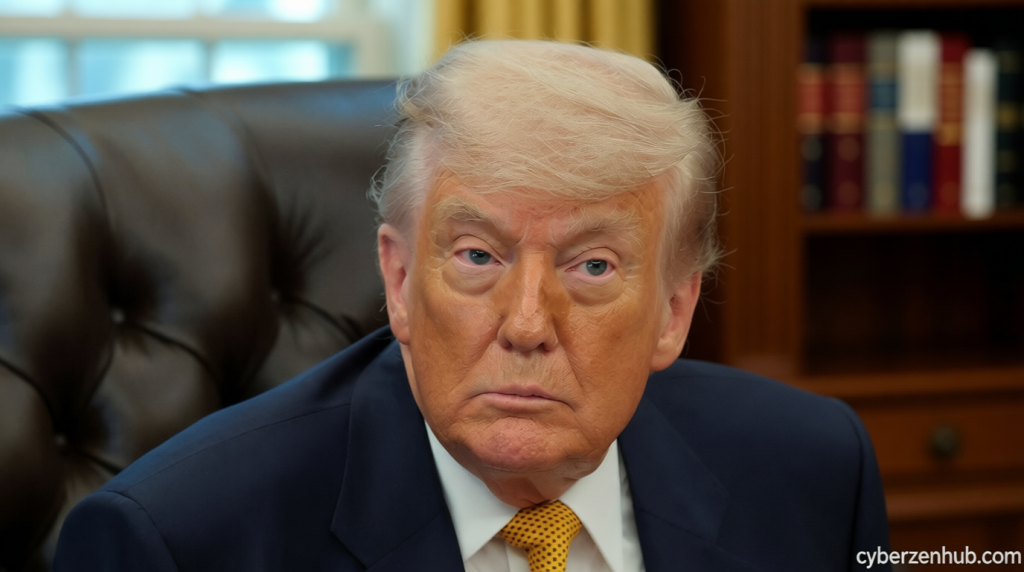
Trump calls Iran strikes a ‘love tap,’ says ceasefire still in effect
Trump calls Iran strikes a love – President Donald Trump described the recent attacks on Iran as a “love tap,” asserting that the existing ceasefire between the two nations remains active. During a Thursday interview with ABC News’ Rachel Scott, the leader characterized the strikes as a measured response, emphasizing that the pause in hostilities is not yet over. When asked whether the exchange indicated the end of the ceasefire, which had been in place for a month, Trump responded with firm confidence, stating, “No, no, the ceasefire is ongoing. It’s still in effect.”
“It’s just a love tap,” Trump told ABC News’ Rachel Scott when questioned about the strike.
Later that day, Trump reiterated his warnings to Iran, stating that the nation must agree to a deal to restart negotiations aimed at ending the war or face more aggressive retaliation. The leader emphasized his intent to escalate if a resolution is not reached swiftly, declaring on his social media platform, “[J]ust like we knocked them out again today, we’ll knock them out a lot harder, and a lot more violently, in the future, if they don’t get their Deal signed, FAST!” This statement underscored the administration’s readiness to take further action if diplomatic efforts falter.
“J]ust like we knocked them out again today, we’ll knock them out a lot harder, and a lot more violently, in the future, if they don’t get their Deal signed, FAST!”
The U.S. Central Command (CENTCOM) provided context for the strikes, stating that they were conducted in self-defense after Iranian forces attacked U.S. destroyers in the Strait of Hormuz. In a statement, CENTCOM noted, “U.S. forces intercepted unprovoked Iranian attacks and responded with self-defense strikes as U.S. Navy guided-missile destroyers transited the Strait of Hormuz to the Gulf of Oman.” The agency clarified that no U.S. assets were directly struck during the incident, though the ships were targeted by multiple missiles, drones, and small boats.
CENTCOM further detailed that the USS Truxtun, USS Rafael Peralta, and USS Mason were navigating the strategic waterway when the attacks occurred. These vessels, part of the U.S. naval fleet, were transiting the area as part of an ongoing operation to enforce blockades on Iranian ports. The attack, according to the command, was a retaliation for prior U.S. strikes on an Iranian oil tanker, which had been targeted as it approached the Strait of Hormuz. “U.S. forces targeted Iranian military facilities responsible for attacking U.S. forces, including missile and drone launch sites, command and control locations, and intelligence, surveillance, and reconnaissance nodes,” CENTCOM added.
Contrasting the U.S. narrative, the Islamic Revolutionary Guard Corps (IRGC) issued a statement claiming the attacks were a proportional response to previous U.S. actions. The IRGC asserted that its forces had struck the U.S. warships in retaliation for strikes on an Iranian oil tanker and civilian areas along the Iranian coast. The statement highlighted the IRGC’s claim of “substantial damage” inflicted on the American vessels, a figure that CENTCOM disputed, stating the damage was minimal and the strikes were necessary to protect U.S. interests.
The Strait of Hormuz, a vital maritime route for global oil transportation, has become a focal point of escalating tensions between the U.S. and Iran. This narrow passage, just 30 miles wide, is critical for the flow of approximately 20% of the world’s oil supply, making it a strategic target for both sides. The recent incidents in the strait underscore the fragile balance between military confrontation and diplomatic engagement. While the ceasefire was intended to reduce hostilities, the attacks suggest that Iran is still testing the U.S. resolve and willing to take risks to assert its position.
Trump’s use of the term “love tap” has sparked debate among analysts, who interpret it as a metaphor for a mild or symbolic strike. The phrase implies that the U.S. is not yet fully committed to escalating the conflict, but rather delivering a “soft punch” to signal a warning. However, the leader’s subsequent threats to intensify attacks if a deal is not reached indicate a potential shift in strategy. The contrast between the “love tap” and the possibility of more severe retaliation highlights the administration’s dual approach of balancing deterrence with diplomacy.
Analysts suggest that the ceasefire, while still in effect, may be under pressure due to the recent actions. The agreement, which began a month prior, was intended to de-escalate tensions after a series of military confrontations. However, the IRGC’s decision to target U.S. ships appears to challenge the terms of the ceasefire, raising questions about its sustainability. Trump’s response to the strikes, framed as a necessary and proportionate measure, aligns with the administration’s broader strategy of maintaining a show of force while keeping open channels for negotiation.
The USS Rafael Peralta (DDG 115), which was involved in the attacks, is often deployed in the Persian Gulf and Indian Ocean, underscoring its role in regional security. The ship’s presence in the Strait of Hormuz highlights the U.S. commitment to safeguarding its interests in the region. Meanwhile, the IRGC’s statement, which included details about the attack, was released alongside images of the USS Rafael Peralta near a vessel attempting to sail to an Iranian port. This image, captured on April 24, 2026, is part of the U.S. blockade efforts on Iranian ports, further illustrating the complex interplay of military and political actions.
The conflict in the region has seen a series of confrontations, with both sides accusing each other of provocative actions. The Iranian attacks on U.S. ships come amid a backdrop of ongoing disputes over Iran’s nuclear program and its regional influence. The U.S. has accused Iran of threatening global oil supplies, while Iran has framed its actions as a defensive measure against Western aggression. The recent strikes and the administration’s response reflect the high stakes of the situation, where even a single incident can ripple through international markets and diplomatic relations.
As the situation unfolds, the effectiveness of the ceasefire and the broader implications for U.S.-Iran relations remain under scrutiny. While Trump has maintained that the pause is still in effect, the attacks suggest that the agreement may be a temporary measure. The administration’s ability to enforce the ceasefire without significant backlash will depend on its capacity to manage the crisis while keeping pressure on Iran. The outcome of these developments could shape the future of the conflict, determining whether diplomacy prevails or hostilities resume with renewed intensity.
In the days following the strikes, officials from both sides will likely assess the situation. The U.S. may use the incident to push for renewed negotiations, while Iran could leverage it to justify its military actions and demand concessions. The phrase “love tap” encapsulates Trump’s view that the strikes were a necessary but restrained response, setting the stage for potential escalation if Iran fails to meet U.S. demands. The strategic maneuvering in the Strait of Hormuz serves as a reminder of the precarious nature of the ceasefire and the readiness of both nations to act decisively in the absence of a resolution.