
Top Judiciary Democrat Raskin blasts possible Trump-IRS settlement
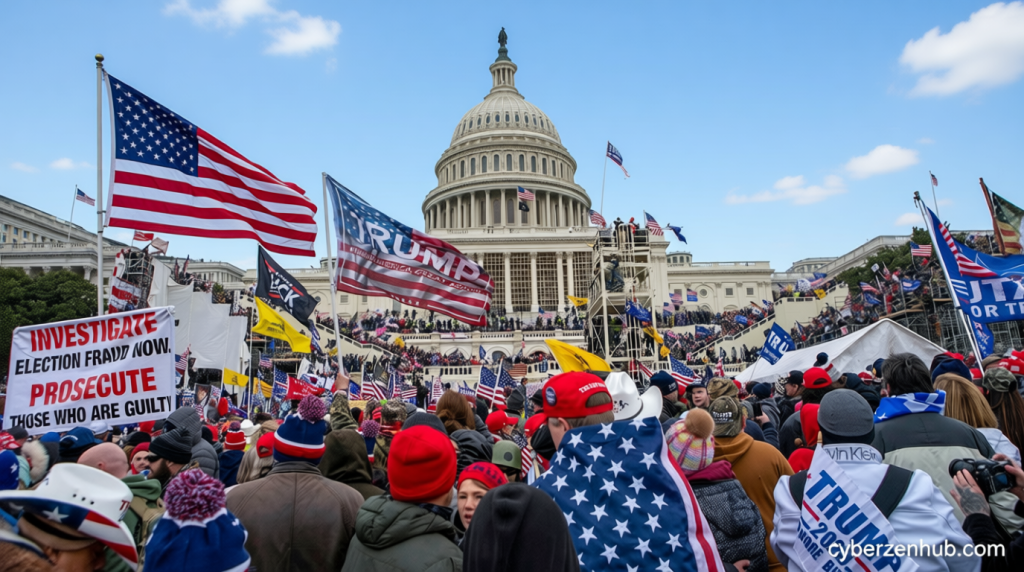
Top Judiciary Democrat Raskin Condemns Potential Trump-IRS Settlement as Unconstitutional
Top Judiciary Democrat Raskin blasts possible – On Sunday, Jamie Raskin, the Democratic ranking member of the House Judiciary Committee, strongly criticized a proposed settlement between President Donald Trump and the Internal Revenue Service (IRS). The deal, which could establish a $1.7 billion fund to compensate allies of the former leader, has sparked outrage among lawmakers who argue it undermines the separation of powers and the rule of law.
Democrats Accuse Trump of Expanding Political Slush Fund
According to ABC News, Raskin labeled the settlement a “political slush fund,” asserting that it operates without congressional approval and violates the Constitution. He emphasized that the power to allocate federal funds lies exclusively with Congress, and that the Trump administration’s initiative bypasses this authority entirely.
“Only Congress has the power to appropriate money, and Congress never voted to create this $1.7 billion political slush fund at the Department of Justice,” Raskin stated during an interview with ABC News’ “This Week.” “Congress would never pass a law that allows the president to unilaterally fund settlements for those he claims were wrongfully targeted.”
Raskin accused Trump of using the settlement as a tool to reward political allies, a move he described as an “invention” aimed at consolidating influence. He warned that even if Congress had endorsed the fund, its creation would still be unconstitutional on multiple fronts. The congressman’s comments followed reports that Trump might withdraw his $10 billion lawsuit against the IRS in exchange for this arrangement.
Trump’s Settlement Plan and Its Legal Implications
Details of the proposed fund emerged in recent days, with sources confirming that Trump is likely to end his high-stakes legal battle against the IRS in favor of a new financial mechanism. This $1.776 billion fund would be used to settle claims by individuals and entities linked to his administration, including those involved in the January 6 Capitol attack.
Raskin pointed out that the settlement could affect nearly 1,600 individuals charged in connection with the Jan. 6 events, along with organizations associated with Trump. He argued that the plan creates a precedent where the executive branch assumes the authority to fund claims outside of the legislative process, which he called a “clear violation” of constitutional principles.
“We know the president wants to keep setting up these political slush funds,” Raskin added. “All of this is outside of the Constitution. It’s outside of congressional spending power, and so it’s illegal. It’s unconstitutional.”
The congressman criticized the administration’s efforts to reframe the fund as a “Truth and Justice Commission,” suggesting it masks the true intent of rewarding political supporters. Raskin highlighted that the commission would have the authority to review and settle claims, potentially allowing the IRS to prioritize cases that align with Trump’s agenda.
Constitutional Challenges and the Fourteenth Amendment
Raskin further contended that the settlement would violate Section 4 of the Fourteenth Amendment, which prohibits the federal government from spending money to settle claims related to insurrection or rebellion. He cited this provision as a key argument against the fund’s legality, stating that it would effectively subsidize payments to those pardoned for their role in the Capitol riot.
“If you look at Section 4 of the Fourteenth Amendment, it says no money can be spent by the federal government for the purpose of paying for insurrection or rebellion,” Raskin explained. “So, to the extent he wants to give a million dollars to each of 1,600 pardoned rioters, that’s an unconstitutional use of money.”
He emphasized that the amendment was designed to prevent the government from financially backing those who oppose the Constitution, such as insurgents or rebels. Raskin argued that the settlement plan would blur the line between justice and political favoritism, undermining public trust in the legal system.
Demands for Congressional Action and Legal Recourse
In response to the settlement, Raskin urged Congress to take decisive action to halt its implementation. He stated that Democrats would not only voice opposition but also pursue legal avenues to challenge the fund’s validity. “Undoubtedly, we will file lawsuits,” he said, underscoring the need for legislative oversight.
Raskin also pointed to the role of Congress as the “Article I branch,” highlighting its constitutional authority over spending. He warned that if Republican lawmakers respected the Constitution, they would support measures to block the fund. “If our colleagues have any respect for the Constitution and the powers of Congress, they will move to stop this,” he said.
Related Stories and Broader Context
Meanwhile, the episode has drawn comparisons to other instances of executive overreach, including the creation of the “Truth and Justice Commission” to compensate allies. This commission, which would oversee the fund, has been criticized for its lack of transparency and its potential to prioritize political settlements over judicial processes.
Other recent headlines include reports on the Ebola outbreak in Africa, which the World Health Organization (WHO) has classified as a “public health emergency of international concern.” Additionally, there are updates on the electoral race in Louisiana, where Trump-backed candidates have advanced to a runoff. These stories underscore the broader political climate as lawmakers grapple with issues of accountability and authority.
Raskin’s opposition reflects a growing divide over the use of executive power in the aftermath of the Jan. 6 attack. While some view the settlement as a necessary compromise to ease tensions, others see it as a calculated move to consolidate power. The congressman’s position reinforces the Democratic Party’s stance on maintaining congressional control over federal expenditures and upholding constitutional safeguards.
As the debate intensifies, the focus remains on whether the settlement will be upheld or blocked. With the potential for legal action and congressional scrutiny, the outcome could have significant implications for the balance of power between the branches of government. For now, Raskin’s voice stands as a critical counterpoint to the administration’s plans, emphasizing the importance of legislative oversight in matters of national significance.