
China committed to not ‘provide material support to Iran,’ US trade rep says
China Committed to Not Provide Material Support to Iran, US Trade Rep Says
China committed to not provide material – U.S. Trade Representative Jamieson Greer confirmed on May 17, 2026, during an interview with ABC News, that China has pledged not to provide material support to Iran. This assurance came as part of diplomatic discussions with Beijing, where Greer highlighted President Donald Trump’s efforts to secure commitments from China on regional stability. Despite this, the U.S. did not formally request China to take direct action in the Strait of Hormuz, a key chokepoint for global oil shipments, indicating a more indirect approach to the issue.
“President Trump focused on ensuring China wouldn’t provide Iran with critical resources or strategic aid that could bolster its influence in the region,” Greer explained. “While the Hormuz Strait is important, our immediate goal was to align on China’s support stance for Iran, not to push for direct intervention.”
The trade rep acknowledged that China’s involvement in the matter remains symbolic, emphasizing that the agreement hinges on Beijing’s willingness to cooperate. “China’s commitment is clear, but without direct participation in Hormuz operations, it’s uncertain how effectively this will translate to regional impact,” he added. The statement reflects the broader U.S. strategy of leveraging China’s economic and political influence to stabilize Middle Eastern tensions.
Strategic Priorities During the Trump-Xi Summit
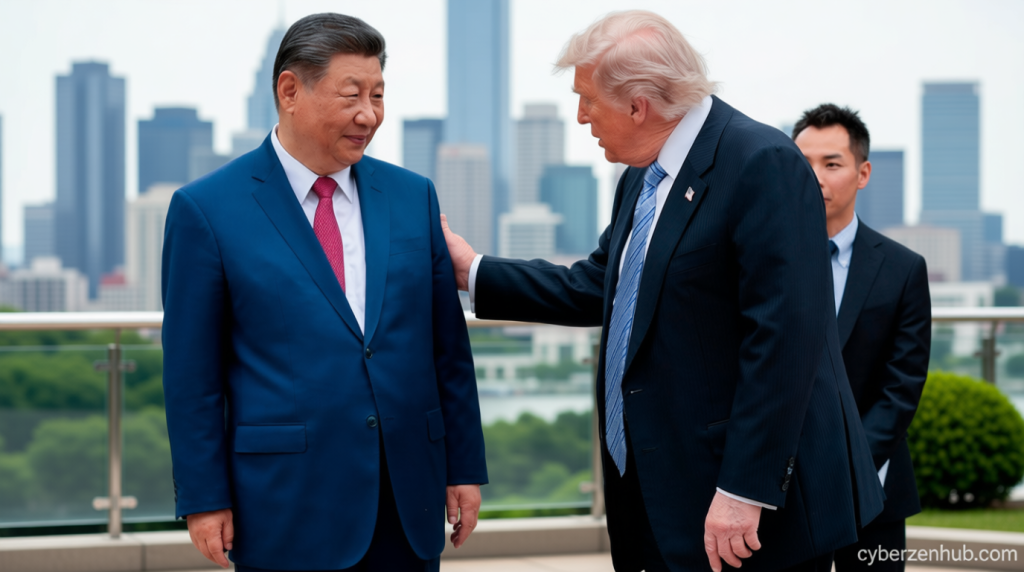
During the two-day summit in Beijing, Trump and Xi Jinping prioritized key issues such as Iran support and Taiwan policy. Greer revealed that while tariffs were not the main focus, trade teams worked on specific terms for goods like agricultural products and aircraft. “We’re aligning on trade agreements before leaders meet, which helps avoid major disputes during high-level talks,” he noted. This method allows for smoother negotiations on contentious topics like the Strait of Hormuz.
“The focus was on securing China’s commitment to not provide material support to Iran, which is a strategic win for us,” Greer said. “It’s about ensuring China’s actions align with our regional interests, even if they don’t involve direct military involvement.”
The summit also addressed the U.S. stance on Taiwan, with Xi Jinping warning that an improper approach could escalate tensions. However, both leaders expressed optimism about maintaining stable relations. Greer clarified that while the arms sale to Taiwan was discussed, the final decision rested with Trump, underscoring the administration’s flexible but firm approach to the issue.
Trade Negotiations and the Board of Trade Initiative
Greer outlined the U.S. strategy to foster ongoing dialogue with China through structured trade discussions. “We’re establishing clear terms for trade in specific sectors, such as medical devices and technology, to ensure mutual benefits,” he stated. This initiative aims to create a framework for consistent economic cooperation, even as geopolitical tensions persist. The focus keyword China committed to not provide remains central to these negotiations, as both sides work to solidify agreements on Iran-related support.
“We’re focused on creating a Board of Trade initiative that will keep the conversation open and address issues like market access and technology transfers,” Greer added. “This is part of our broader effort to ensure China doesn’t provide Iran with the resources needed to sustain its regional dominance.”
As the trade talks progress, the U.S. seeks to balance its demands with China’s strategic interests. Greer emphasized that the agreement on Iran support is a critical step, but continued engagement will be necessary to sustain momentum. This approach highlights the intricate interplay between economic cooperation and geopolitical leverage in U.S.-China relations.