
Louisiana Passes New Congressional Map, Reducing Majority-Black District Amid Republican Ambitions
Cyberzenhub.com – On Friday, Louisiana state legislators finalized a revised congressional map that could potentially shift the balance of power in the state’s House representation ahead of the 2026 midterms. The update, which removes one of Louisiana’s two majority-Black districts, has sparked significant debate over its impact on racial equity and political strategy. While the Senate gave final approval to the bill, Democrats expressed strong opposition, arguing the new boundaries are designed to weaken minority voting strength and favor Republican candidates.
Supreme Court’s Influence on Redistricting
The revised map follows a pivotal U.S. Supreme Court ruling earlier in the month that declared Louisiana’s previous congressional boundaries an unconstitutional racial gerrymander. This decision, which struck down the state’s 2022 map, dealt a major blow to Section 2 of the Voting Rights Act, a key provision aimed at preventing discrimination in voting. As a result, Louisiana lawmakers have faced pressure to redraw districts, setting the stage for a contentious political landscape in the upcoming election cycle.
State Sen. Royce Duplessis, a Democrat, voiced his concerns on the Senate floor during the final vote. “Y’all, at the beginning of this process, I would have said that we are building a house on a broken foundation. Now, it feels more like quicksand, because we’re in 2026 going into a map we know is flawed, one that we know will be struck down,” he said. His remarks underscore the Democratic Party’s belief that the new map is not just a political move but a deliberate strategy to dilute the influence of Black voters, a group that has historically played a crucial role in shaping state elections.
Republican Defense of the Map’s Design
Republican lawmakers, however, defended the revised boundaries as a fair and necessary adjustment. State Sen. Jay Morris, a Republican, argued that the map adheres to traditional redistricting principles, ensuring geographic contiguity and compactness. “This map provides equitable representation for every region of the state, and it’s very fair,” he stated. “Race was not a factor when drawing these districts; it’s about maximizing partisan advantage while preserving community ties.”
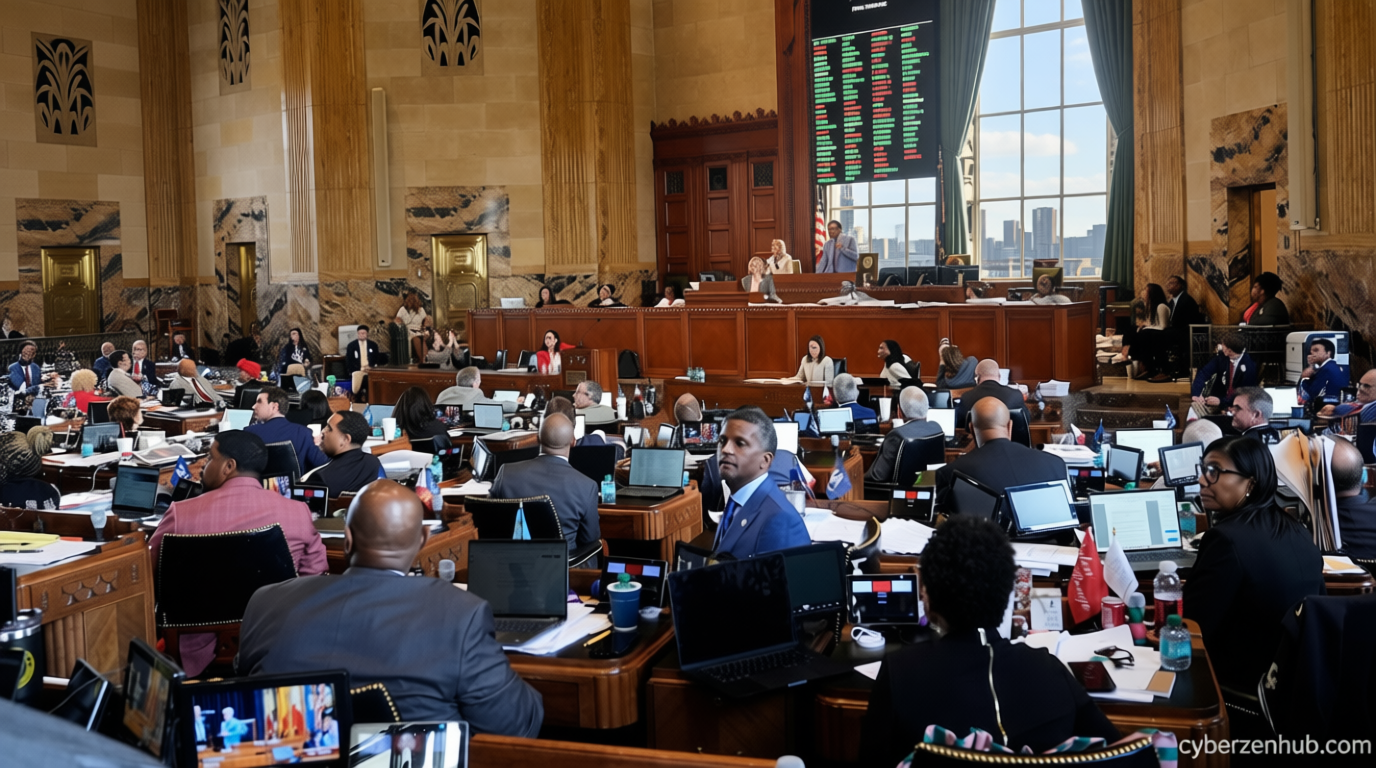
Earlier in the week, the Louisiana House of Representatives had approved the map after a heated debate. Several Democratic representatives criticized the plan, claiming it was racially motivated. On Thursday, during floor discussions, Rep. Kyle Green, a Democrat and member of the Louisiana Legislative Black Caucus, accused the legislature of erasing the state’s historical legacy. “I want you to remember the argument that we should now be colorblind about a congressional map,” he said. “In this state of all states, we are required to forget a quantity of history that I don’t believe any of us has the right to forget. Black people in this country were not citizens; not partial citizens, not second-class citizens. We weren’t citizens at all.”
Mid-Term Implications and Political Strategy
The new map, which eliminates a majority-Black district, is expected to bolster Republican prospects in the 2026 midterms. With two Democratic-held seats currently in play, the changes could create a more favorable environment for GOP candidates. This comes amid broader efforts across the country to reshape electoral boundaries following the Supreme Court’s decision, which critics argue has weakened protections for minority voters.
State Rep. Beau Beaullieu, a Republican who co-sponsored the updated map, highlighted the necessity of the revision. “We find ourselves back with a similar map to the one this body passed in 2022,” he explained on Thursday. “That map had five Republican districts and one Democrat district, and this one follows the same pattern. Race was not a consideration when drawing these lines; it’s about creating districts that align with partisan goals.” His comments reflect the bipartisan consensus that redistricting should balance representation with strategic advantages, even if it means sacrificing certain demographic protections.
Delayed Primaries and Ongoing Controversy
The controversy surrounding the new map has already affected the state’s political calendar. Louisiana’s congressional primaries were postponed in response to the Supreme Court’s decision, which forced lawmakers to accelerate the redistricting process. This delay allowed time for increased scrutiny of the map, with Democrats accusing the legislature of leveraging the ruling to reshape electoral outcomes in their favor.
While the map’s approval marks a key step, the debate over its fairness continues. The Democratic lawmakers argue that the elimination of the majority-Black district disproportionately impacts communities that have long been underrepresented in Congress. They also warn that the new boundaries could lead to a decline in the number of Black representatives, a trend they fear will persist as other states follow suit in adjusting their districts.
Broader National Impact
The Louisiana case is part of a larger national trend where states are reevaluating their congressional maps in light of the Supreme Court’s ruling. The decision to limit the Voting Rights Act has prompted a wave of redistricting efforts that prioritize partisan interests over racial equity. For Louisiana, the stakes are high: the new map not only threatens to reduce the political power of Black voters but also sets a precedent for how other states might approach similar challenges.
As the 2026 midterms approach, the focus on redistricting has intensified. The revised map’s approval has ignited discussions about its long-term implications, with both parties citing their own interpretations of fairness. For Democrats, the challenge is to counteract what they see as a deliberate effort to undermine minority representation. For Republicans, the opportunity is to secure additional seats while maintaining the state’s geographic and cultural integrity.
Despite the divisions, the map’s passage highlights the central role of redistricting in shaping electoral outcomes. As Louisiana moves forward, the focus will remain on whether the new boundaries will hold up in court or if they will be challenged as another instance of racial gerrymandering. The state’s legislative process has demonstrated the complexities of balancing partisan goals with constitutional obligations, a tension that will likely define the coming election cycle.
Key Figures and Historical Context
Rep. Edmond Jordan, a Democrat from District 29, became a prominent figure in the debate after the redistricting plan was passed by the House. His comments, captured in a photo by Gerald Herbert/AP, reflect the emotional response of many Black voters to the changes. Jordan’s district, which had been a stronghold for Democrats, is now part of a redrawn map that could shift its political dynamics. His presence in the debate underscores the personal stakes for those directly affected by the revisions.
With the new map approved, Louisiana’s congressional representation will be redefined. The state’s legislative actions have not only set the stage for a potential GOP gain but also reignited conversations about the Voting Rights Act’s role in safeguarding minority votes. As the map takes effect, its impact on the 2026 midterms will be closely watched, both as a local issue and a national indicator of how redistricting can influence political power. The process, though contentious, remains a critical tool for shaping the future of representation in the United States House of Representatives.