Ken Paxton’s Political Journey: Triumphs and Controversies
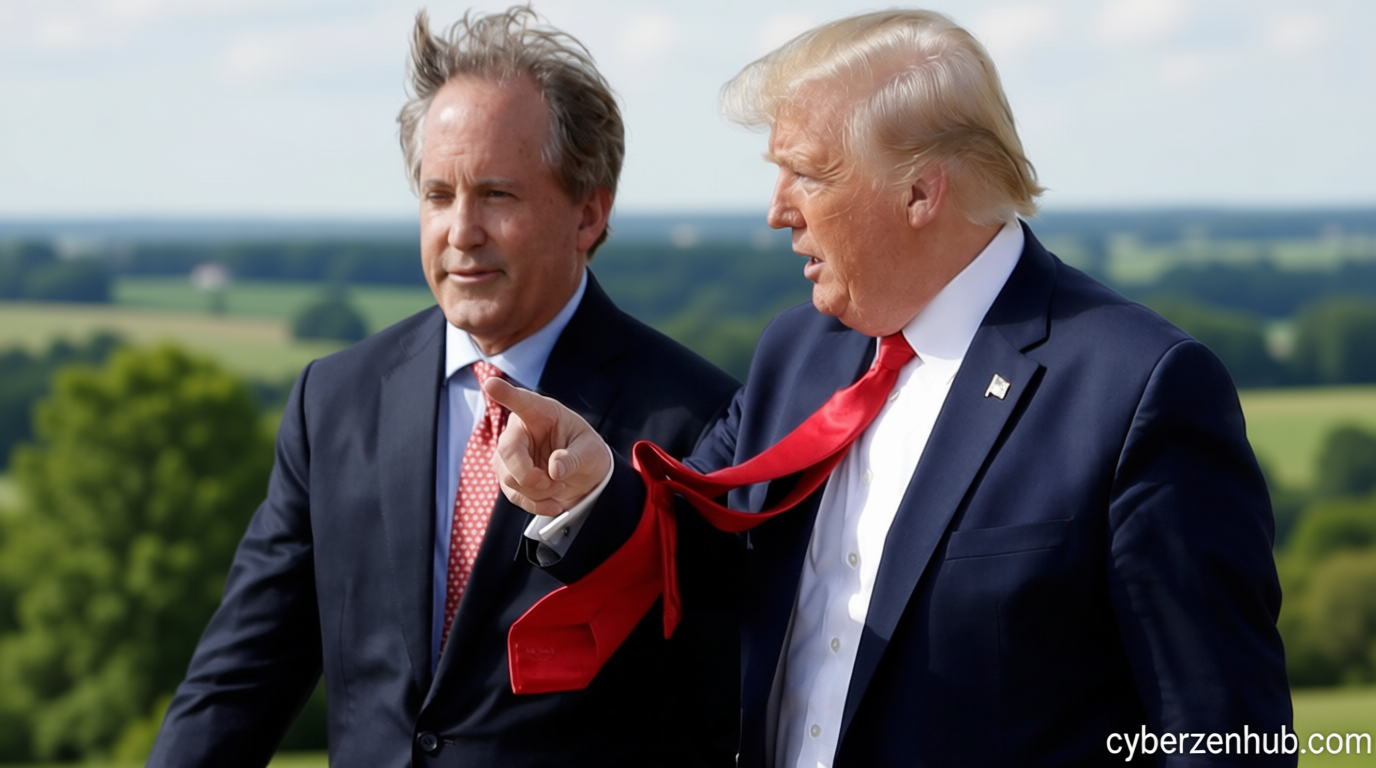
Cyberzenhub.com – Ken Paxton, the 63-year-old Texas Attorney General, emerged victorious in a pivotal Senate race this week, defeating incumbent John Cornyn in the Republican runoff. As he addressed supporters at an event in Plano, Texas, Paxton credited President Donald Trump for playing a crucial role in securing his win. In a speech, he highlighted the president’s late endorsement, which he described as the deciding factor in a tight contest. “Everyone in Washington told me to abandon me,” Paxton remarked, emphasizing the challenges he faced during the campaign.
“Loyal” and a “true MAGA warrior,” Trump’s words encapsulated his belief in Paxton’s steadfast commitment to his policies. The president’s support came at a critical moment, helping Paxton overcome a wave of criticism that had mounted throughout the race.
Political Career Highlights
Over the past two decades, Paxton has carved a path marked by both electoral successes and controversies. His career began in the Texas House of Representatives, where he first made a name for himself in 2002. Born to an Air Force veteran and a corporate lawyer, Paxton’s entry into politics was preceded by a background in law, having founded his own firm before transitioning to public service. His tenure in the House saw multiple re-elections, spanning four consecutive terms from 2004 to 2010.
By 2012, Paxton had expanded his influence, winning a Senate seat that represented Collin and Dallas counties. This marked a significant step in his political trajectory, positioning him as a rising figure within the Republican Party. However, his ascent was not without challenges. In 2014, he secured the position of Texas Attorney General, a role that would become central to his career. His early initiatives included launching a specialized unit to target human trafficking, a move that aligned with his broader focus on law enforcement and state governance.
Scandals and Legal Battles
Paxton’s tenure as Attorney General was soon shadowed by legal troubles. In August 2015, a Texas grand jury indicted him on three felony counts, including securities fraud and failure to register with the state securities board. The charges, which predated his time in office, alleged that he had misled investors by omitting commissions from Servergy, a technology firm he had ties to. Paxton faced the possibility of imprisonment but opted to plead not guilty, a decision that underscored his resilience in the face of scrutiny.
The legal saga continued into 2016 when the Securities and Exchange Commission (SEC) filed federal fraud charges against him. This development highlighted the ongoing investigations into his financial dealings. A federal judge eventually dismissed the case in 2017, but the incident left a lasting mark on his reputation. Meanwhile, in 2018, Paxton narrowly won re-election as Attorney General, a victory that demonstrated his ability to weather criticism and retain public trust.
Controversies and Campaigns
As his political career progressed, Paxton found himself embroiled in further disputes. In October 2020, seven senior staff members from the Attorney General’s Office accused him of accepting bribes and misusing his authority. The allegations, which came to light through a letter sent to the human resources director, claimed that Paxton had engaged in unethical practices. He swiftly denied the accusations, labeling the staff as “false witnesses” and defending his conduct with a statement that emphasized his dedication to public service.
The same year, Paxton played a key role in a high-profile effort to challenge the 2020 presidential election. He filed a lawsuit against four battleground states—Georgia, Michigan, Pennsylvania, and Wisconsin—arguing that pandemic-era modifications to voting procedures violated federal law. The case sought to halt the Electoral College process, a move that aligned with his broader narrative of defending state sovereignty. Despite his legal claims, the U.S. Supreme Court rejected the petition, leaving Paxton’s political strategy in the electoral arena unfulfilled.
Legacy and Future Prospects
While Paxton’s recent Senate victory signals a new chapter in his political career, it also adds to a long list of controversies that have defined his public image. His impeachment in 2017 as the first statewide official in Texas history to face such charges further cemented his reputation as a polarizing figure. Yet, his ability to overcome these hurdles and secure a Senate nomination suggests a blend of political acumen and strategic resilience.
Now, with the focus shifting to the November midterm elections, Paxton faces a formidable opponent in James Talarico, a Democrat and member of the Texas House of Representatives since 2018. The matchup promises to be a test of Paxton’s ability to leverage his loyalist credentials and Trump’s endorsement while addressing the scrutiny that has followed him throughout his career. Political analysts note that his victory may serve as a barometer for the broader Republican strategy in the state, particularly in the wake of the 2020 election challenges.
Key Moments in Paxton’s Timeline
November 2002 – Paxton made his political debut by winning a seat in the Texas House of Representatives, a move that laid the groundwork for his future roles. His early career was marked by a focus on conservative policies and a commitment to law and order, which resonated with voters in the state.
November 2012 – His Senate election in Collin and Dallas counties marked a significant milestone, expanding his reach beyond the House and into the state’s upper legislative chamber. This period also saw him become a prominent voice in debates over state legislation and federal oversight.
November 2014 – Paxton’s election as Texas Attorney General was a defining moment, as he took on a role that combined law enforcement with political influence. His initiatives, such as the human trafficking unit, positioned him as a proactive leader in state affairs.
August 2015 – The indictment on securities fraud charges brought national attention to his personal finances and business dealings. The case, which included allegations of commission concealment, raised questions about transparency and ethical conduct in his role as a public official.
April 2016 – The SEC’s federal fraud charges against Paxton added another layer of legal scrutiny, though the case was later dismissed in 2017. This event underscored the ongoing nature of his legal battles and the complexity of his public persona.
November 2018 – Paxton’s re-election as Attorney General demonstrated his continued support among voters, despite the controversies that had plagued his career. His ability to retain the office highlighted his appeal to a base that prioritized conservative values and loyalty to the party.
October 2020 – The allegations from his own staff marked a turning point, as they revealed internal dissent and raised concerns about his leadership style. Paxton’s response, which included a public rebuttal, reflected his determination to defend his integrity against critics.
December 2020 – His lawsuit challenging the 2020 election further solidified his role as a key player in the Republican Party’s efforts to contest election outcomes. The legal action, which drew attention to his views on federal intervention, remains a defining moment in his political career.
Throughout his career, Paxton has navigated a landscape of both triumph and turmoil, often positioning himself as a defender of conservative principles while facing accusations of mismanagement and corruption. His Senate win, however, appears to have reinvigorated his political standing, setting the stage for a potential showdown with Democratic challenger James Talarico. As the November elections approach, the stakes for Paxton and his allies will be high, with the outcome likely to shape the political dynamics of Texas and beyond.