
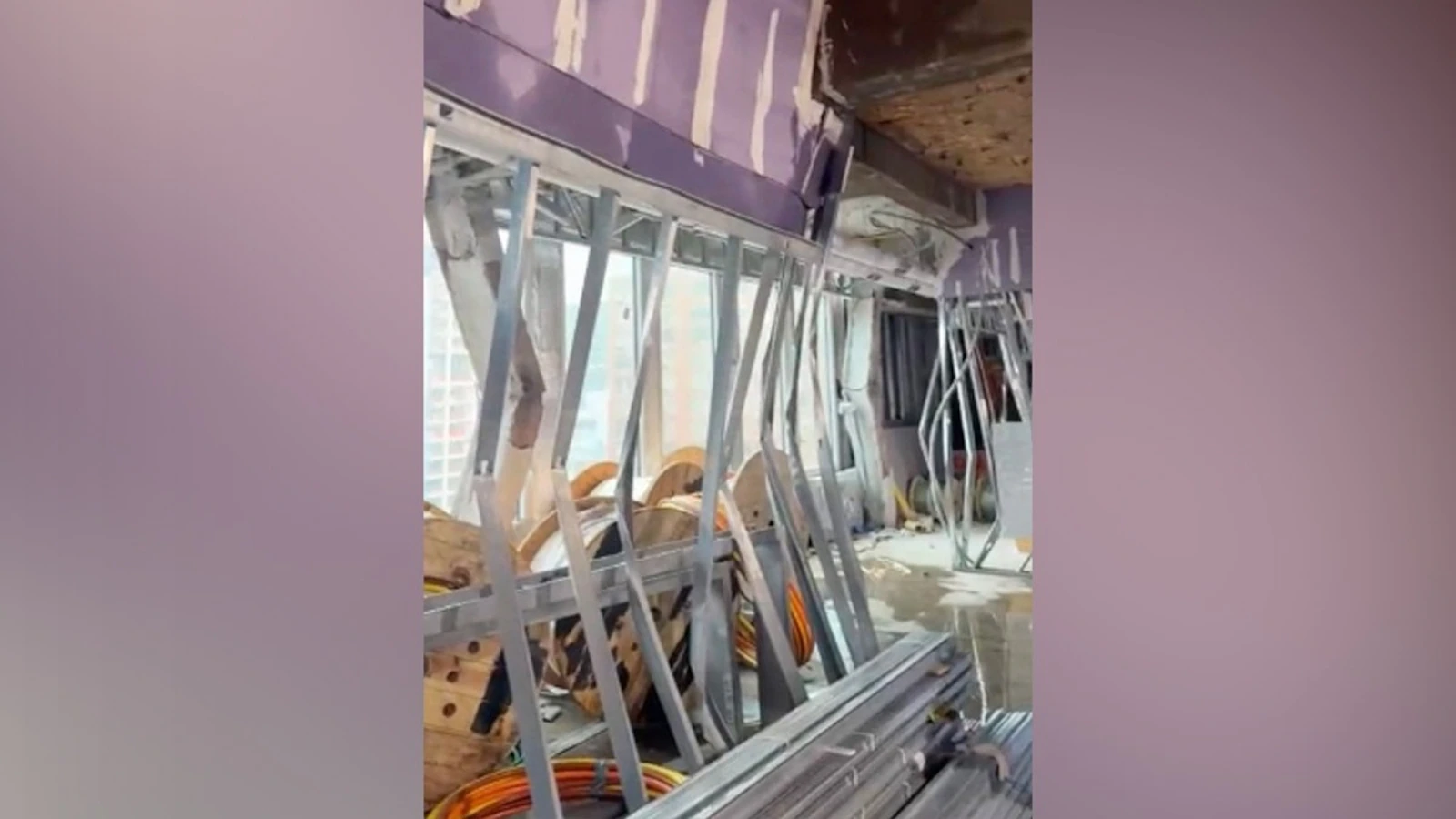
Midtown Manhattan Buildings Evacuated After Beams Buckle
Cyberzenhub.com – Midtown Manhattan buildings evacuated after beams buckling on July 7, 2026, as emergency crews responded to a sudden structural failure at a high-rise under construction. The incident occurred at 235 E. 42nd Street, where a commercial building being converted into residential units faced urgent safety concerns. Officials confirmed that the buckling beams, detected on the 21st floor, led to the immediate evacuation of several city blocks. The situation highlighted the critical need for structural monitoring in ongoing construction projects.
Emergency Response and Evacuation Process
At approximately 8:00 a.m., workers noticed the beams beginning to bend, triggering a rapid evacuation. The Fire Department of New York (FDNY) and the city’s Department of Buildings mobilized to secure the site, while a frozen zone was set up to restrict access to 40th to 45th Streets and 1st to 3rd Avenues. Traffic was halted, and residents were urged to stay away from the area as teams assessed the risk of further collapse.
“The building’s stability has been compromised, and we’re taking all necessary steps to ensure public safety,” stated FDNY spokesperson Maria Gonzalez during an early afternoon briefing. The decision to evacuate was based on real-time observations of the structural issue, which had escalated quickly.
The evacuation of Midtown Manhattan buildings after the beams buckling caused temporary disruption to the area’s commerce and daily activities. While no injuries were initially reported, the event underscored the vulnerability of high-rise construction sites. Engineers and inspectors were dispatched to determine the cause of the deformation, with live updates provided to the public as the situation unfolded.
Structural Assessment and Immediate Actions
By midday, a team of specialists entered the building to evaluate the damage. City officials confirmed that temporary shoring was installed to prevent additional structural movement. The FDNY and Department of Buildings worked in tandem to monitor the building’s condition, with engineers measuring the extent of the buckling and identifying potential risks to adjacent structures. The efforts aimed to stabilize the site while investigations continued.
Midtown Manhattan buildings evacuated after the beams buckling were not the first instance of structural issues in the project. The Department of Buildings revealed that the site had seven violations recorded between July and December 2025, though they emphasized that the current problem was unrelated to prior infractions. This raised questions about the adequacy of safety protocols in large-scale urban development.
Project Background and Urban Impact
The building in question, a 37-story commercial structure formerly used by Pfizer, is part of New York City’s ambitious office-to-residential transformation. Metro Loft, the developer, noted that the project had already undergone significant changes in its design and purpose. The evacuation of Midtown Manhattan buildings after the beams buckling has shifted public focus to the safety measures required in such conversions.
The incident serves as a reminder of the complexities involved in high-rise construction. While the FDNY and Department of Buildings acted swiftly, the event has prompted a review of structural safety standards. Officials stressed that the focus keyword, “Midtown Manhattan buildings evacuated after,” was a key factor in highlighting the urgency of the situation and the need for proactive measures in the city’s evolving skyline.
Public Response and Ongoing Monitoring
Residents and businesses in the area expressed concern following the evacuation of Midtown Manhattan buildings after beams buckling. Some commutes were rerouted, and nearby stores faced temporary closures. Despite the disruption, city officials maintained that the risk of a complete collapse was low, though the structure remained under close observation. Engineers continued to monitor the building’s movements throughout the day.
As of late afternoon, the situation showed signs of stabilization. However, the focus keyword, “Midtown Manhattan buildings evacuated after,” remained central to the ongoing assessments. Authorities confirmed that the frozen zone would stay in place until the investigation concluded, with plans to revisit the area’s safety protocols in the coming weeks. The event has also sparked discussions about the balance between development speed and structural integrity in urban construction.