
‘We can’t take it anymore’: How Trump is pushing Cuba to the brink
‘We can’t take it anymore’: How Trump is pushing Cuba to the brink
On a quiet Havana street, a Cuban man leaned in close, his voice barely audible, as if confiding in a trusted confidant. “Let the Americans come, let Trump come—it’s time to get this over with,” he muttered. These words carry weight in Cuba, where decades of U.S. pressure have left the nation bracing for a new chapter of hardship. The man, a driver of a bicycle taxi, spoke with a mixture of resignation and defiance, his sentiment echoing a growing sense of weariness among Cubans.
“We can’t take it anymore,” he said. “People can’t feed their families.”
As the United States president escalates economic measures against Cuba, the island finds itself at a critical juncture reminiscent of Cold War tensions. Yet, the current situation feels more urgent, more personal. My cameraman, documenting the ongoing challenges in transportation, captured the man’s words, adding a layer of immediacy to the story. With no clear escape from the escalating crisis, the Cuban people are left to navigate a landscape where survival has become an act of daily resistance.
The Cuban government has long weathered U.S. sanctions, including the failed CIA invasions and the 1962 missile standoff. Now, under Trump’s leadership, the pressure is intensifying. The president’s recent declaration that “Cuba is going to fall soon” marks a new phase, not just in rhetoric but in action. His administration has imposed an oil embargo that swiftly undermines Havana’s fragile economy, severing ties with allies and accelerating a decline already in motion.
Trump’s strategy extends beyond Cuba. In his second term, he has orchestrated targeted campaigns against Venezuela and Iran, aiming to reshape regional power dynamics. Cuba, once a steadfast ally, now faces the prospect of being the next target. The impact is stark: new government-funded hotels sit empty, employees are sent home, and tourists—once a vital source of income—have all but disappeared. The lack of jet fuel underscores a reality where travel is no longer a luxury but a distant memory.
Blackouts, once fleeting, now stretch for days, forcing Cubans to adapt with relentless ingenuity. During a recent 36-hour outage, a group of men cooked a pot over burning tree limbs on Havana’s main avenue, their efforts a testament to survival. “We have returned to the Stone Age,” one man remarked, his tone oddly upbeat, as if the chaos had become a familiar part of life.
“We have returned to the Stone Age,” one called out to me in a disarmingly cheerful voice.
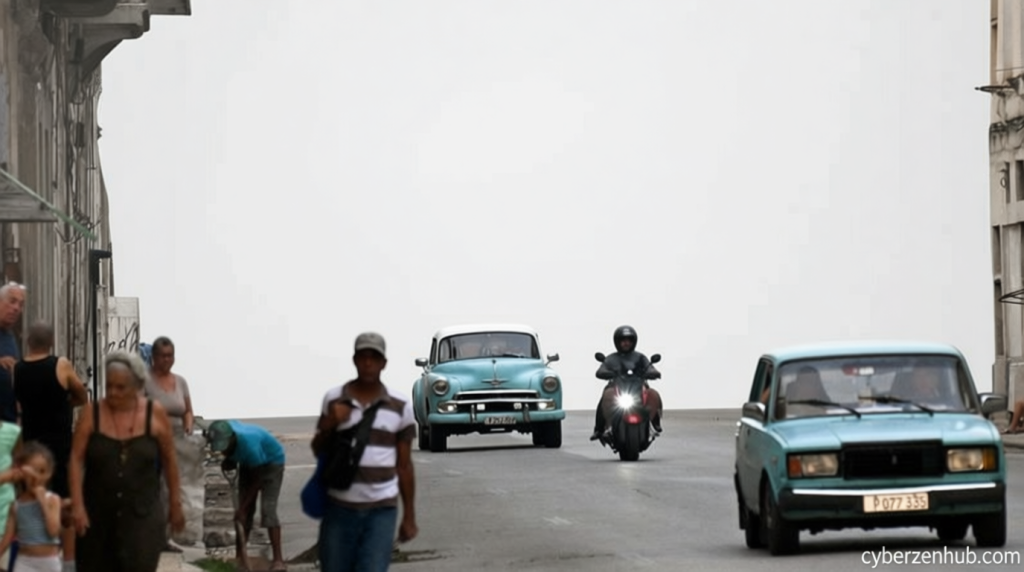
Without access to fuel, the streets are quieter, with few cars moving. Government rentals for tourists remain the only vehicles regularly refueling at state-run stations, prompting Cubans to siphon gas for the black market. A single tank now costs over $300, a sum exceeding the annual earnings of many locals. Scavenging through trash for food has become a common sight, sometimes involving children.
Despite these hardships, the Cuban government maintains its resolve. Officials insist the U.S. will never again dictate terms to their nation, even as Trump’s policies deepen the crisis. The slogan “Cuba is not alone” reflects a determination to stand firm, yet the island’s current state suggests a sense of isolation. With no visible end to the pressure, Cubans are left waiting for change—whether it arrives as a relief or another wave of adversity.
When my cameraman finally reappears, I ask the taxi driver if he wishes to share his thoughts for the story. He hesitates, then walks away, content to keep his frustrations beneath the surface for now. The weight of his words lingers, a quiet plea in a world where the future feels uncertain.