
I left Gaza with guilt, sorrow and tears for the son Israel took from me
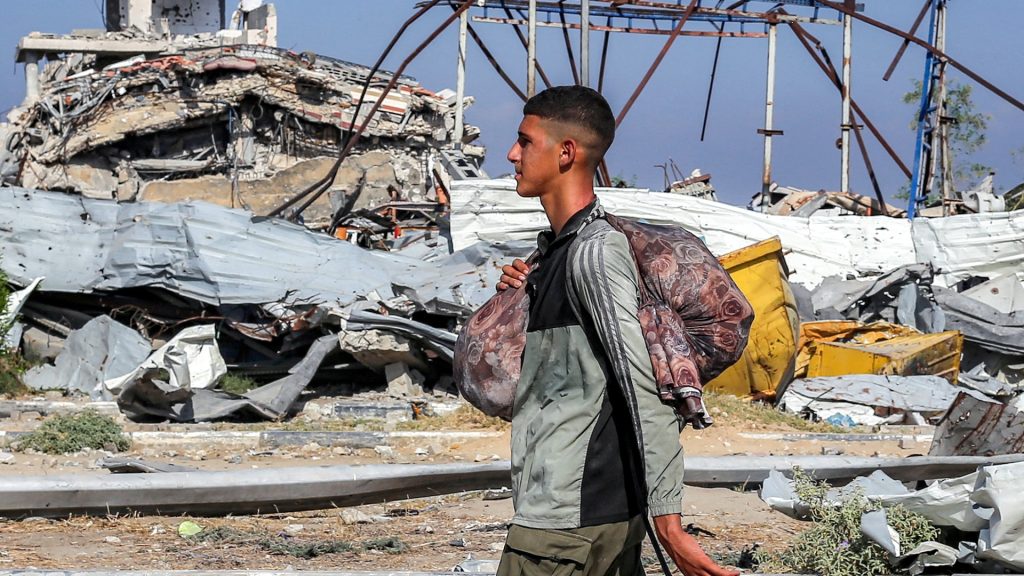
I left Gaza with guilt, sorrow and tears for the son Israel took from me
Gaza endured 690 days of relentless violence, dread, and starvation. I survived, but not without losing nearly everything. Among the countless Palestinians displaced by the conflict, I am one who carries the weight of grief and uncertainty.
Weeks into the war, my eldest son, Abdullah, 13, was killed in an Israeli airstrike that shattered our family home in Rafah. The blast left me injured, my younger children wounded, and several family members killed. As the city crumbled, my surviving children fled abroad, and soon after, the Israeli army razed the residential block where my apartment stood.
With my city reduced to rubble and my relatives scattered, I had no shelter, no security, and no hope of rebuilding. Gaza became a place of endless waiting, where despair was the only constant companion.
A New Beginning
After more than a year and a half of devastation, a Dutch friend offered me a chance to escape. Through De Correspondent, I was granted a writer’s position, and the process unfolded swiftly. The newspaper secured a work permit, and within weeks, the logistics were finalised.
The Dutch Ministry of Foreign Affairs liaised with Israeli and Jordanian authorities, paving the way for 13 Gazans, including myself, to cross the border. The journey took nearly two months of anticipation, each day stretching with the fear of being denied passage. On the day of departure, the embassy confirmed the meeting point near the Unicef office in Deir al-Balah and outlined the strict restrictions.
Israel barred us from bringing anything beyond what we wore. Clothes, bags, books, and even a phone charger were left behind. I accepted the rule without protest, having already sacrificed so much. My few possessions were shared with siblings and relatives, as if distributing them could ease the burden of loss.
The Weight of Memory
What haunted me most was the impossibility of carrying Abdullah’s remnants. After his death, I preserved his clothes and toys in a dedicated space, a fragile attempt to hold onto his presence. But when the Israeli forces destroyed the building, all traces of his life were erased. Only two items survived: his Quran and a comb, kept safe in a bag outside the home.
With the departure date set for Wednesday, August 27, 2025, I chose secrecy. I told only my father about the journey, greeting him with a routine farewell before walking away. The thought lingered—had that been our final goodbye? Yet, I found no solace in farewells.
“Abdullah was in the middle of speaking to me when the bomb struck. In an instant, he was gone. He never uttered his last word, and I never said goodbye.”
The night before departure, we moved through darkness, guided only by the glow of the moon. Israeli drones buzzed overhead, their constant presence a reminder of the danger we faced. Despite the risks, we hoped this would be our last night under the relentless watch of those machines.
As dawn approached, we arrived at the gathering point. An hour later, our names were called, and we boarded a bus. Among 130 passengers, there were students, families, and those seeking work. All had been granted passage by European embassies, a rare reprieve after two years of unrelenting hardship.