
Facing ‘grave and complex landscape,’ China sets lowest economic growth target in decades
Facing ‘grave and complex landscape,’ China sets lowest economic growth target in decades
On Thursday, China announced its lowest GDP growth target in decades, aiming for 4.5-5% expansion in 2026. This projection comes as the world’s second-largest economy navigates weak domestic demand and a globally uncertain environment. The moderate goal follows three years of targeting “around 5%” growth, which the country achieved despite a slow post-pandemic recovery and US tariffs imposed by Donald Trump in 2025.
China’s broader economic trajectory has slowed, hindered by a prolonged property crisis, declining investments, sluggish consumer spending, and deflationary pressures. The government acknowledged these challenges, signaling a shift from ambitious growth forecasts to a more cautious approach. Premier Li Qiang, the country’s second-highest official, emphasized the difficulty of the current situation at the opening of the National People’s Congress (NPC), describing it as a “grave and complex landscape” shaped by both external shocks and internal struggles.
“Rarely in many years have we encountered such a grave and complex landscape, where external shocks and challenges were intertwined with domestic difficulties and tough policy choices,” Li said, highlighting the resilience of the economy amid headwinds.
During the week-long session, over 2,900 delegates will approve China’s next “Five-Year Plan,” a roadmap to steer government priorities and reinforce the nation’s position as a global tech leader. The meeting precedes Trump’s upcoming visit to Beijing, where Xi Jinping will host him for a three-day summit on trade, technology, and Taiwan.
Since its economic reforms in the late 1970s, China enjoyed nearly three decades of double-digit growth, surpassing Japan in 2010 to become the world’s second-largest economy. However, its momentum has waned over the past decade, partly due to stringent pandemic controls. Meanwhile, India has outpaced it as the fastest-growing major economy in recent years.
Amid ongoing US-led conflicts in the Middle East, Chinese leaders are projecting an image of stability and strength. With Trump’s second term underway, Xi has further bolstered his credibility by countering the tariff offensive with reciprocal measures, including levies on American imports and export restrictions on rare earth elements.
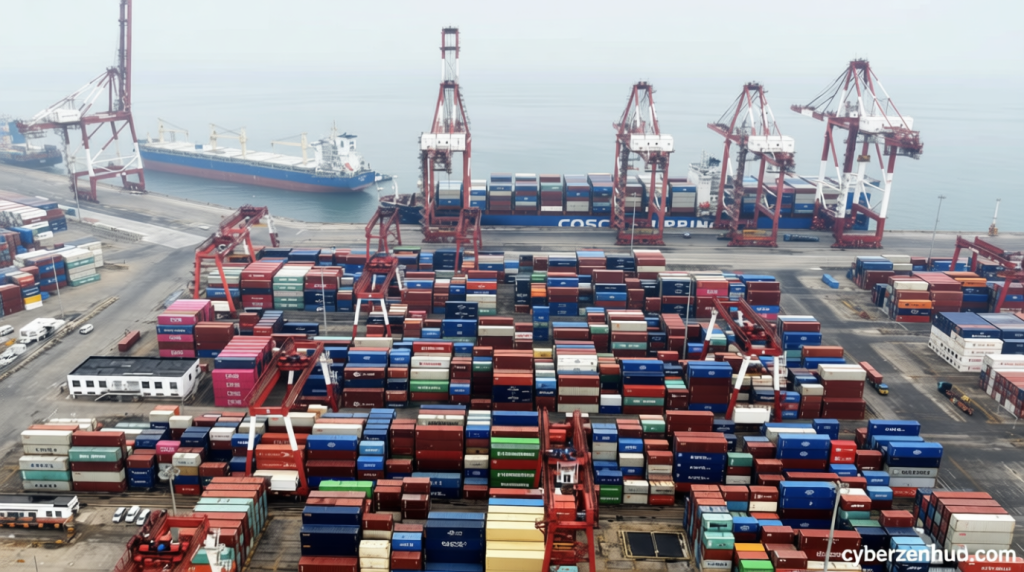
Last year, China recorded a record trade surplus despite these tariffs, shifting focus to alternative markets. The US Supreme Court’s recent decision to strip Trump of his tariff authority reinforced China’s strategy of patience, reducing effective tariffs on its goods to align more closely with international norms.
For the first time in three decades, investment in housing, manufacturing, and infrastructure—key engines of growth—declined. The property sector, now in its fifth year of crisis, continues to struggle with falling sales and dwindling capital, which has dampened consumer confidence and economic activity. Li Qiang noted the ongoing challenges, stating the domestic economy is grappling with “deep-seated structural problems.”
Helen Chiao, chief Greater China economist at Bank of America, remarked that the revised target reflects a pragmatic pivot by policymakers. “It’s also a reflection… that policymakers might be acknowledging the fact that the domestic demand weakness is probably going to be challenging to remove,” she added, underscoring the shift from high-speed to high-quality growth.