
The Essential Role of Firewalls in Network Protection
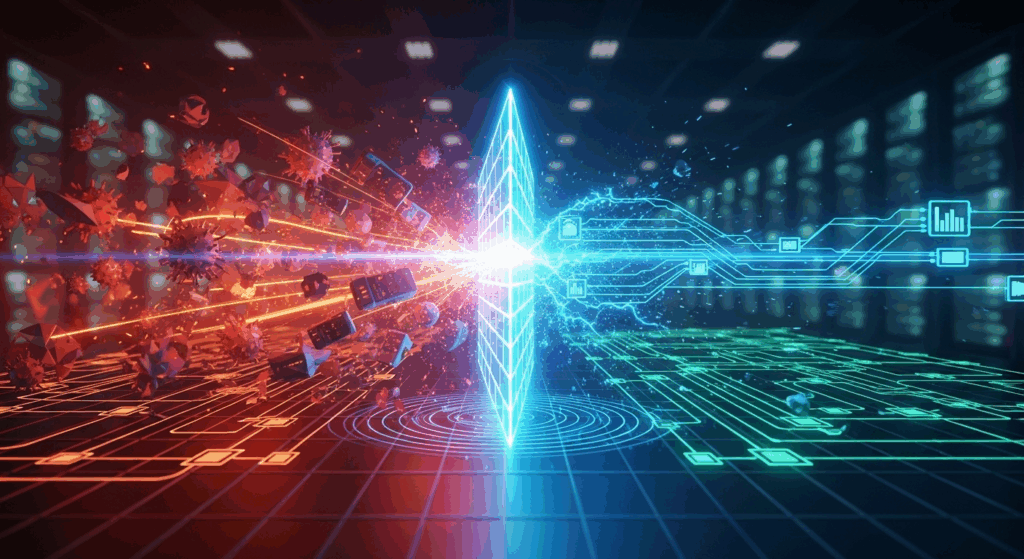
In the sprawling, interconnected digital landscape of the 21st century, data is the new gold, and networks are the highways that transport it. From personal banking details to corporate trade secrets and critical national infrastructure, a constant stream of information flows across the internet. This digital abundance, however, comes with a significant and ever-present risk: cyber threats. Malicious actors are perpetually seeking vulnerabilities to exploit, making robust network security not just an IT recommendation but a fundamental necessity for survival and success. At the very heart of this defensive strategy lies a critical piece of technology that has served as the primary digital gatekeeper for decades. Understanding the role of firewalls in network protection is the first and most crucial step toward building a resilient and secure digital environment for any individual or organization.
What is a Firewall and How Does it Work?
At its most fundamental level, a firewall is a network security device—either hardware or software-based—that monitors and controls incoming and outgoing network traffic based on predetermined security rules. Think of it as a vigilant security guard or a bouncer standing at the entrance of a private club. This guard has a strict guest list (the rule set) and meticulously checks the credentials of everyone trying to enter or leave. Anyone who isn't on the list or appears suspicious is denied access. In the digital realm, a firewall performs this exact function, but instead of people, it inspects data packets. It establishes a barrier between a trusted internal network (like your home or office network) and an untrusted external network (like the public internet).
The mechanics behind this process involve the analysis of data packets for various pieces of information. These can include their source and destination IP addresses, port numbers, and the protocols they use. The firewall compares this data against its configured rule set, which dictates what traffic is permissible and what should be blocked. For example, a basic rule might be to block all incoming traffic from a known malicious IP address or to only allow traffic on a specific port that is used for secure web browsing (HTTPS port 443). This filtering process is the core principle of a firewall's operation.
Ultimately, the primary goal of a firewall is to create a controlled and secure boundary. By meticulously filtering traffic, it prevents unauthorized users from gaining access to the private network, stops the spread of malicious software like viruses and worms, and can even prevent sensitive data from being exfiltrated from the network. It is the first line of defense, a non-negotiable component of a layered security architecture, working tirelessly to distinguish between legitimate communication and potential threats. Without a firewall, a network is essentially an open door, inviting any and all traffic, including cyberattacks.
The Evolution and Types of Firewalls
The concept of the firewall is not static; it has evolved significantly since its inception to keep pace with the growing complexity and sophistication of cyber threats. Early firewalls were relatively simple, operating on basic principles. As attackers developed more advanced techniques to bypass these initial defenses, firewall technology was forced to adapt, leading to the diverse range of solutions available today. This evolution reflects a technological arms race, with defenders constantly innovating to counter new offensive tactics.
This progression has resulted in several distinct generations and types of firewalls, each with its own methodology, strengths, and weaknesses. The choice of which firewall to deploy depends heavily on the specific security requirements, network complexity, performance needs, and budget of an organization. A small home office has vastly different needs than a multinational corporation or a government agency. Understanding these differences is key to implementing an effective and appropriate security posture.
The journey began with simple packet-filtering firewalls and has led to today's intelligent, context-aware Next-Generation Firewalls (NGFWs). Each step in this evolution added new layers of inspection and intelligence, moving from simply checking an address to understanding the application, user, and content of the data flowing through the network. This technological advancement ensures that firewalls remain a relevant and powerful tool in the face of modern threats.
- #### Packet-Filtering Firewalls
Packet-filtering firewalls represent the first generation of firewall technology. They operate at the network layer of the OSI model and are inherently stateless. This means they examine each data packet in isolation, without any knowledge of the packets that came before or might come after. Their decision to allow or block a packet is based on a simple checklist: source IP address, destination IP address, source port, destination port, and protocol type. If a packet’s information matches a rule in the firewall’s access control list, it is either permitted or denied.
The primary advantage of packet-filtering firewalls is their speed and low impact on network performance. Because they perform a very basic level of inspection and don't need to maintain a state table of active connections, they can process traffic very quickly. This makes them a simple and efficient solution for basic network segmentation. However, their simplicity is also their greatest weakness. They are vulnerable to attacks like IP spoofing and cannot distinguish between legitimate and malicious traffic if it originates from a permitted port or IP address.
- #### Stateful Inspection Firewalls
Recognizing the limitations of stateless packet filtering, the second generation of firewalls introduced the concept of stateful inspection. Also known as dynamic packet filtering, a stateful firewall maintains a “state table” that keeps track of all active connections. When a new packet arrives, the firewall not only checks it against the security rule set but also cross-references it with the state table to ensure it is part of an established, legitimate conversation. For example, if an internal user initiated a connection with an external web server, the stateful firewall remembers this session. When the web server sends a response packet back, the firewall knows it is an expected part of that conversation and allows it through, even if no explicit rule exists for that incoming traffic.
This contextual awareness provides a significant security advantage over stateless firewalls. By understanding the state of a connection, it can make more intelligent filtering decisions and effectively prevent many types of attacks that exploit the trust model of network protocols. For instance, it can block unsolicited incoming packets that are not part of a recognized active session, which is a common technique used by attackers. While they require more memory and processing power than their predecessors, the enhanced security they provide made them the de facto standard for many years.
- #### Proxy Firewalls (Application-Level Gateways)
Proxy firewalls operate at the application layer of the OSI model, offering a fundamentally different and more thorough approach to security. Instead of allowing direct traffic between the internal and external networks, a proxy firewall acts as an intermediary, or a “proxy,” for all communication. An internal client makes a request to the firewall, and the firewall then creates a separate, new connection to the external server on behalf of the client. The external server only ever communicates with the firewall, completely isolating the internal client from the public internet.
This intermediation allows for deep packet inspection (DPI) of the content itself, not just the packet headers. A proxy firewall can understand application-specific commands, such as HTTP or FTP requests, and can filter traffic based on the content of the data. For instance, it can block a file download if it detects malware within the file or prevent users from accessing specific websites. While this provides an extremely high level of security and fine-grained control, it comes at a cost. The process of inspecting and regenerating every packet introduces significant latency, which can impact network performance and may not be compatible with all network applications.
- #### Next-Generation Firewalls (NGFW)
Next-Generation Firewalls (NGFWs) are the current standard in network security, representing a culmination of previous firewall technologies combined with a suite of advanced security features. An NGFW integrates traditional stateful inspection with a host of other capabilities, providing a multi-layered security solution in a single platform. They are designed to address the modern threat landscape, where attacks are often hidden within legitimate application traffic and target multiple vectors simultaneously.
The key features that define an NGFW include:
- Application Awareness and Control: The ability to identify and control traffic based on the specific application (e.g., Facebook, YouTube, BitTorrent), regardless of the port or protocol used.
- Integrated Intrusion Prevention System (IPS): Proactively detects and blocks network and application-level attacks by analyzing traffic for known threat signatures and anomalous behavior.
- Deep Packet Inspection (DPI): Scans the actual content of data packets for malware, sensitive data, and other threats.
- User Identity Awareness: Enforces security policies based on user or group identities, often integrating with services like Active Directory.
- Threat Intelligence Feeds: Utilizes real-time updates on emerging threats, malicious IP addresses, and attack patterns from global security networks.
By combining these functions, NGFWs provide a holistic and context-rich view of network activity, enabling organizations to implement highly granular and effective security policies that are far more robust than what older technologies can offer.
Key Functions of a Firewall in Modern Cybersecurity
In today's complex digital ecosystem, the role of a firewall extends far beyond simply blocking unwanted traffic. It has become a central pillar of an organization's overall cybersecurity posture, performing several critical functions that are essential for protecting assets, maintaining operations, and ensuring compliance. Modern firewalls are intelligent, versatile tools that provide visibility, enforcement, and control over the entire network landscape.
A firewall serves as the primary enforcement point for an organization's security policy. This policy defines what is and is not acceptable behavior on the network. The firewall translates these high-level business rules into specific, technical controls that are applied to every data packet that attempts to cross the network boundary. This function is critical for maintaining a controlled and secure environment, reducing the organization's attack surface, and ensuring that network resources are used appropriately.
Furthermore, as businesses become more distributed, with remote workers and cloud-based services, the network perimeter is no longer a simple, well-defined line. Firewalls have adapted to this new reality, providing secure connectivity for remote users and protecting assets no matter where they are located. They are indispensable for achieving regulatory compliance with standards like PCI DSS (Payment Card Industry Data Security Standard) and HIPAA (Health Insurance Portability and Accountability Act), which mandate strict controls over data access and network segmentation.

- Preventing Unauthorized Access: This is the most fundamental function. By filtering traffic based on IP addresses, ports, and protocols, firewalls ensure that only legitimate, authorized users and systems can access network resources. This prevents hackers, bots, and other malicious actors from gaining a foothold in the internal network.
- Blocking Malware and Malicious Content: Modern firewalls, especially NGFWs, can inspect the content of traffic to identify and block malware, viruses, spyware, and phishing attempts before they can reach end-user devices. This is a proactive defense mechanism that significantly reduces the risk of infection and data breaches.
- Segmenting Networks: Firewalls are used to create secure zones within a network, a practice known as network segmentation. For example, a finance department's network, containing sensitive financial data, can be isolated from the guest Wi-Fi network. If the guest network is compromised, the firewall prevents the attack from spreading to more critical parts of the organization.
- Enabling Secure Remote Access: Firewalls are integral to Virtual Private Network (VPN) functionality. They create an encrypted tunnel over the public internet, allowing remote employees to securely connect to the corporate network as if they were physically in the office. The firewall authenticates the user and enforces security policies on all their traffic.
Implementing and Managing Firewalls: Best Practices
Deploying a firewall is not a one-time, "set-it-and-forget-it" task. To be effective, a firewall requires careful planning, meticulous configuration, and continuous management. A poorly configured firewall can provide a false sense of security, leaving a network just as vulnerable as if it had no firewall at all. In some cases, misconfigurations can even disrupt legitimate business operations by blocking essential traffic. Therefore, adhering to established best practices is crucial for maximizing the return on investment in firewall technology.
The foundation of effective firewall management is the development of a clear and comprehensive security policy. This policy should be built on the principle of least privilege, which dictates that any user, program, or process should only have the bare minimum permissions necessary to perform its function. In firewall terms, this translates to a "default deny" stance, where all traffic is blocked by default, and rules are only created to explicitly allow specific, necessary traffic. This approach drastically reduces the attack surface compared to a "default allow" policy, where everything is permitted except what is explicitly blocked.
Ongoing maintenance is just as critical as the initial setup. The threat landscape is constantly changing, with new vulnerabilities and attack methods emerging daily. Firewall administrators must commit to a routine of regular monitoring, updating, and auditing. This includes keeping the firewall's software and firmware patched, updating threat intelligence and IPS signatures, and regularly reviewing firewall logs for signs of suspicious activity or policy violations. An unpatched or unmonitored firewall is a liability waiting to be exploited.
Firewall Type Comparison
To better understand the differences between the major firewall categories, the following table provides a high-level comparison:
| Feature | Packet-Filtering | Stateful Inspection | Proxy Firewall | Next-Generation Firewall (NGFW) |
|---|---|---|---|---|
| Security Level | Low | Medium | High | Very High |
| Performance Impact | Very Low | Low to Medium | High | Medium to High |
| Inspection Layer | Network Layer | Network & Transport Layer | Application Layer | Network, Transport, & Application Layer |
| Context Awareness | None (Stateless) | Connection-Aware | Session & Content-Aware | User, Application, & Threat-Aware |
| Primary Use Case | Basic network filtering, internal segmentation | Standard perimeter defense for SMBs | High-security environments, content filtering | Comprehensive enterprise security |
| Cost | Low | Low to Moderate | Moderate to High | High |
The Future of Firewalls: Cloud and AI Integration
The traditional concept of a network perimeter is dissolving. With the widespread adoption of cloud computing, mobile workforces, and the Internet of Things (IoT), data and users are no longer confined within the four walls of an office. This shift has profound implications for network security and is driving the next stage in the evolution of firewalls. The future of firewall technology lies in its ability to adapt to these decentralized, dynamic environments, primarily through cloud integration and artificial intelligence.
The rise of Firewall as a Service (FWaaS) and cloud-native firewalls is a direct response to this new paradigm. FWaaS is a cloud-based security solution that delivers firewall functionality directly from the cloud. This allows organizations to apply consistent security policies to all users and devices, regardless of their physical location. Whether a user is in the office, at home, or in a coffee shop, their traffic is routed through the cloud-based firewall for inspection and policy enforcement. This approach provides scalable, flexible, and centralized security management for a distributed world.
Simultaneously, Artificial Intelligence (AI) and Machine Learning (ML) are being integrated into firewall platforms to create more intelligent and automated defense systems. AI-powered firewalls can analyze vast amounts of traffic data in real-time to identify subtle patterns and anomalies that might indicate a sophisticated, zero-day attack that would be missed by signature-based detection methods. ML algorithms can learn what constitutes "normal" network behavior and automatically flag or block deviations, significantly reducing the response time to new threats and easing the burden on human security analysts.
Conclusion
From their humble beginnings as simple packet filters to their current status as intelligent, multi-faceted security platforms, firewalls have remained an indispensable cornerstone of network defense. The essential role of firewalls in network protection cannot be overstated; they are the primary guardians of the digital perimeter, serving as the first and often most critical line of defense against a relentless barrage of cyber threats. They prevent unauthorized access, block malicious content, enable secure connectivity, and provide the visibility and control necessary to enforce security policies in an increasingly complex IT environment.
The evolution of technology has not made firewalls obsolete; on the contrary, it has reinforced their importance. As networks become more distributed and threats more sophisticated, the need for advanced, adaptable, and intelligent firewall solutions like NGFWs and cloud-based services will only continue to grow. While a firewall is not a silver bullet, it is a foundational element of any robust, layered cybersecurity strategy. For any organization or individual serious about protecting their digital assets, a properly configured and actively managed firewall is not an option—it is an absolute necessity.
Frequently Asked Questions (FAQ)
Q: Is a firewall enough to protect my network completely?
A: No, a firewall is not enough on its own. It is a critical component of a "defense-in-depth" or layered security strategy. Effective cybersecurity also requires other measures such as antivirus/anti-malware software on endpoints, regular software patching, user security training, strong access controls, and data encryption. A firewall is the first line of defense, but it must be supported by other security layers.
Q: What is the difference between a hardware firewall and a software firewall?
A: A hardware firewall is a physical appliance that sits between your network and the internet, inspecting all traffic that passes through it. They are generally more robust, faster, and considered more secure for protecting an entire network. A software firewall is a program installed on an individual computer or server that protects only that specific device. Most modern operating systems (like Windows and macOS) come with a built-in software firewall. The best practice for an organization is to use both: a hardware firewall at the network perimeter and software firewalls on all endpoint devices.
Q: Can a firewall slow down my internet connection?
A: Yes, a firewall can potentially introduce latency and slow down your internet connection, as it has to inspect every data packet. However, modern hardware firewalls and NGFWs are highly optimized and built with powerful processors designed to handle high traffic volumes with minimal performance impact. Significant slowdowns are more likely to be caused by an old, underpowered firewall, a complex and inefficient rule set, or deep packet inspection features being enabled on a device not powerful enough to handle them.
Q: Do I still need a firewall if I have an antivirus program?
A: Absolutely. Firewalls and antivirus programs serve two different but complementary security functions. A firewall acts at the network level, preventing unauthorized traffic and malicious connections from ever reaching your computer. An antivirus program operates at the device level, scanning files and processes on the machine to detect, quarantine, and remove malware that may have found its way past the firewall (e.g., via a USB drive or a phishing email attachment). You need both for comprehensive protection.
***
Summary
This article provides an in-depth analysis of the essential role of firewalls in network protection. It begins by defining a firewall as a digital gatekeeper that monitors and controls network traffic based on security rules, acting as the first line of defense against cyber threats. The piece explores the historical evolution of firewalls, detailing the progression from basic Packet-Filtering Firewalls to more advanced Stateful Inspection Firewalls, security-focused Proxy Firewalls, and the current industry standard, Next-Generation Firewalls (NGFWs). Key functions of modern firewalls are highlighted, including preventing unauthorized access, blocking malware, segmenting networks for better security, and enabling secure remote access via VPNs. The article also emphasizes the importance of adhering to best practices for implementation and management, such as using a "default deny" policy and performing regular updates. Finally, it looks to the future, discussing the impact of cloud computing through Firewall as a Service (FWaaS) and the integration of Artificial Intelligence (AI) for enhanced, automated threat detection. The content concludes by reaffirming the firewall's status as a non-negotiable, foundational component of any effective cybersecurity strategy.