
Top MFA Alternatives for Enterprises in 2026
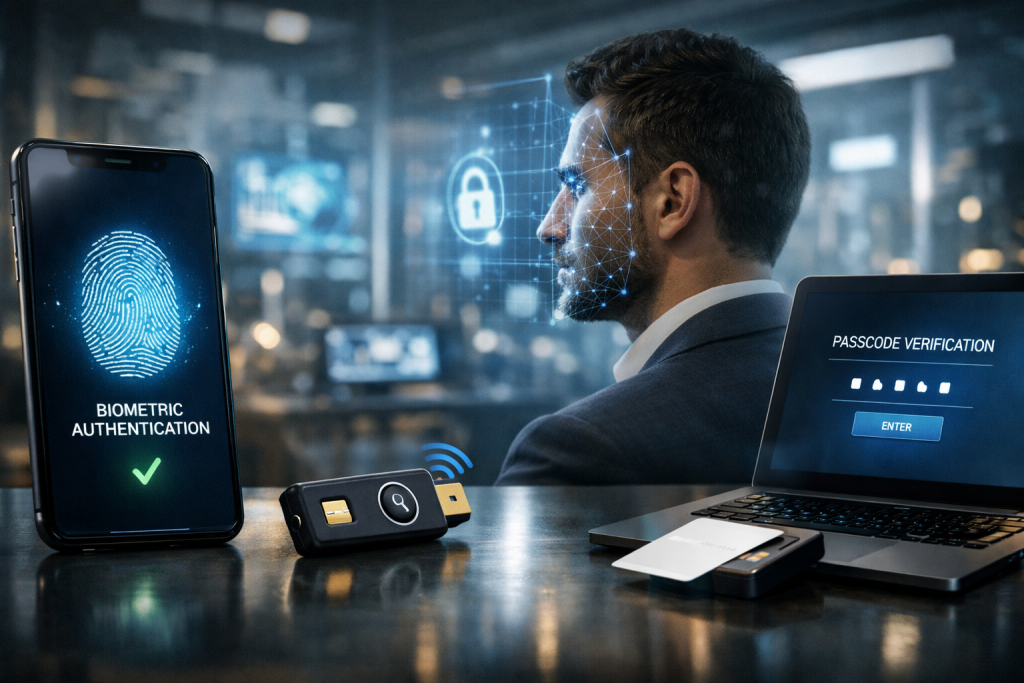
Cyber threats in 2026 are more sophisticated, automated, and AI-driven than ever before. Enterprises can no longer rely solely on traditional multi-factor authentication (MFA) to secure access to critical systems. While MFA remains widely used, it is increasingly targeted by phishing kits, session hijacking, SIM swapping, and push fatigue attacks. As a result, organizations are actively exploring MFA alternatives for enterprises that reduce user friction while improving security resilience.
This article outlines the most effective authentication models replacing or augmenting MFA in enterprise environments, focusing on scalability, compliance, and real-world deployment feasibility.
Why Enterprises Are Moving Beyond Traditional MFA
Traditional MFA typically combines something users know (password), have (OTP token), or are (biometrics). However, attackers have adapted. Phishing-as-a-service kits can now bypass SMS codes and even intercept push notifications through real-time relay attacks.
Another issue is user fatigue. Push-based MFA systems have become vulnerable to repeated approval requests, tricking employees into accidentally approving malicious login attempts. In large enterprises, even a small percentage of compromised approvals creates systemic risk.
Operational complexity also plays a role. Managing tokens, SMS gateways, help desk resets, and integration layers increases cost and administrative burden. Enterprises are therefore evaluating MFA alternatives for enterprises that eliminate passwords entirely or shift authentication from static factors to contextual intelligence.
Passwordless Authentication and Passkeys
One of the most prominent shifts in enterprise security is toward passwordless authentication. Instead of passwords and OTP codes, users authenticate through device-bound cryptographic credentials, commonly referred to as passkeys.
Passkeys are built on FIDO2 and WebAuthn standards. They use public-key cryptography stored securely on trusted devices, such as laptops or smartphones, and often require biometric verification like fingerprint or facial recognition. Because the private key never leaves the device, phishing attacks become significantly harder to execute.
For enterprises, passkeys reduce help desk costs associated with password resets and token management. They also improve user experience by removing login friction. As phishing-resistant authentication becomes a compliance requirement in several regulatory frameworks, passwordless systems are rapidly becoming a leading option among MFA alternatives for enterprises.
Zero Trust and Continuous Authentication
Zero Trust architecture changes authentication from a one-time login event to an ongoing verification process. Instead of trusting a user after initial MFA validation, the system continuously evaluates risk signals during the session.
Continuous authentication uses behavioral analytics, device posture checks, network context, and geolocation to determine whether access should remain active. If anomalies appear, the system can re-authenticate or terminate the session immediately.
This model reduces reliance on static authentication factors. It treats identity as dynamic rather than binary. For enterprises operating hybrid workforces and multi-cloud infrastructure, Zero Trust frameworks serve as strategic MFA alternatives for enterprises because they reduce the impact of stolen credentials.
Adaptive and Risk-Based Authentication
Adaptive authentication introduces contextual intelligence into access decisions. Instead of applying the same MFA challenge to every login, the system analyzes risk signals such as IP reputation, device fingerprint, login velocity, and historical behavior patterns.
If the risk score is low, the system may allow seamless access without additional friction. If risk is high, it may require step-up verification or restrict access entirely. This reduces unnecessary user prompts while strengthening security posture.
Machine learning models improve detection accuracy over time. Enterprises benefit from lower authentication fatigue and stronger anomaly detection. Among modern MFA alternatives for enterprises, adaptive authentication offers a practical transitional approach without fully replacing existing identity infrastructure.
Hardware-Backed Identity and Trusted Devices
Another strong alternative involves hardware-bound identity models. These systems tie authentication credentials directly to enterprise-managed devices using secure elements or TPM chips.
When access attempts originate from verified hardware with compliant security posture, authentication confidence increases significantly. This reduces dependence on user-supplied codes and mitigates risks associated with compromised personal devices.
In regulated industries such as finance and healthcare, hardware-backed authentication supports compliance requirements around device control and endpoint integrity. It strengthens identity assurance while simplifying login flows.
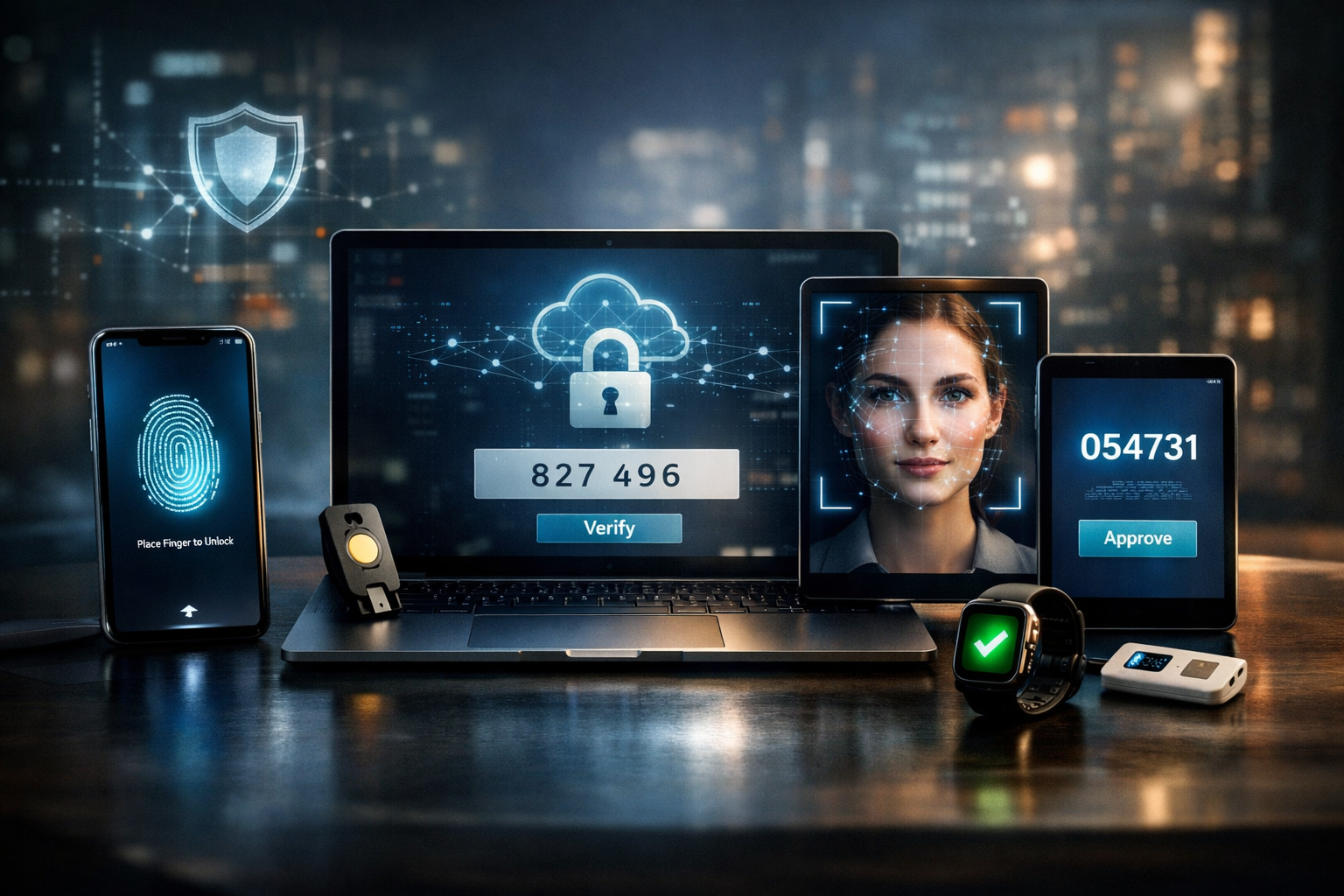
This model often integrates with endpoint management platforms and device compliance engines. As enterprises standardize corporate hardware fleets, hardware-backed identity systems are emerging as reliable MFA alternatives for enterprises with high assurance levels.
Decentralized Identity and Verifiable Credentials
Decentralized identity (DID) frameworks represent a more structural shift in authentication. Instead of storing identity data in centralized directories, credentials are issued and verified using cryptographic proofs controlled by the user or enterprise wallet.
Verifiable credentials allow authentication without exposing underlying personal data. For example, a system can verify that a user is an employee with a certain clearance level without revealing unnecessary attributes.
While adoption is still early, decentralized identity reduces reliance on centralized identity providers and limits large-scale breach impact. For multinational enterprises concerned with data sovereignty and privacy regulations, DID systems are becoming strategic long-term MFA alternatives for enterprises.
Implementation complexity remains a challenge, but pilot deployments in supply chain, cross-border collaboration, and government services are accelerating.
Biometric-Only Authentication with Liveness Detection
Biometric authentication is not new, but its enterprise-grade evolution is significant. Modern biometric systems combine fingerprint, facial recognition, and behavioral biometrics with advanced liveness detection to prevent spoofing.
Unlike SMS or OTP codes, biometrics cannot be intercepted through phishing. When combined with device binding and encrypted templates, biometric-only authentication can eliminate passwords entirely.
However, enterprises must address privacy compliance, template storage security, and fallback mechanisms. When properly implemented, biometric systems reduce authentication friction and improve user satisfaction while increasing resistance to social engineering attacks.
As biometric hardware becomes standard in enterprise laptops and mobile devices, biometric-first authentication is increasingly considered among viable MFA alternatives for enterprises.
Conclusion
Enterprises in 2026 face identity threats that traditional MFA was not designed to withstand. Phishing-resistant authentication, Zero Trust architectures, adaptive risk models, hardware-backed credentials, decentralized identity, and advanced biometrics are redefining enterprise access control. The most effective strategy is not simply replacing MFA, but evolving toward layered, context-aware authentication models that reduce user friction while strengthening security posture. Organizations evaluating MFA alternatives for enterprises must prioritize phishing resistance, scalability, compliance alignment, and long-term architectural flexibility.
FAQ
Q: Are MFA alternatives more secure than traditional MFA? A: Many modern alternatives, such as passkeys and hardware-backed authentication, are phishing-resistant and reduce risks associated with OTP interception and push fatigue attacks.
Q: Can enterprises fully eliminate passwords in 2026? A: Yes, passwordless systems using FIDO2 passkeys, biometrics, and device-bound credentials allow enterprises to remove passwords in many use cases.
Q: Is Zero Trust a replacement for MFA? A: Zero Trust complements or replaces traditional MFA by shifting from one-time verification to continuous risk-based authentication throughout a session.
Q: What is the main benefit of adaptive authentication? A: Adaptive authentication reduces unnecessary login friction by applying additional verification only when contextual risk signals indicate elevated threat levels.
Q: Are decentralized identity systems widely adopted by enterprises? A: Adoption is still emerging, but enterprises in regulated and cross-border environments are piloting decentralized identity for improved privacy and data control.