
What Is Social Engineering in Cybersecurity: A Guide
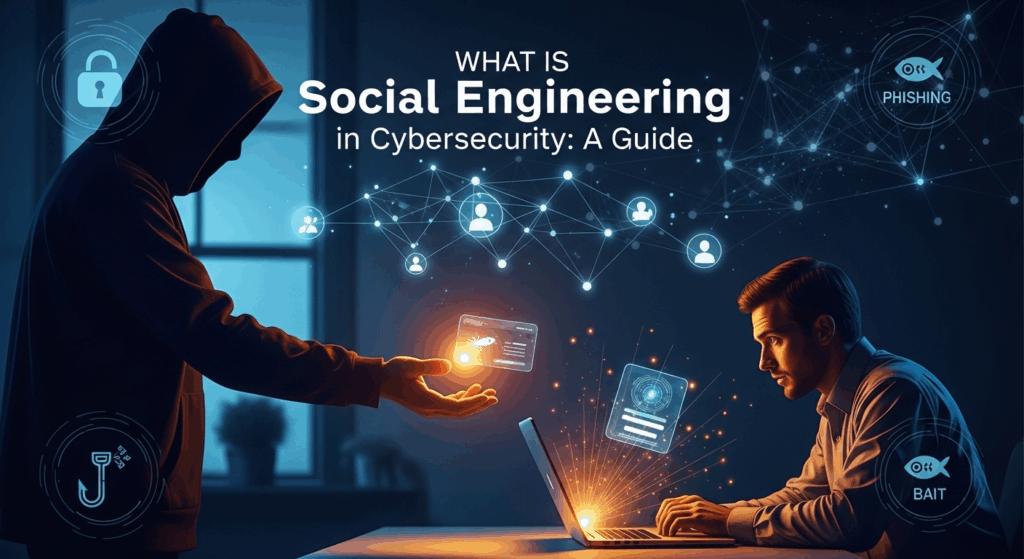
What Is Social Engineering in Cybersecurity: A Guide
Social engineering is one of the most effective and persistent threats facing organizations and individuals today. If you’ve ever wondered what is social engineering in cybersecurity, this guide explains the psychology, common techniques, real-world impacts, and practical defenses you can implement. Social engineering exploits human behavior rather than technical vulnerabilities, making awareness and process changes essential to an enduring security posture.
Understanding Social Engineering: Definition and Psychology
Social engineering in cybersecurity refers to tactics that manipulate people into divulging confidential information, performing actions that compromise security, or granting unauthorized access. These attacks combine persuasion, deception, and contextual cues to exploit natural human tendencies such as trust, urgency, curiosity, and the desire to help. Rather than attacking software or hardware directly, attackers focus on the human element—the weakest link in many security chains.
The psychology behind social engineering is rooted in well-studied cognitive biases: authority bias (we obey perceived authorities), reciprocity (we return favors), scarcity (we act faster when resources appear limited), and urgency (we prioritize time-sensitive requests). Attackers craft scenarios that trigger these biases. For example, an email claiming to be from a CEO asking for immediate action leverages authority and urgency to short-circuit normal verification behaviors.
Because social engineering targets behavior, defenses must combine technical controls with human-centered strategies. Training alone is insufficient if corporate processes allow single-step approvals or if systems fail to enforce multi-factor authentication. A layered approach—education, process design, and technical enforcement—reduces risk significantly. Understanding the human motivators is the first step in building these layers.
- Psychological Principles Behind Attacks
Attackers rely on predictable human responses. Recognizing the mechanics—how urgency, fear, and trust are used—helps defenders anticipate and mitigate scenarios.
- Social proof: showing that others have complied to make requests seem normal.
- Familiarity: referencing company processes or names to lower suspicion.
Awareness of these tactics reduces susceptibility. When employees are taught to pause and verify, the effectiveness of many social engineering attempts drops dramatically.
- The Role of Organizational Culture
Culture amplifies or dampens social engineering risk. A culture that rewards speed over verification or stigmatizes questioning authority creates openings for attackers. Conversely, a culture that encourages verification, transparency, and reporting strengthens resilience.
Changing culture requires leadership modeling, consistent policies, and reinforcement via training and metrics. Security-conscious culture is a strategic asset, not a checkbox.
Common Social Engineering Techniques
Social engineering manifests in many forms, ranging from broad automated campaigns to highly targeted, manually crafted attacks. Knowing the common techniques helps security teams recognize suspicious patterns quickly.
Phishing is the broad category of email- (and now SMS-/chat-) based scams that impersonate trusted parties to capture credentials or deliver malware. Spear phishing narrows the focus to a specific individual or group and uses contextual details to increase success rates. Spear phishing is far more dangerous because of its precision and personalization.
Other techniques include pretexting, baiting, tailgating, and quid pro quo exchanges. Attackers often chain methods—for example, using a phishing email to obtain a phone number, then calling to build rapport and extract additional information. The multi-step nature of many attacks makes detection harder if defenses are only focused on single channels.
- Phishing and Spear Phishing
Phishing remains the most common entry vector. Basic phishing uses mass emails with generic lures; spear phishing includes personal details like names, job titles, and internal projects to increase credibility. Both often contain malicious links, attachments, or credential-harvesting pages.
Organizations should implement email filtering, link and attachment sandboxing, and targeted awareness training. In addition, technical controls such as DMARC, DKIM, and SPF reduce email spoofing success rates.
- Pretexting, Baiting, and Quid Pro Quo
Pretexting involves fabricating a believable scenario to access sensitive information—like pretending to be IT support. Baiting uses promised rewards (e.g., free downloads or USB drives) to tempt victims. Quid pro quo offers a service in exchange for information.
Defending against these requires both training and process controls. For example, verify requests for sensitive data through independent channels and establish strict policies on removable media.
- Tailgating and Physical Manipulation
Physical social engineering—such as tailgating into secure facilities or posing as a vendor—bypasses many logical controls. Badges and locks are insufficient when human error allows unauthorized entry.
Physical security measures (mantraps, turnstiles) combined with access policies and visitor verification reduce risk. Employees should be encouraged to politely challenge and report suspicious visitors.
Comparison Table: Common Social Engineering Methods
Attack Type | How It Works | Typical Indicators | Primary Mitigations
— | —: | — | —
Phishing (mass) | Bulk emails with generic lures | Generic greeting, mismatched links, poor grammar | Email filtering, SPF/DKIM/DMARC, user training
Spear Phishing | Targeted emails using personal info | Contextual references, tailored requests | Awareness training, multi-factor authentication, link sandboxing
Pretexting | Fabricated identity or story | Unusual verification requests, pressure | Out-of-band verification, strict data-handling policies
Baiting | Physical/media or digital rewards | Leftover USB drives, enticing downloads | Removable media policies, endpoint scanning
Tailgating | Follow authorized person into secure areas | Unauthorized presence, missing credentials | Turnstiles, escort policies, security awareness
Real-World Examples and Case Studies
Reviewing real-world cases illustrates how social engineering leads to large-scale breaches and operational impacts. High-profile incidents often begin with a simple human mistake that was exploited through social engineering.
Consider cases where attackers used spear phishing to compromise executives’ credentials, then initiated fraudulent wire transfers. These attacks combined social engineering with financial fraud, exploiting both trust and process weaknesses. Losses ranged from tens of thousands to millions of dollars, often accompanied by reputational damage.
Small and mid-sized businesses experience frequent social engineering losses because they may lack mature security controls. A vendor compromise can cascade into multiple clients being targeted, especially where shared credentials or weak supplier verification exist. These cascading effects emphasize the need for both internal safeguards and supply-chain vigilance.
- High-Profile Breaches
High-profile breaches often begin with phishing, followed by lateral movement and data exfiltration. Attackers use initial social engineering footholds to escalate privileges and access sensitive systems.
Lessons learned from these incidents include the importance of multi-factor authentication (MFA), segmentation, and rapid detection. Organizations that detected and contained early often limited damage; those without these controls suffered greater losses.
- Small Business and Supply Chain Incidents
Small businesses may be targeted via vendor impersonation or invoice fraud. Attackers exploit less-rigorous invoice verification processes and the assumption that suppliers are safe.
Implementing simple controls—two-person verification for payments, vendor validation procedures, and regular vendor audits—reduces exposure significantly.
How to Detect and Prevent Social Engineering
Detection and prevention require both technical controls and human-focused measures. Relying solely on one approach leaves gaps that attackers exploit.
Technical controls include email authentication (DMARC/DKIM/SPF), advanced threat protection, endpoint detection and response (EDR), and robust identity management with MFA. However, technical solutions cannot fully replace human judgment; they should support and augment human decision-making.
Human defenses—awareness training, simulated phishing, clear reporting channels, and a culture that rewards verification—are critical. Training should be frequent, engaging, and tailored to roles. Behavioral reinforcement is more effective than one-off presentations.

- Technical Controls and Configurations
Technical measures reduce exposure and increase the cost for attackers. Recommended controls:
- Enforce MFA on all privileged and remote access.
- Use email authentication and advanced filtering.
- Implement network segmentation and least privilege.
Regularly update and patch systems, and use EDR and SIEM tools to detect suspicious behaviors that might indicate social engineering successes.
- Human-focused Defenses
Training programs should move beyond slides: incorporate interactive modules, real-world scenarios, and simulated phishing campaigns. Positive reinforcement (reward reporting) encourages proactive behavior rather than punishment for mistakes.
Encourage verification behaviors: call-backs to a known number, confirming payment changes via separate channels, and refusing to bypass approval workflows. Make reporting effortless (e.g., one-click email reporting buttons) and ensure timely, constructive feedback after incidents.
- Incident Response and Recovery
Assume that some attacks will succeed; prepare an incident response plan focused on social engineering outcomes—compromised credentials, unauthorized transfers, and data leaks. Plans should include containment, credential resets, legal/PR considerations, and regulatory notification processes.
Conduct post-incident reviews to identify root causes (technical, human, process) and update controls and training accordingly. Learning cycles turn painful incidents into long-term resilience improvements.
Implementing a Security Awareness Program
A successful program blends policy, training, simulation, and measurement. It starts with leadership buy-in and clear goals tied to business risk. Awareness without measurement or reinforcement tends to decay rapidly.
Design training for different roles—executives face targeted threats different from front-line staff. Tailored modules increase relevance and retention. Regular simulated phishing tests help evaluate effectiveness and guide targeted coaching for high-risk users.
- Training Design and Frequency
Best practice is frequent, short, scenario-based sessions rather than annual long seminars. Microlearning (5–10 minute modules) and real-world simulations maintain attention and reinforce behaviors continuously.
Incorporate role-based exercises: finance staff practice invoice verification, IT handles suspicious password reset requests, and HR deals with credential-protection scenarios. This role focus improves practical readiness.
- Measuring Effectiveness
Metrics matter: track click rates on simulated phishing, reporting rates, time-to-report, and incident counts. Use these indicators to refine training and track progress over time.
Also measure process adherence—are out-of-band verifications being used? Are multi-step approvals enforced for high-risk actions? Data-driven programs allow prioritized resource allocation.
- Policy, Governance, and Culture
Policies should be practical, enforceable, and communicated clearly. Governance ties policies to accountability: who approves exceptions, who trains staff, and how incidents are escalated.
Culture change requires visible leadership support. Rewarding good security behavior, celebrating near-miss reports, and making verification the default all contribute to a resilient environment.
Future Trends and Evolving Threats
Social engineering evolves with technology. Attackers adopt new channels (instant messaging platforms, collaboration tools) and leverage advanced techniques like AI-generated content and deepfakes to increase believability.
The rise of generative AI makes personalized attacks cheaper and faster; automated systems can craft emails tailored with publicly available information. This increases the scale and sophistication of social engineering campaigns, requiring enhanced detection and verification methods.
Regulatory developments and industry standards increasingly emphasize human-centered security controls and reporting requirements. Organizations that proactively strengthen social engineering defenses will be better positioned for compliance and resilient operations.
- AI-powered Attacks and Automation
Generative AI can create convincing text, voice, and images. Attackers can automate personalization at scale, making mass phishing mimic spear phishing. Detection systems must therefore incorporate behavioral analytics and multi-channel correlation.
Organizations should invest in solutions that analyze anomalies (unusual login locations, atypical command sequences) and enforce stronger identity verification.
- Deepfakes and Synthetic Media
Deepfakes—synthetic audio or video—enable impersonation of executives to authorize fraudulent actions. These attacks exploit human trust in familiar voices or faces.
Mitigations include strict verification protocols for high-risk requests (e.g., payment approvals), training to recognize deepfake cues, and technical tools for media authentication where available.
- Regulatory and Supply Chain Impacts
Regulatory scrutiny on cyber incidents is increasing. Expect more mandatory reporting and requirements around employee training and vendor security. Supply chain attacks leveraging social engineering will prompt tighter third-party risk management.
Proactive governance and vendor assessments reduce surprise exposures and help demonstrate due diligence in the face of regulatory inquiries.
FAQ — Q & A
Q: What is social engineering in cybersecurity, and why is it dangerous?
A: Social engineering is the manipulation of people to obtain confidential information or trigger actions that compromise security. It’s dangerous because it targets human behavior—often bypassing technical defenses—and can lead to credential theft, financial fraud, and data breaches.
Q: How can I tell if an email is a phishing attempt?
A: Look for mismatched URLs, unexpected attachments, pressure to act quickly, and language that seems off. Verify sender addresses, hover over links without clicking, and confirm high-risk requests through known channels.
Q: Is training enough to stop social engineering?
A: Training is essential but not sufficient. Combine training with technical controls (MFA, email authentication), strong processes (dual approvals), and a culture that encourages verification and reporting.
Q: What should a company do immediately after a suspected social engineering breach?
A: Contain the breach by isolating affected accounts, reset compromised credentials, notify legal/compliance teams, and begin forensic investigation. Implement fixes and retrain affected users.
Conclusion
Social engineering in cybersecurity remains a dominant threat because it preys on predictable human behavior. Understanding the psychology, recognizing common tactics, and implementing layered defenses—technical controls, role-focused training, and resilient processes—are the most effective ways to reduce risk. As attackers evolve with AI and new channels, organizations must adopt continuous learning, measurement, and culture change to maintain security over time. Prevention, detection, and incident readiness together create a robust defense against social engineering.
Summary (English)
This comprehensive guide explains what social engineering in cybersecurity is, why it’s effective, and how to defend against it. Social engineering manipulates human behavior to obtain credentials, money, or access, using techniques like phishing, spear phishing, pretexting, baiting, and tailgating. Effective defense requires a layered approach: technical controls (MFA, email authentication), human-focused practices (frequent, role-based training, simulations), process improvements (dual approvals, out-of-band verification), and a security-aware culture supported by leadership. The guide includes comparisons of attack types, real-world examples, best practices for awareness programs, and notes on emerging threats such as AI-driven attacks and deepfakes. Regular measurement, incident readiness, and continuous improvement are essential for long-term resilience.