
Iran war: Why is Russia not coming to Tehran’s aid?
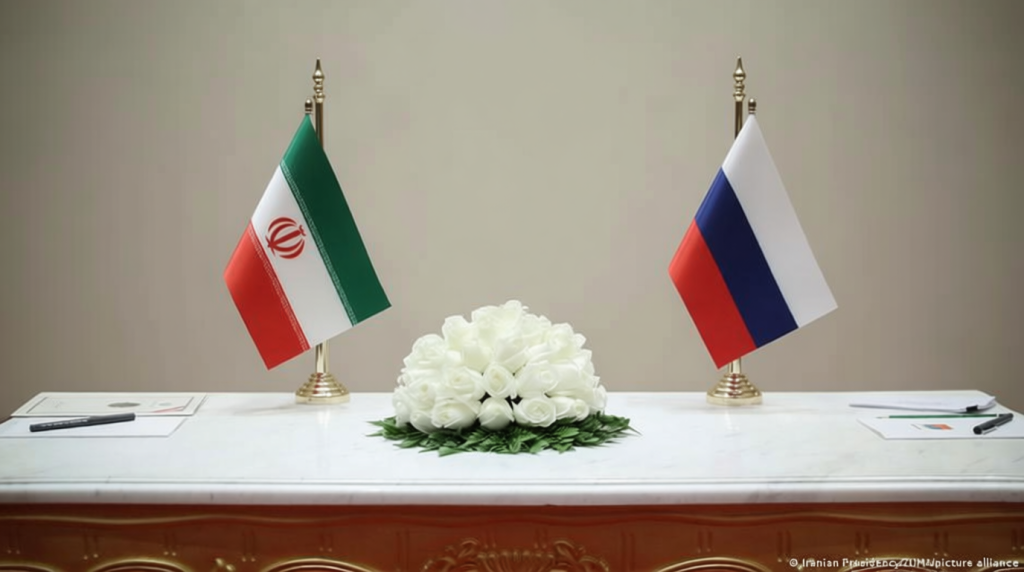
Iran War: Why Is Russia Not Coming to Tehran’s Aid?
In the face of relentless US-Israeli strikes, Iran’s government has found itself with minimal international allies. Despite this, it has pinned hopes on Moscow’s backing. However, the support from Russia has been lacking, leaving Tehran disheartened. Just after the bombings began on Saturday, Russia’s UN representative, Vassily Nebenzia, labeled the attacks as “an unprovoked act of armed aggression against a sovereign and independent UN member state.”
Moscow stands as one of Tehran’s most steadfast allies despite limited global backing. A shift in Iran’s political landscape could impact Russia’s strategic interests. Yet, the absence of active intervention has raised questions. Why hasn’t Russia stepped in to defend its partner?
Economic Ties
Russia and Iran have collaborated on key projects that are vital to Moscow’s economy. Nikita Smagin, an Azerbaijan-based expert, highlighted the North-South transport corridor as a critical example. This 7,200-kilometer (4,473 miles) multi-mode network, signed in 2000, runs through Azerbaijan. The Gulf Research Center notes that 75% of the project is complete. Smagin explained that Russia’s access to traditional transit routes was disrupted by its invasion of Ukraine in February 2022, making the corridor even more essential.
Military Collaboration
Russia has also relied on Iran’s military contributions, especially since 2023. Shahed drones, supplied by Iran, have played a significant role in reshaping the Ukraine war, according to Julian Waller of the Center for Naval Analyses. While Iran initially aided Russia, the country has since developed its own drone technology, improving designs and reducing dependency. Waller pointed out that the partnership between Russia and Iran is pragmatic, driven by shared challenges rather than ideological alignment.
Russia and Iran have exchanged intelligence and shared military resources. However, their alliance is not defined by common values. Smagin noted that Russian politicians have mixed feelings about Iran but recognize its reliability as a strategic partner. Both nations face international sanctions, unlike Turkey or Egypt, which might hesitate to trade with Russia if pressured by the West.
Expectations and Disappointment
Tehran anticipated more than just verbal support from Moscow. Mojtaba Hashemi, a political analyst, emphasized that the regime expected “tangible political and military assistance,” including expanded cooperation and a clear deterrent against adversaries. Hashemi suggested that Iran’s miscalculations were evident, as Russia and China have prioritized their own geopolitical concerns over Iran’s defense.
Gregoire Roos of Chatham House argued that a prolonged conflict could benefit Russia. He believed the attention would shift from Ukraine to Iran, potentially weakening President Zelenskyy’s media presence. Additionally, he noted that Washington might struggle to sustain its efforts in a wider regional war.
Some analysts, like Mohammad Ghaedi of George Washington University, suggest that Tehran’s lack of support from Russia wasn’t entirely unexpected. Ghaedi cited former president Mahmoud Ahmadinejad’s remark that “Russia has always sold out the Iranian nation” and noted that President Masoud Pezeshkian observed the same pattern during the 12-day war in June 2025.
“The two countries are not defensive allies,” said Julian Waller, underscoring that Russia’s involvement remains limited to symbolic gestures rather than decisive action.