
Is Iran’s regime at a breaking point?
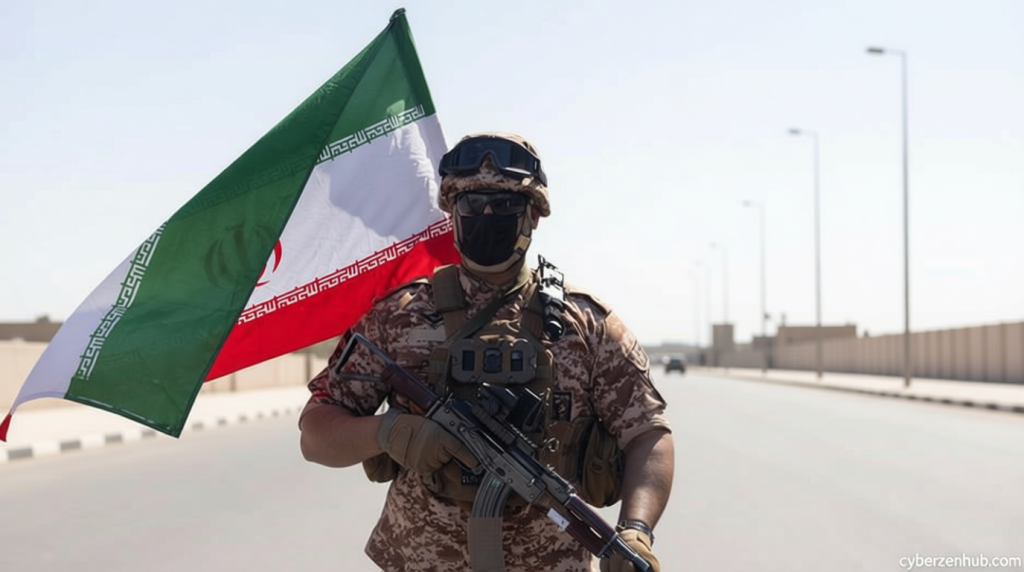
Is Iran’s regime at a breaking point?
Eighteen days into the conflict, Iran’s Revolutionary Guards continue to operate despite significant losses. Their adaptable command system allows them to maintain operations, though analysts observe growing strain within the power hierarchy. Initial assumptions of a critical collapse were premature, as the core of the Islamic Republic’s authority appears resilient. Middle East analyst Habib Hosseini‑Fard noted that “the assessment of a weakened power center does not align with the current situation. Iran’s leadership has managed to recover from the initial shock,” according to DW.
Despite the US and Israel’s strikes, which claimed the life of Supreme Leader Ali Khamenei in the conflict’s opening hours and eliminated key political and military figures, the Revolutionary Guard Corps (IRGC) remains active. These forces are conducting attacks across multiple fronts against the US, Israel, and nearby Arab nations. Their decentralized command structure, which enables rapid decision-making, persists even after Israel reported the death of Ali Larijani, secretary of the Supreme National Security Council, and the elimination of Gholamreza Soleimani, head of the Basij militia.
Over the past two weeks, Iran has launched more than 300 attacks on Oman, Saudi Arabia, Israel, Jordan, Cyprus, Turkey, Azerbaijan, the United Arab Emirates, Qatar, Iraq, Kuwait, and Bahrain, as per US Central Command (CENTCOM). Saudi Arabia’s Defense Ministry confirmed intercepting over 60 drones in its airspace since midnight. The UAE reported one fatality and one injured person in Abu Dhabi, attributed to falling debris from Iranian projectiles. These developments underscore the intensity of the ongoing confrontation.
Strategic Resilience of the IRGC
The IRGC, established after the 1979 Islamic Revolution, was initially tasked with preventing coups and safeguarding state ideology. Now, it forms the backbone of Iran’s armed forces, operating under Supreme Leader Mojtaba Khamenei. With an estimated personnel strength of up to 200,000, the group has evolved into a networked structure. Provincial commands hold substantial autonomy, allowing independent action without central oversight, as explained by Hosseini‑Fard.
“The IRGC’s decentralized model ensures its survival, even amid sustained attacks,” he said. This flexibility is bolstered by Iran’s strategic depth, including underground missile silos, which make complete military destruction unlikely in the short term. “These assets explain why strikes persist despite claims of maximum damage,” he added.
Foreign Minister Abbas Araghchi has rejected the idea of negotiations, insisting there will be no ceasefire while the US and Israel target Iranian infrastructure. The IRGC’s ability to respond swiftly to shifting circumstances highlights its continued relevance. Recent attacks, such as the drone and rocket assault on the US embassy in Baghdad, demonstrate this capacity.
Political analyst Reza Talebi emphasizes Iran’s internal coherence, cautioning against simplistic views of regime collapse. “The notion that a weakened state would automatically lead to military surrender overlooks the deep integration of ideological and economic power structures,” he argued. The Revolutionary Guards, he noted, extend beyond military functions, influencing regional militant groups and shaping broader geopolitical strategies. This multifaceted role reinforces their resilience in the face of external pressure.